Book Your Adventure 1-800-346-8747

Why Europe Should Be Your Next Hunting Destination

Dino Bugni
|  
Location: SlovakiaAustria

When hunters think of the ultimate adventures, Africa and Alaska are usually at the top of the list. Yet tucked away in Europe is a world-class hunting experience that most never know enough about to wish for. It’s a mistake, one I made myself for years, until a recent trip to Slovakia opened my eyes to what hunting in the Old World is truly like. In Europe, centuries of tradition reshape your thoughts about international hunting.
The Hunt You Didn’t Expect

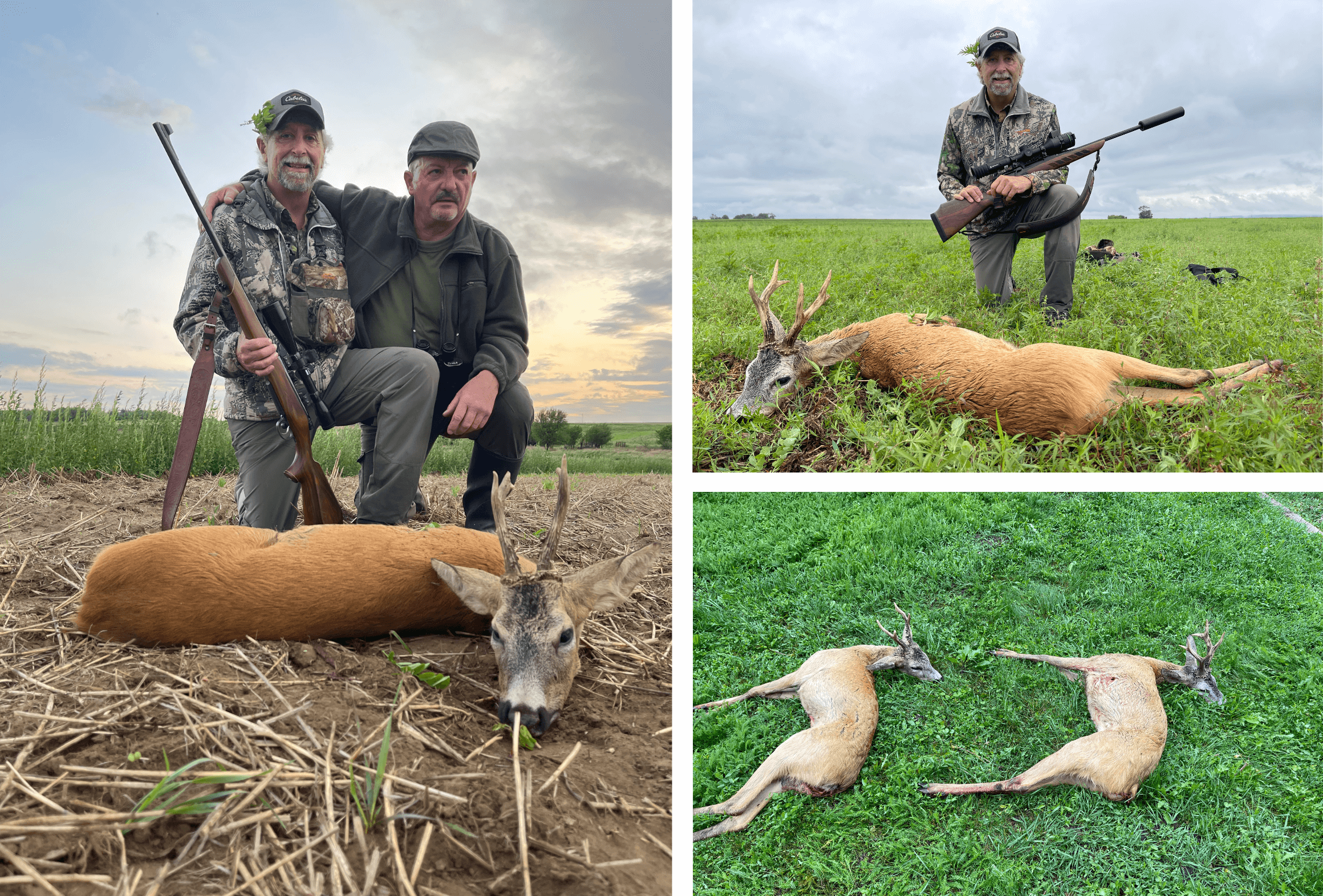
My group of seven rolled into Slovakia in early August, the perfect time for the roe deer rut. We had booked five tags per person through WTA, which initially made me nervous. How could taking that many animals be sustainable? But game management in Europe works on an entirely different level. Their wildlife departments track populations down to individual animals, maintaining detailed records unlike anything we have in the States. They issue licenses based on precise population data, and in many areas, they still need to conduct additional culls because game numbers are so healthy.

The hunting itself felt foreign yet familiar. Watching roe bucks chase does across open ag fields reminded me of hunting pronghorn during the rut. We watched as bucks chased does miles over the horizon, only to return and chase more. We would use the standing corn and sunflower rows for cover, glassing open areas where roe deer congregated on clover and alfalfa food plots.

The guides knew every ridge and valley, pointing out where certain bucks lived and separating solid trophies from medal-class deer. Some mornings started at 3 a.m., with hunters in position before dawn. While some stayed afield all day, others slipped back to the lodge for a late-morning feast and rest before the evening hunt.
More than One Species

The hunting was amazing, and we were not limited to roe deer. Once we arrived, we learned that we could add mouflon and red stag to our hunt. Wild boar roamed the same areas. Come September, fallow deer would be available as well. It’s a mixed-bag type of hunt, where you can customize your hunt on the fly.

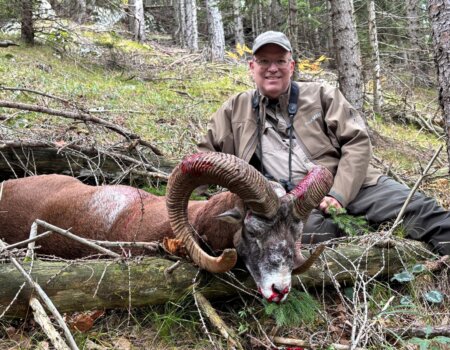
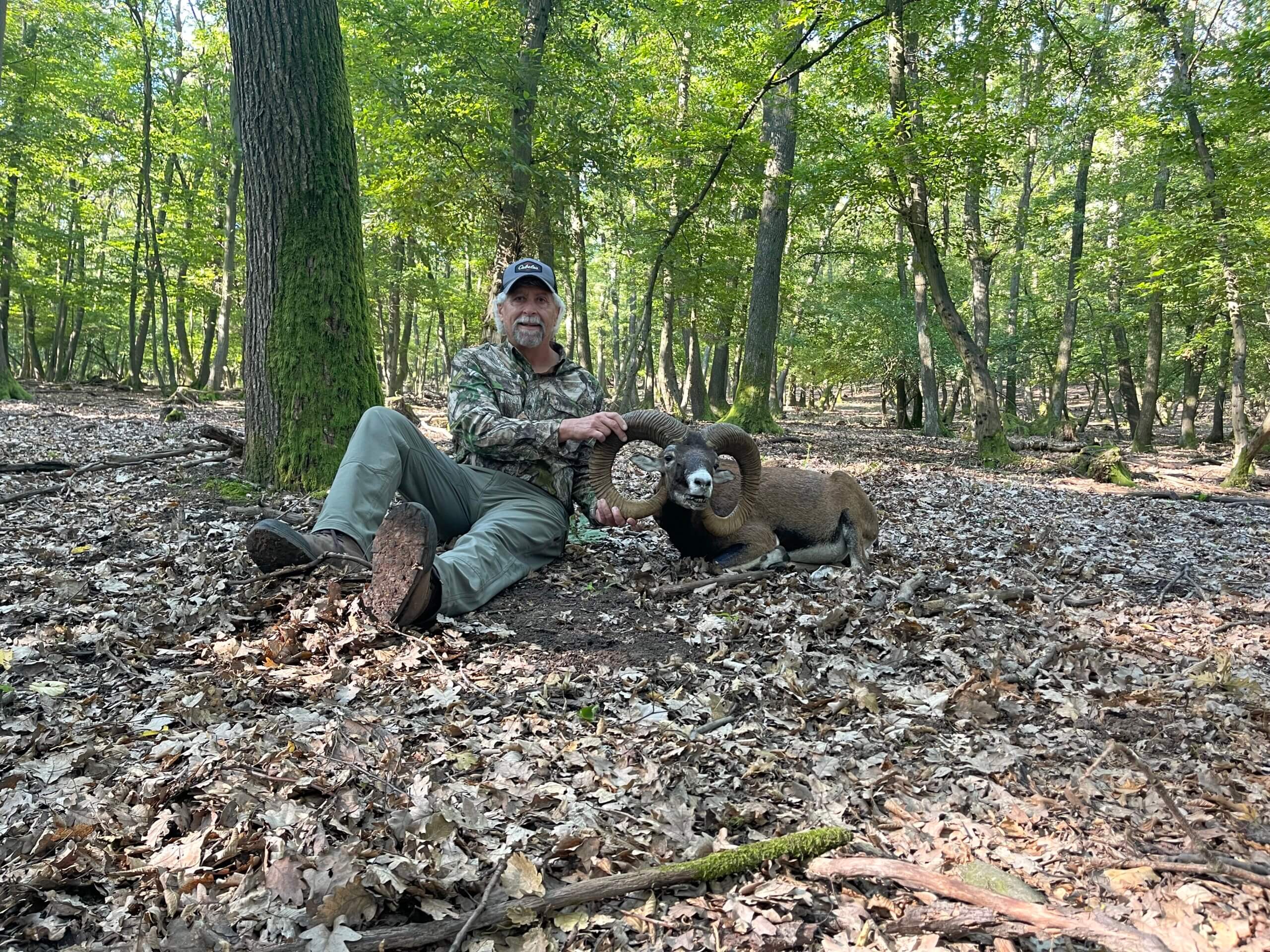
The mouflon hunting took us into mountains that could have been transplanted from Montana. We parked at the end of a logging road and stalked through timber, glassing for those distinctive curved horns. On one stalk, we heard an odd noise: two mouflon rams butting heads. Following the sound, we intercepted a bachelor band of rams, all jostling and sparring as they moved through the forest. When the biggest ram separated from the group at 70 yards, I made my shot at a free-range animal that had lived wild in these mountains for years.

The quality of the animals shocked everyone. Multiple hunters took mouflon that exceeded expectations. One member of our group dropped a 320″ red stag that wasn’t even on our radar when we planned the trip. These aren’t high-fence operations—this is free-range hunting across extremely varied terrain.

Tradition Runs Deep

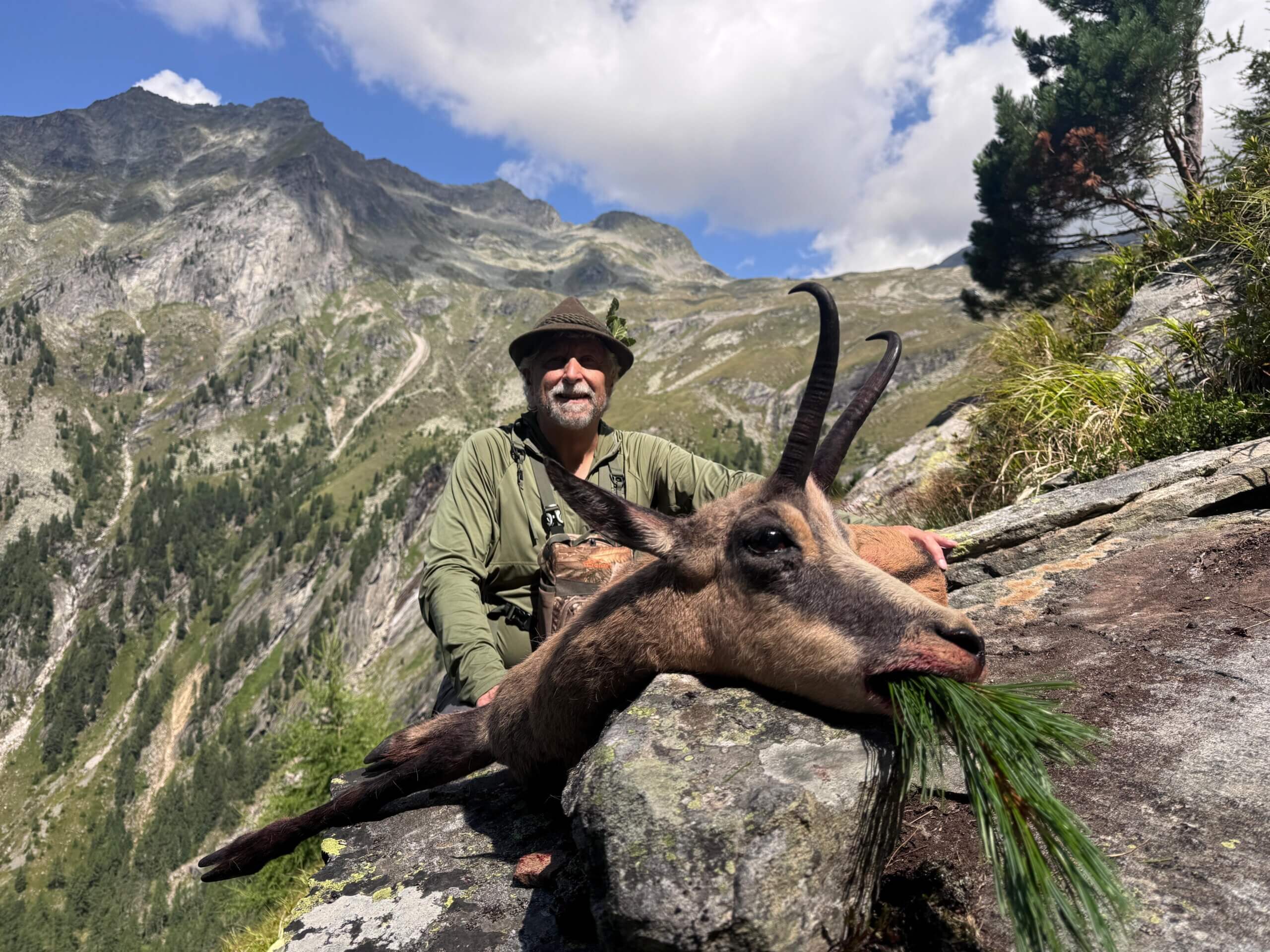
European hunting carries traditions that date back centuries; participating in them adds profound meaning to the experience. When you harvest an animal, you pick specific plants to place in its mouth. It’s a tradition where this “last bite” honors the animal’s life. You remove your hat, place the vegetation, and take a moment of genuine reflection. Pretty cool. Another sprig marks where the animal fell, with the stem pointed toward the head for males or the tail for females.

The focus isn’t purely on trophy size either. Harvesting mature animals there matters more than inches of headgear. My guide was ecstatic when I took a 15-year-old chamois in Austria. It wasn’t his horn length, but because it had lived a full life, passed on its genes, and removing it made room for younger animals. This management philosophy, based on age and herd dynamics rather than simply trophy quality, has resulted in remarkably healthy game populations.
The Complete Experience

After Slovakia, I continued to Austria for alpine chamois. We stayed in another century-old hunting cabin. Glassing from the deck, I spotted over 100 chamois that evening. The next morning’s grueling hike (I later learned there was a road, but my guide figured I would want to earn it) led to harvesting that ancient chamois.

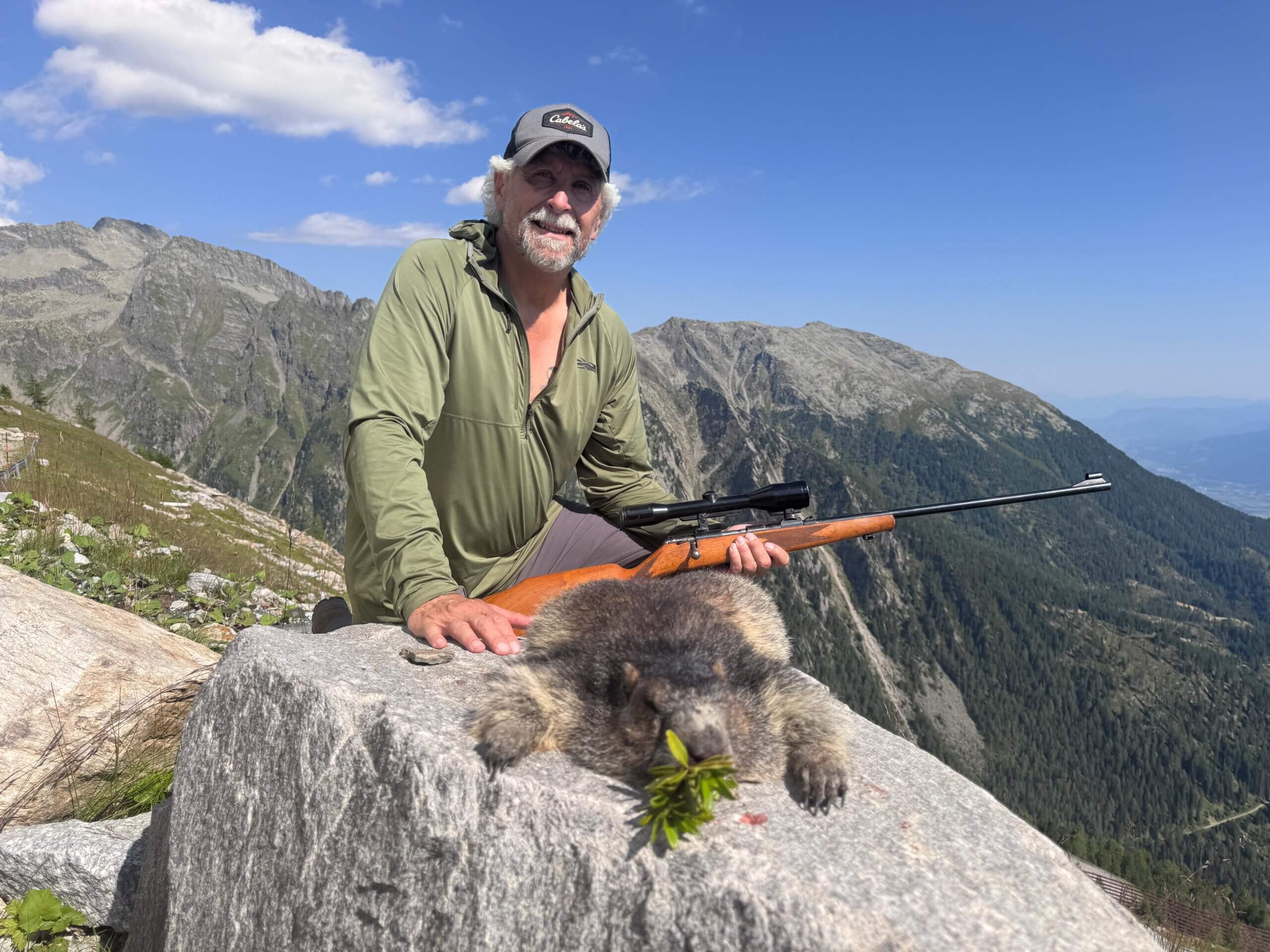
Following another tradition, we finished with a marmot hunt. It is a customary ending to an alpine hunting experience, and it was a blast. These small details, the rituals and customs, transform what could be just another hunt into something deeper and more memorable.
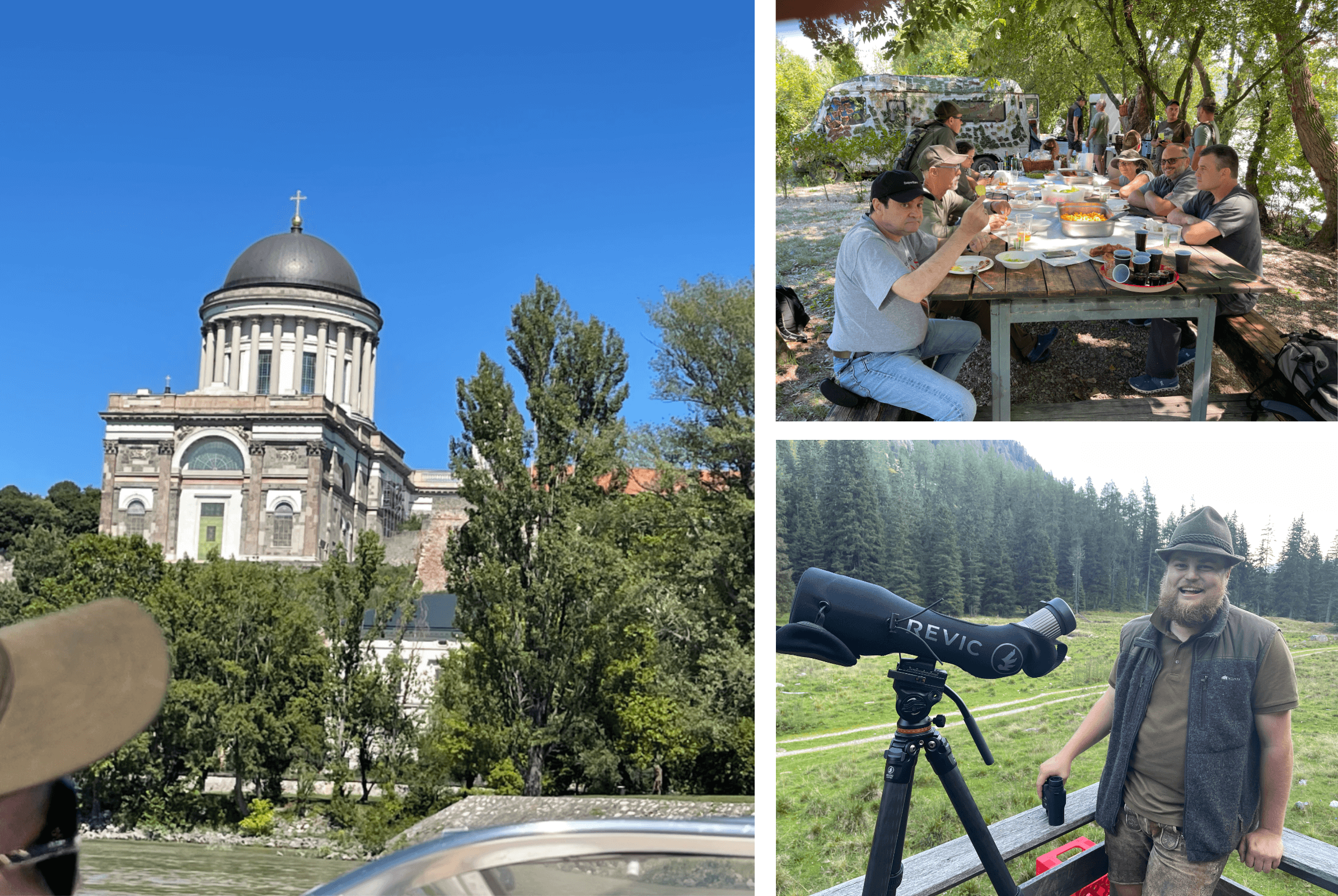
Making It Happen

The logistics are simpler than you might expect. Direct flights from Dallas or Atlanta to Vienna eliminate the connecting flight nightmares that can plague firearm transport. WTA’s travel partner handles all the details from firearm permits to scheduling around any sightseeing plans. Additionally, having Roger William Jørgensen, WTA’s international consultant, based in Austria provides invaluable boots-on-the-ground support for everything from trophy shipping to solving unexpected issues.

European taxidermists and shipping agents have the process dialed in to get your trophies done and home. Whether you want a shoulder mount done there or skulls and hides shipped home, all CITES permits and paperwork are handled professionally. Your trophies arrive home properly preserved and documented.

Why Europe Deserves Your Attention

This is a trip for hunters who appreciate variety, culture, and the complete experience. Bring your spouse and they will actually thank you for booking this one! While you’re stalking mouflon in the mountains, they can explore wine cellars, castles, and villages that are centuries old. In the evenings, you can gather for spectacular meals and European wines that make the day’s stories even better.

Europe offers something unique in modern hunting: the perfect blend of adventure, culture, and exceptional hunting. The game populations are strong, the traditions add meaning to every harvest, and the accommodations and cuisine rival any vacation destination.

For hunters who think they’ve seen it all, Europe is a reminder that there are still surprises out there. Call us at 1-800-346-8747 for more information and book through WTA to discover why European hunting traditions have endured for centuries. 

Recent Articles

Popular Hunts

WTA Exclusive
Red Stag, Fallow Deer   ·
Croatia
From 
$10,250
Outfitter #949
Outfitter Special
Combo Hunt
WTA Exclusive
Red Stag, Roe Deer   ·
Scotland
From 
$8,000
$6,500
Outfitter #1110
2 Stags (Sika or Red) for the Price of One! Save $1,500! September 3rd to 7th - October 8th to 12th - October 19th to 25th

Top Hunting Trips

Hosted Trip
Estate Hunt
Chamois, Alpine Ibex   ·
Austria
From 
$10,300
Outfitter #1097
2027- September 20th to 24th - 2 Spots & 2028- September 18th to 22nd - 4 Spots
Estate Hunt
Chamois, Alpine Ibex   ·
Austria
From 
$23,875
Outfitter #1097

Related Articles

New Zealand: A Spring Paradise

New Zealand: A Spring Paradise

The end of winter in the Northern Hemisphere gives me the itch to travel. I often visit Uganda to chase buffalo, before coming home for Spring turkey season. But this year, I switched it up. My wife, Alka, and I headed south to New Zealand for the last few days of February. We hosted two groups of hunters at two of WTA’s top outfitters and we all enjoyed a wonderful trip.

New Zealand offers endless opportunities for non-hunting companions while delivering a world-class hunting experience. Both lodges where we stayed had dedicated hosts who organized daily activities for the non-hunting guests. Shopping, visiting wineries, sightseeing in Mount Cook, jet boating, and many other activities filled the schedule. Once our hunts wrapped up, the guys joined the ladies on several of these excursions. I especially enjoyed spending a day exploring Mount Cook and an afternoon on the jet boat.

After flying to New Zealand and clearing customs, we caught a short flight to Queenstown. Queenstown is beautiful, situated on a lakeshore with steep mountains dropping straight to the water, making for postcard views. The local food scene is excellent. Alka and I tried multiple restaurants, checked out local shops, and rode the skylift to the top of the mountain. It was nice to have a day or two to acclimate to the 13-hour time difference.

We went to our first lodge, got settled in, visited the rifle range, and then had an incredible dinner.

Alka isn’t really a hunter. She has taken a few animals, and somehow I talked her into hunting a red stag. We got out at daylight with our excellent guide, Victor, when the stags were roaring. We looked at a couple of groups and crept over a ridge to glass into a creek bottom. We found stags roaring, fighting, feeding, and moving all over.

We finally decided on a beautiful red stag with a tank of a body, heavy mass, great crowns. And you could tell he was old. He was also dominant. The others gave way whenever he came near.

After a couple of hours, our stag bedded with another away from the others, and we decided to make a move. Victor expertly maneuvered us down into the thick creek bottom with the wind in our faces. Eventually, we moved within 100 yards of where we thought the stags were. After a while, the other stag stood up and repositioned. When he bedded again, Victor wanted to shift for a better angle. We ended up at 65 yards and could see our stag’s antler tips.

We waited 3 hours for the big guy to get up. We roared, threw rocks, raked brush, but he was tucked in and didn’t budge. Finally, in the early afternoon, Victor raked some brush, roared loudly, and the stag stood. Alka quickly got on the .30-06 and with a couple of shots an inch apart to the shoulder, the big stag dropped. Celebration time!

Alka got a super experience with lots of stag action, a great stalk in close, and then the nerve-racking wait for the 525″ stag to stand up and offer a shot.

Over the next few days, our group of hunters took some incredible stags and fallow deer. Toward the end, a few of us wanted to hunt tahr in the southern Alps.

I cannot describe how beautiful and rugged those mountains are, and seeing them from a helicopter is an experience not to be missed. My hunting partner and I both scored on nice bull tahr the morning we went out, and then the chopper pilot took the ladies up for a quick ride to show them the beauty and majesty of the southern Alps. It was a morning none of us will ever forget.

Learn More about this Hunt

Alka and I then packed up and transferred to our next lodge, where we met four other couples, including our good friends Russell and Cindy. Russell and I were going to hunt together, as we have all over the globe, and again, the ladies had a full palette of fun excursions planned.

During the first afternoon, we saw a number of great stags and some incredible fallow. What really excited me was seeing and hearing bugling elk. We returned for a 5-star meal (Be ready to gain weight in New Zealand!) and prepared for the next day. 

Just after daylight, we were on stags and moving around the hills and canyons, glassing and enjoying the views and the number of animals. One of the hardest parts of hunting there is choosing the stag you want to pursue. There are so many, and they are all so different, it’s sensory overload. There are wide, heavy, drop tines, typical frames, and every other antler configuration imaginable.

While glassing some stags in a wallow across a canyon, I spotted a big bull elk up on a ridge. He was so regal standing on the skyline, I kept coming back to him with my binos. I must have talked about him non-stop, because my outfitter and guide Shaun finally said, “We can go after him if you want, but he is about a mile away, and it’s all uphill.” I told Shaun I was ready to go if he was, so off we went, trekking up the mountain.

When we got to the top, we couldn’t find the bull. Huge rock formations blocked us from seeing a number of areas, so we slowly moved from rock to rock, carefully glassing, until we found the big bull on the third set of rocks.

I quickly set up and Shaun ranged the bull at a bit under 300 yards, moving away. Shaun has suppressed Gunwerks rifles available for his clients to use. I knew with that setup, the shot should be easy if the bull presented a good angle.

After watching him for a few minutes, the bull swung around, giving me a quartering away shot, and I tucked one in behind the shoulder. The big guy was done. When we got to him, he was way bigger than I thought, with 54″ beams and a huge frame, the 7×7 stretched the tape to 397″. I was ecstatic!

That afternoon, I went along with Russell on an exciting stag hunt where we got in on two great bulls. After a lot of maneuvering, they stepped out of a bedding area at 70 yards, and Russell hammered a beautiful stag with great crowns and kicker tines off both sides. Getting in close on these huge stags is an absolute blast.

The other guys in camp were laying down some great animals as well. On our second-to-last day, we all decided to go with the ladies for a jet boat ride up a glacial river, a short hike, and then a winery stop for apps and drinks. It was a fantastic day of seeing incredible scenery and relaxing with old and new friends.

On our last morning, Russell decided to find a good elk. An hour or so later, we found a big bull working a wallow. Russell and his guide made a stalk, Russ got on the sticks, and the next thing Shaun and I saw through our binos was the big heavy bull tipping over. What a great way to end our superb hunt!

We all headed back to Queenstown in the afternoon, had a great dinner at the Botswana Butchery restaurant, and then it was one sleep and a long flight home.

Gunwerks Long Range University | WTA Team Experience

Gunwerks Long Range University | WTA Team Experience

There’s a major difference between simply shooting a rifle and building a repeatable process that works under pressure in real hunting situations.

That was the biggest takeaway when the Worldwide Trophy Adventures team attended the Gunwerks Long Range University L1 and L2 courses in Cody, Wyoming. What started as an opportunity to sharpen our shooting skills quickly became something much bigger: a deep dive into confidence, communication, ethics, and the complete shooting system.

At WTA, we spend our lives helping hunters prepare for meaningful hunts around the world. We talk constantly about tags, gear, outfitters, strategy, and opportunity. But eventually, every hunt comes down to a single moment behind the rifle. That’s where Long Range University changes the conversation.

More than Just “Long Range Shooting”

A lot of hunters hear “long range shooting” and immediately think about distance. The course focused far more on consistency, process, and decision making than simply stretching the range.

The Gunwerks instructors repeatedly emphasized that successful shooting is about understanding the entire system:

  • Rifle
  • Optics
  • Ballistics
  • Environment
  • Wind
  • Shooter fundamentals
  • Mental process

That holistic approach was eye-opening, even for experienced hunters and shooters.

Several members of the WTA team came into the class with years of hunting experience and a solid understanding of rifles and optics. But one theme surfaced almost immediately: many of us had developed bad habits over time, simply because we’d never received formal instruction.
By lunchtime on the first day, most of us were already identifying flaws in our setup, body position, and shot process.

Honestly, that was one of the best parts of the experience.

Building Confidence through Process

Confidence is one of the most important elements in hunting. When doubt creeps into your mind during a critical moment, things tend to unravel quickly. Long Range University focuses heavily on eliminating uncertainty by building a repeatable process.

The course blended classroom instruction with live-fire range sessions, translating concepts immediately into practical applications.

Topics included:

  • Rifle setup and maintenance
  • Zeroing procedures
  • Ballistic profiles
  • Wind reading
  • Spotter/shooter communication
  • Prone shooting fundamentals
  • Shooting from improvised positions
  • Tripod and support techniques
  • Real-world hunting scenarios
  • Ethical shot evaluation

One of the most valuable lessons was learning to manage instability instead of fearing it. In the field, hunting shots rarely happen from a perfect, benchrest position. Hunters must adapt to terrain, weather, awkward angles, and time pressure.

The instructors did an exceptional job of simplifying complex concepts into practical, understandable instructions. Nothing felt overly tactical or intimidating. The focus remained on building ethical, capable hunters.

Real…
Arizona’s Deer/Sheep Deadline: That’s a Wrap on the Draw Season!

Arizona’s Deer/Sheep Deadline: That’s a Wrap on the Draw Season!

The Arizona deer and sheep deadline on June 2 marks the end of another application season. There are a few minor draws and point-only periods coming up, but the major deadlines have passed and the draw results have been posted. I hope this is your year to draw an awesome tag! If not, you’ve built another valuable bonus point for your future. That’s the name of the game!

If you successfully drew a tag, you received a call from your dedicated WTA TAGS consultant informing you of your good fortune. If you drew a tag and haven’t booked with an outfitter, this needs immediate attention. WTA’s owner Mark Peterson said it best: “After finally drawing a great tag…don’t screw it up at the end…hire a reputable outfitter!”

Arizona Deadlines

Arizona has a staggered deadline for its limited-entry big game tags. June 2 marks the deadline to apply for deer and sheep tags. For deer, we’re talking about mule deer and coues deer. And for sheep, desert bighorn and Rocky Mountain bighorn are both available.

Mule Deer vs. Coues Deer

Applicants in Arizona are restricted to one deer application. The state considers two choices on the application. You can utilize two mule deer choices, or two coues deer choices, or one choice for each. For example, first choice mule deer, second choice coues deer.

Consider this quick, low-level consultation when deciding how to apply for deer in Arizona. Arizona boasts the best mule deer hunting in North America. It is truly the land of 200″. However, these deer reside in a handful of units with VERY limited non-resident tags. This is a tag you may never draw in your lifetime.

Arizona also boasts the best coues deer hunting in the West. Early hunts in October and November can easily be drawn with 0–3 bonus points and we offer highly successful adventures with our TAGS-endorsed outfitters. The more sought-after late coues hunts in December are more difficult to draw, but the tag can be drawn within 8 years, hopefully sooner.

Desert Bighorn vs. Rocky…

Find the outdoor adventure of a lifetime.

SEARCH
Try ‘Elk’, ‘Colorado’ or ‘Waterfowl’