Book Your Adventure 1-800-346-8747

Upland Adventure Conclusion – The Journey Within, A Bird Hunter’s Diary

Mark Peterson
|  

3 Countries — 6 Months — 10 States — 27 Species — 42,667 Miles Traveled

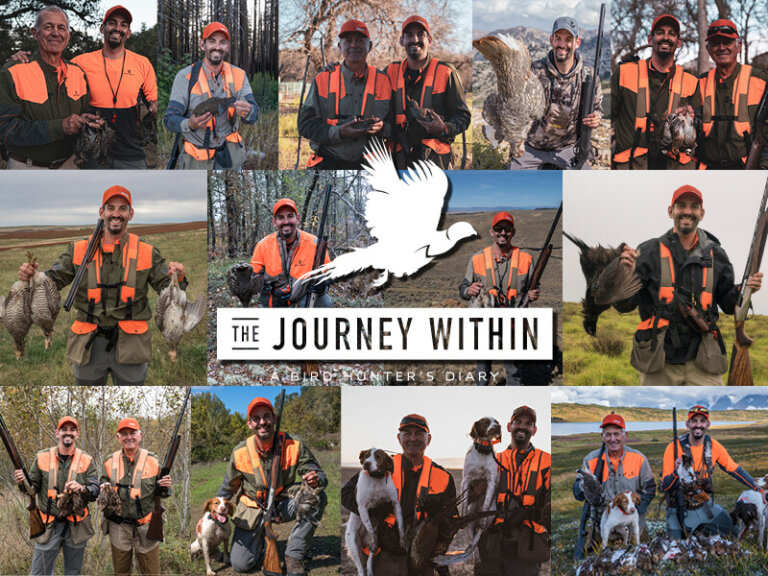
The quest to complete the North American Upland Slam of 27 species began in September of 2019 in Nevada and concluded in Senora, Mexico during February 2020.  It was a formidable challenge to accomplish this adventure in one hunting season using our own dogs and capturing it on film.  Due to a past history of pursuits, most people classify me as “The International Big Game Guy.”  It is often shocking when people learn that my first passion, and where I cut my teeth, was upland hunting with my Dad and our dogs.  Dad (Earl) is still in phenomenal condition and able to hunt alongside me, so we decided not to wait another year to bring our upland passion full circle.
Among our other purposes for this endeavor were to experience different behaviors, habitats, locales, and
pursuit tactics of this hemisphere’s greatest wild birds.  The education we received is indescribable especially when one considers our dogs adapted to all the different scenarios having neither seen nor smelled a majority
of the species.   

Upland birds can be indicator species of an ecosystems’ health. Upland birds typically have, for instance, smaller home ranges than waterfowl or elk.  Therefore, year-round habitat health becomes essential to supporting their life cycle as transitions occur from breeding grounds, nesting, juvenile development to winter survival.  There are crossovers between the food, water and shelter needs of upland birds and big game species.  Locate areas with consistency in these three necessities and you will find yourself in birds and other quality animals.

After reflecting on the six months it took to complete this adventure, I thought, “what knowledge could I pass along to aspiring hunters who might want to attempt an upland slam of their own?”  There are three things that can make or break your outing.  My recommendation is to keep it simple and focus on Dogs, Gear and Location.

DOGS
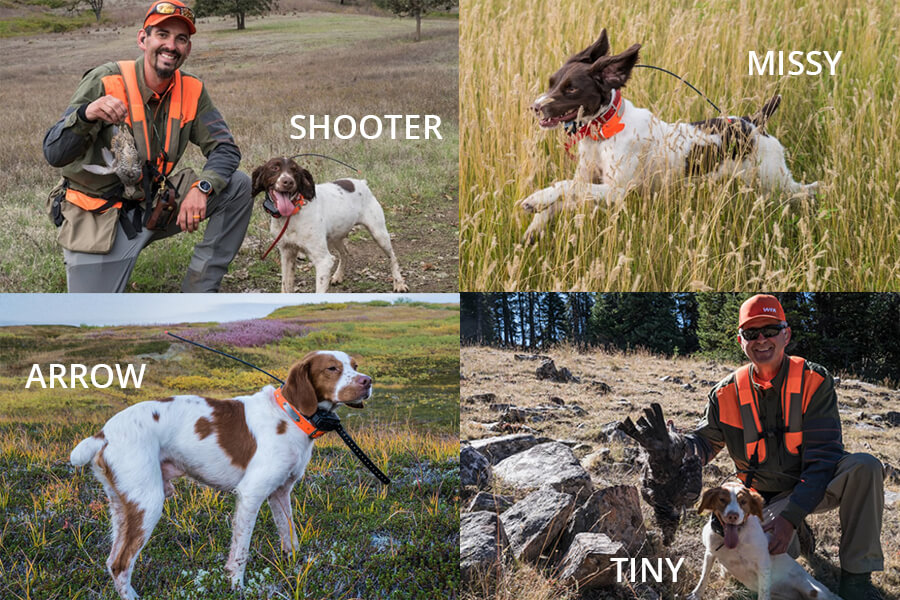
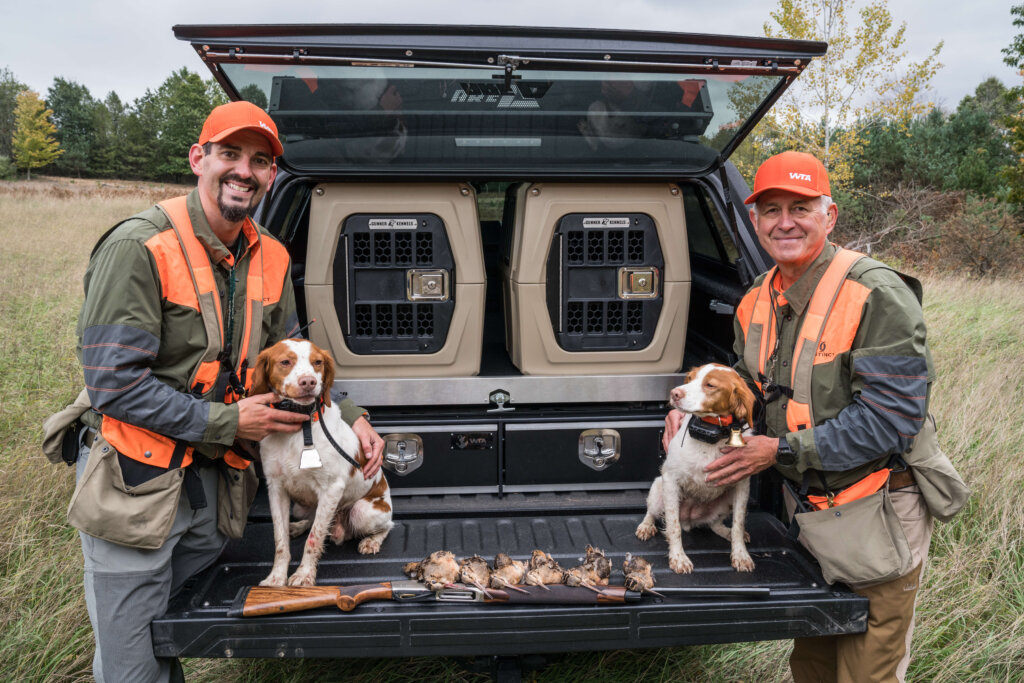
Every hunter has their own opinion on which breed is the best and these beliefs will vary.  Shooter, Arrow, and Tiny are Brittany Spaniels.  We have hunted over this breed for years as it is one Dad and I enjoy for upland hunting, due to the agility and energy they bring to the field.  Our dogs exhibited great versatility by adapting to diverse conditions throughout the season.  Can you imagine what it is like for these dogs to hunt 27 different scents?
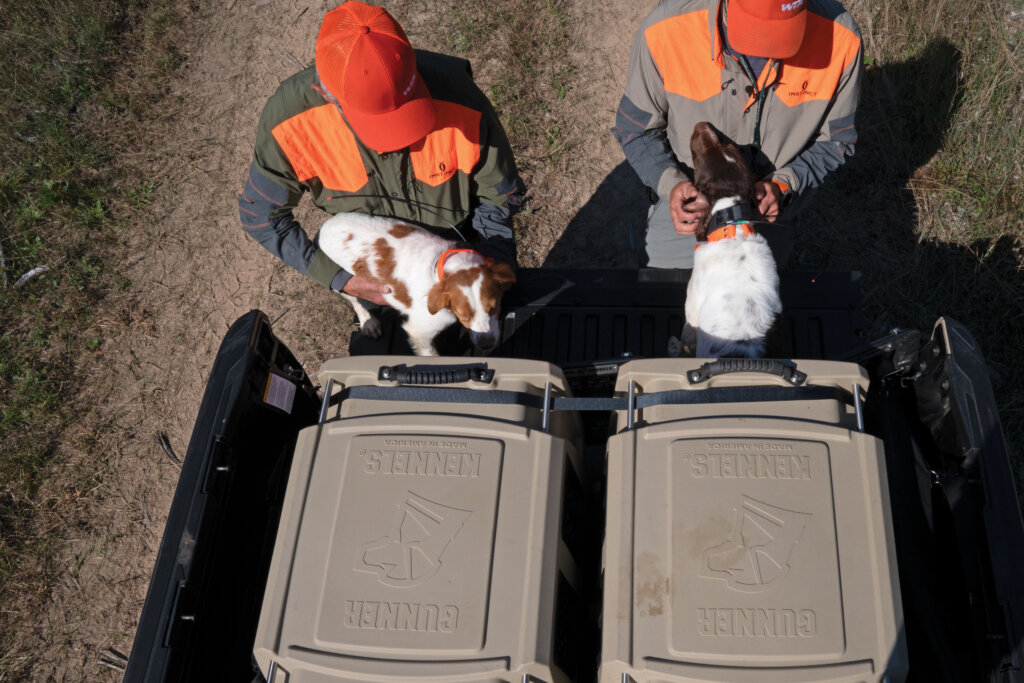
Throughout the adventure, we worked hard to make sure that the dogs were cared for and rested properly. We utilized Garmin Alpha collars to monitor how many miles they covered.  It was quite a season for the dogs as they amassed over 7,000 combined miles of ground while hunting.

It was very beneficial to have a variety of specialty among the dogs.  Arrow is a “Ranger” by nature.  He grew up in Michigan hunting Grouse and Woodcock. His style of hunting personality was suited for the tighter/more heavily wooded areas.  Tiny was the runt of the litter (as well as a sibling to Arrow) and had to be resuscitated early in life by my Dad.  This helped form a lifelong bond between them.  As a result, Tiny is the closest working of the three and does not venture far from Dad.  This trait proved ideal for places like Saskatchewan and where we hunted Blue Grouse in nearly impassable cover.   Shooter is the wide working dog.  He grew up in Texas quail country.  As the “King People Pleaser”, Shooter’s job was to cover ground and hold the birds tight.  There’s cactus in Texas and Shooter’s big, tough paw pads were well suited for places like Wyoming, Arizona, Mexico, and South Dakota.  Arrow and Tiny had to learn from him throughout the trip…there’s not much cactus in Michigan.
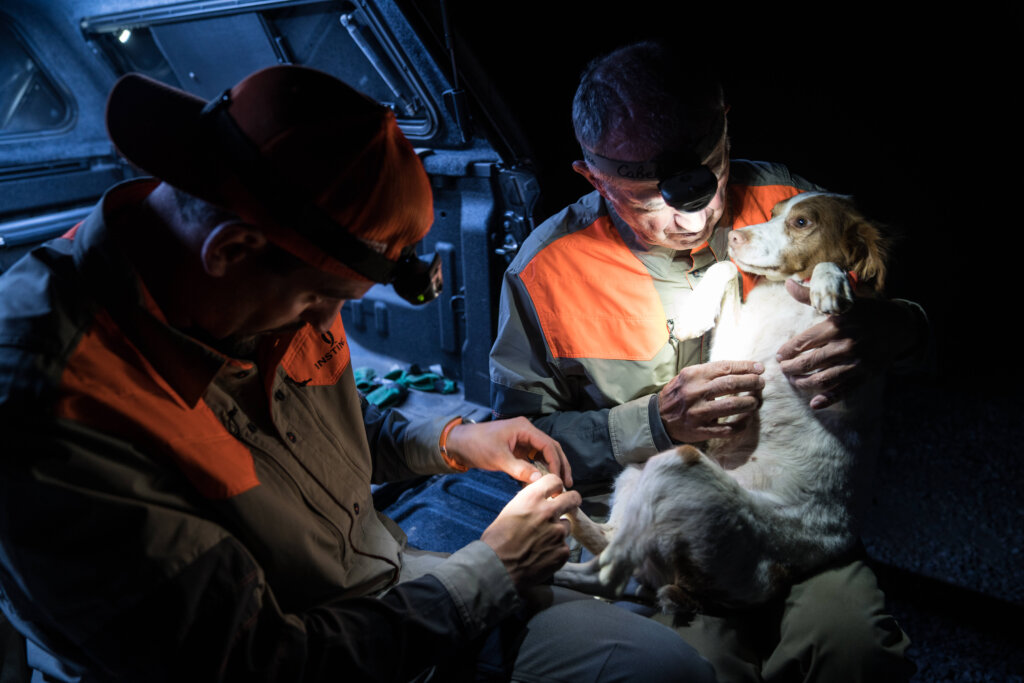
There were several injuries along the way.  Rough rocks, thorns, barbed wire and hidden obstacles all caused cuts, bruises, and muscle strains. Having good bench strength and travel in between destinations helped ensure our dogs were not being over worked.

TIPS:
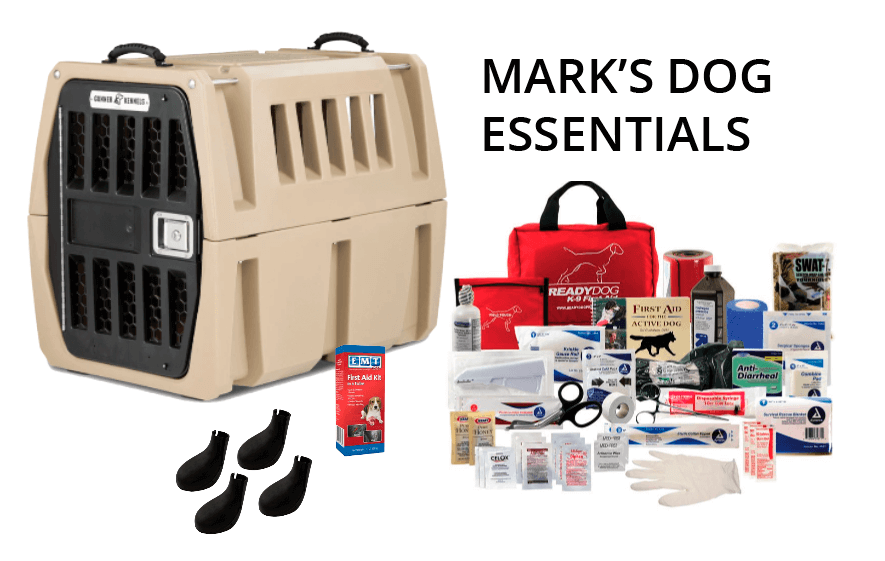
Lewis Dog Boots, Duct and Electrical Tape: Dogs do not like boots as they are not natural.  These boots perform the best of anything I have used to date and with little tape on the boot exterior, stay on the paw well.  Always carry extra boots and some light-weight electrical tape in your vest.

EMT Gel: This product is great for cuts and hot spots.  It will stop bleeding while deterring wound licking.

First Aid Kit: Invest in a quality Canine First Aid Kit that includes a stapler, tools, and medications to be prepared.  Hopefully, you will not have to use any of the contents.  The stapler came in especially handy after encountering barbed wire.

Gunner Kennels – These are awesome.  Crash-tested and indestructible. When you need peace of mind and a low replacement cost/use kennel, Gunner has it figured out.  I also recommend stepping up with the orthopedic pad, tie-downs, and all-weather kit (if you do not have a topper).

GEAR
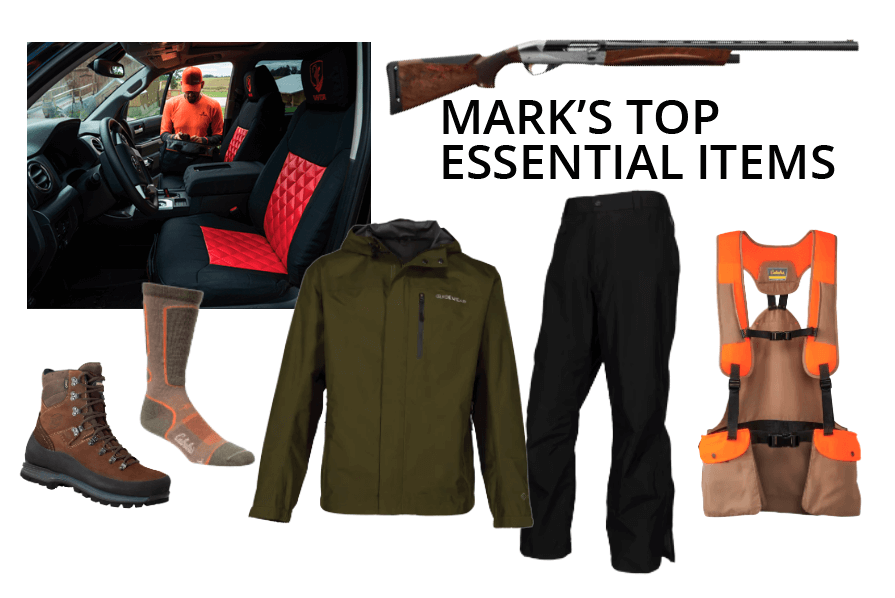
It is difficult to pick my top gear favorite because all gear is a favorite depending on function and end use.  However, if a person had to focus on the top five essential items after dogs are covered, my picks would be:

  1. Meindl Vakuum Hunter Boots — I have worn Meindl’s for so many years and on this expedition we covered 250-300 Miles on foot.  The Vakuums were so versatile that I wore them on every occasion.  They break in easily with a good fit/feel.

  2. Cabela’s Instinct Upland Vest — Light, breathable, plenty of storage and ample storage options make this an essential for covering miles away from the vehicle.

  3. Benelli Ethos 20 Gauge Shotgun and Kent Ultimate FastLead — Most of the gamebirds were small to midsize.  The Ethos is lightweight and fits my pull length so well.  This allows for quick swings adding effectiveness to a size 5, 6, 7 or 7-1/2 Shot specification.

  4. Cabela’s Rainy River Parka & Pant — Extremely durable and endured abrasions very well.  The Gore-Tex PacLite fabric kept me dry and handy enough to pack in my vest when it looked like inclement weather was possible.

  5. Cabela’s Instinct Wool Socks — Good socks and boots go hand and hand. High merino wool content and extra padding in high stress areas like the heel, ball and shin area provide extra comfort.

  6. Other items worth mentioning — Ruff Tuff Seat Covers combined with Weathertech floor liners.  Protecting and keeping the truck clean was important as we spent so much time in the vehicle.  Both brands provide the best protection and are durable enough to last.  A.R.E and Mobile Strong truck bed accessories were a must for all the travel and needed storage space.

LOCATION
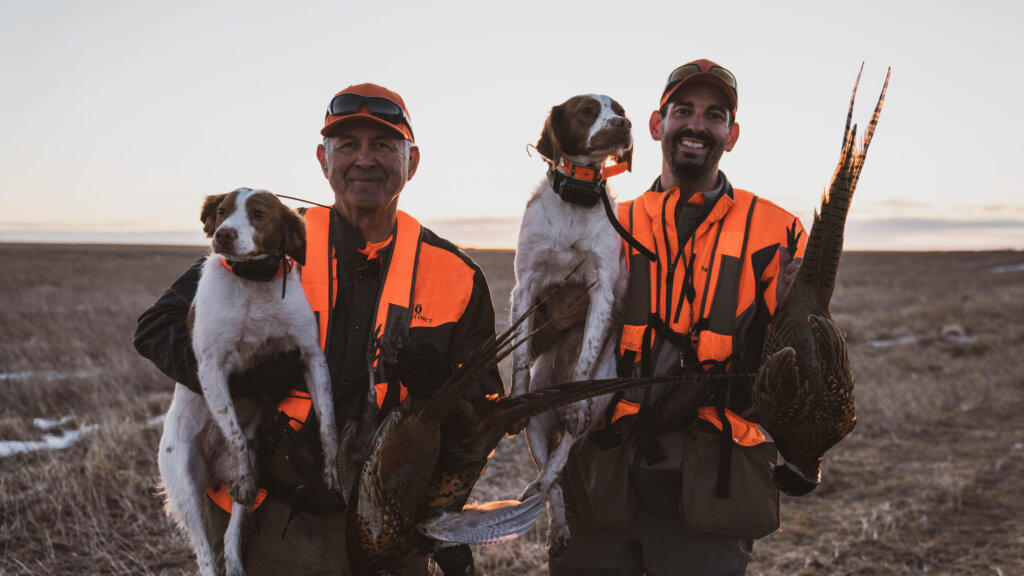
Upland birds can be indicator species of an ecosystems’ health with smaller home ranges, for instance, than waterfowl or elk.  Therefore, year-round habitat health becomes essential to supporting populations throughout a life cycle from breeding grounds, nesting, juvenile development to winter survival.  There are crossovers between the food, water and shelter needs of upland, big and non-game species.  Locate areas with consistency in these three necessities and you will find yourself in birds and other quality animals.

A self-imposed challenge Dad and I made was that we were in search of all wild birds (no pen raised/ preserves).  This added some difficulty and we audibled on two instances.  Eastern Nebraska was hit hard with spring snow and flooding, which made it necessary to make other arrangements for Bobwhite Quail in Kansas where they were less impacted.  Wild Chukar also proved to be challenging in Wyoming, so we ended up in Eastern Oregon with a great outfitter who was willing to help us out.

I will be the first to tell you we could not have done this without the support of the many outfitters, guides, sponsors, and Worldwide Trophy Adventures (WTA) to achieve this feat in one year. WTA consultants are professionals who know where to go for the best experiences. We relied on their knowledge for the best locations and outfitter pairings.  In the eight years WTA has assisted in my worldwide travels, only once was a hunt not successfully completed (Alaska – I was on medevac out of the bush with a serious neck injury and unable to complete the hunt).

If you are an avid bird hunter and desire to attempt the upland slam, it is possible.  Set your goals.  Whether it is a fast track, six to seven years, or a lifetime, guided or unguided, this pursuit is an amazing journey through some of the greatest lands in North America. 
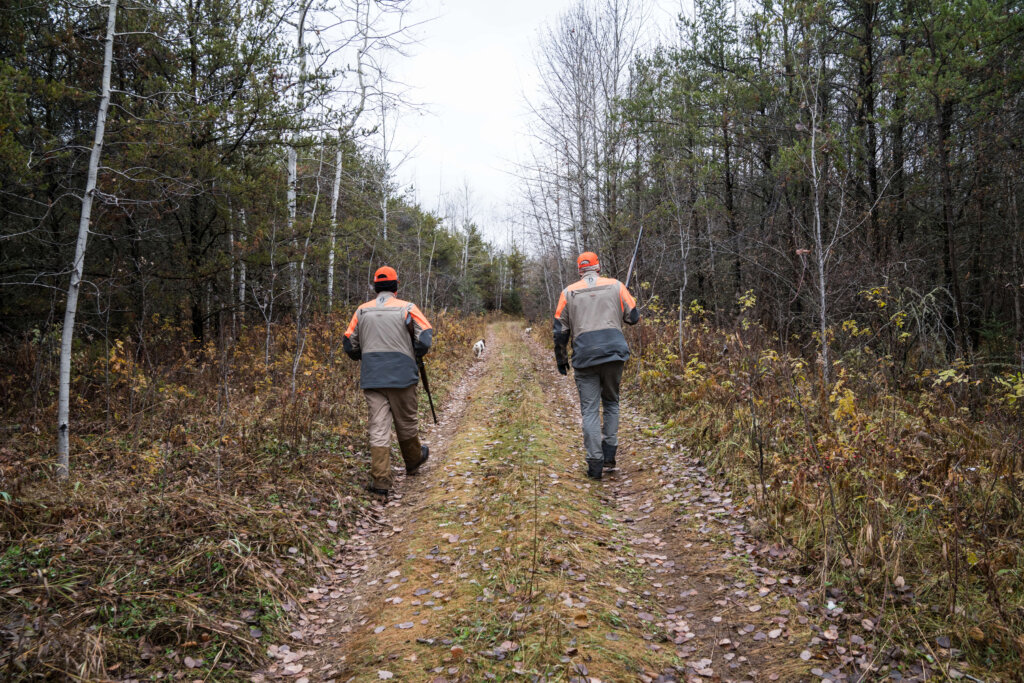
The final piece of advice to pass along is enjoy this with a partner/s.  For me, it was my Dad.  For you, it might mean your best friend, spouse, daughter, or son.  Long hours are spent travelling/hunting. A companion will help motivate, lift spirits and morale along the journey.

I continue to be blessed with the opportunities to hunt all types of game.  If you like what you’ve heard and want to see full episodes of The Journey Within, please click the button below.

Related Articles

New Zealand: A Spring Paradise

New Zealand: A Spring Paradise

The end of winter in the Northern Hemisphere gives me the itch to travel. I often visit Uganda to chase buffalo, before coming home for Spring turkey season. But this year, I switched it up. My wife, Alka, and I headed south to New Zealand for the last few days of February. We hosted two groups of hunters at two of WTA’s top outfitters and we all enjoyed a wonderful trip.

New Zealand offers endless opportunities for non-hunting companions while delivering a world-class hunting experience. Both lodges where we stayed had dedicated hosts who organized daily activities for the non-hunting guests. Shopping, visiting wineries, sightseeing in Mount Cook, jet boating, and many other activities filled the schedule. Once our hunts wrapped up, the guys joined the ladies on several of these excursions. I especially enjoyed spending a day exploring Mount Cook and an afternoon on the jet boat.

After flying to New Zealand and clearing customs, we caught a short flight to Queenstown. Queenstown is beautiful, situated on a lakeshore with steep mountains dropping straight to the water, making for postcard views. The local food scene is excellent. Alka and I tried multiple restaurants, checked out local shops, and rode the skylift to the top of the mountain. It was nice to have a day or two to acclimate to the 13-hour time difference.

We went to our first lodge, got settled in, visited the rifle range, and then had an incredible dinner.

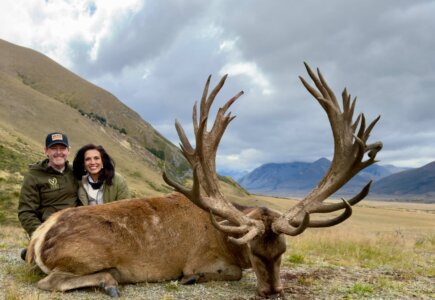
Alka isn’t really a hunter. She has taken a few animals, and somehow I talked her into hunting a red stag. We got out at daylight with our excellent guide, Victor, when the stags were roaring. We looked at a couple of groups and crept over a ridge to glass into a creek bottom. We found stags roaring, fighting, feeding, and moving all over.

We finally decided on a beautiful red stag with a tank of a body, heavy mass, great crowns. And you could tell he was old. He was also dominant. The others gave way whenever he came near.

After a couple of hours, our stag bedded with another away from the others, and we decided to make a move. Victor expertly maneuvered us down into the thick creek bottom with the wind in our faces. Eventually, we moved within 100 yards of where we thought the stags were. After a while, the other stag stood up and repositioned. When he bedded again, Victor wanted to shift for a better angle. We ended up at 65 yards and could see our stag’s antler tips.

We waited 3 hours for the big guy to get up. We roared, threw rocks, raked brush, but he was tucked in and didn’t budge. Finally, in the early afternoon, Victor raked some brush, roared loudly, and the stag stood. Alka quickly got on the .30-06 and with a couple of shots an inch apart to the shoulder, the big stag dropped. Celebration time!

Alka got a super experience with lots of stag action, a great stalk in close, and then the nerve-racking wait for the 525″ stag to stand up and offer a shot.

Over the next few days, our group of hunters took some incredible stags and fallow deer. Toward the end, a few of us wanted to hunt tahr in the southern Alps.

I cannot describe how beautiful and rugged those mountains are, and seeing them from a helicopter is an experience not to be missed. My hunting partner and I both scored on nice bull tahr the morning we went out, and then the chopper pilot took the ladies up for a quick ride to show them the beauty and majesty of the southern Alps. It was a morning none of us will ever forget.

Learn More about this Hunt

Alka and I then packed up and transferred to our next lodge, where we met four other couples, including our good friends Russell and Cindy. Russell and I were going to hunt together, as we have all over the globe, and again, the ladies had a full palette of fun excursions planned.

During the first afternoon, we saw a number of great stags and some incredible fallow. What really excited me was seeing and hearing bugling elk. We returned for a 5-star meal (Be ready to gain weight in New Zealand!) and prepared for the next day. 

Just after daylight, we were on stags and moving around the hills and canyons, glassing and enjoying the views and the number of animals. One of the hardest parts of hunting there is choosing the stag you want to pursue. There are so many, and they are all so different, it’s sensory overload. There are wide, heavy, drop tines, typical frames, and every other antler configuration imaginable.

While glassing some stags in a wallow across a canyon, I spotted a big bull elk up on a ridge. He was so regal standing on the skyline, I kept coming back to him with my binos. I must have talked about him non-stop, because my outfitter and guide Shaun finally said, “We can go after him if you want, but he is about a mile away, and it’s all uphill.” I told Shaun I was ready to go if he was, so off we went, trekking up the mountain.

When we got to the top, we couldn’t find the bull. Huge rock formations blocked us from seeing a number of areas, so we slowly moved from rock to rock, carefully glassing, until we found the big bull on the third set of rocks.

I quickly set up and Shaun ranged the bull at a bit under 300 yards, moving away. Shaun has suppressed Gunwerks rifles available for his clients to use. I knew with that setup, the shot should be easy if the bull presented a good angle.

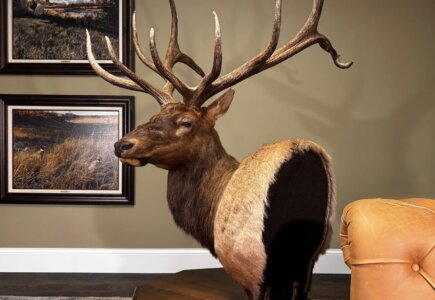
After watching him for a few minutes, the bull swung around, giving me a quartering away shot, and I tucked one in behind the shoulder. The big guy was done. When we got to him, he was way bigger than I thought, with 54″ beams and a huge frame, the 7×7 stretched the tape to 397″. I was ecstatic!

That afternoon, I went along with Russell on an exciting stag hunt where we got in on two great bulls. After a lot of maneuvering, they stepped out of a bedding area at 70 yards, and Russell hammered a beautiful stag with great crowns and kicker tines off both sides. Getting in close on these huge stags is an absolute blast.

The other guys in camp were laying down some great animals as well. On our second-to-last day, we all decided to go with the ladies for a jet boat ride up a glacial river, a short hike, and then a winery stop for apps and drinks. It was a fantastic day of seeing incredible scenery and relaxing with old and new friends.

On our last morning, Russell decided to find a good elk. An hour or so later, we found a big bull working a wallow. Russell and his guide made a stalk, Russ got on the sticks, and the next thing Shaun and I saw through our binos was the big heavy bull tipping over. What a great way to end our superb hunt!

We all headed back to Queenstown in the afternoon, had a great dinner at the Botswana Butchery restaurant, and then it was one sleep and a long flight home.

Gunwerks Long Range University | WTA Team Experience

Gunwerks Long Range University | WTA Team Experience

There’s a major difference between simply shooting a rifle and building a repeatable process that works under pressure in real hunting situations.

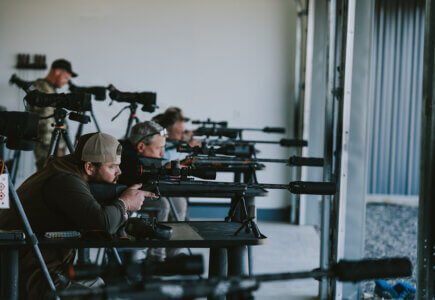
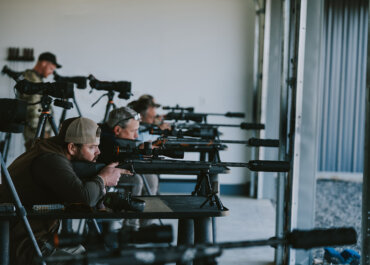
That was the biggest takeaway when the Worldwide Trophy Adventures team attended the Gunwerks Long Range University L1 and L2 courses in Cody, Wyoming. What started as an opportunity to sharpen our shooting skills quickly became something much bigger: a deep dive into confidence, communication, ethics, and the complete shooting system.

At WTA, we spend our lives helping hunters prepare for meaningful hunts around the world. We talk constantly about tags, gear, outfitters, strategy, and opportunity. But eventually, every hunt comes down to a single moment behind the rifle. That’s where Long Range University changes the conversation.

More than Just “Long Range Shooting”

A lot of hunters hear “long range shooting” and immediately think about distance. The course focused far more on consistency, process, and decision making than simply stretching the range.

The Gunwerks instructors repeatedly emphasized that successful shooting is about understanding the entire system:

  • Rifle
  • Optics
  • Ballistics
  • Environment
  • Wind
  • Shooter fundamentals
  • Mental process

That holistic approach was eye-opening, even for experienced hunters and shooters.

Several members of the WTA team came into the class with years of hunting experience and a solid understanding of rifles and optics. But one theme surfaced almost immediately: many of us had developed bad habits over time, simply because we’d never received formal instruction.
By lunchtime on the first day, most of us were already identifying flaws in our setup, body position, and shot process.

Honestly, that was one of the best parts of the experience.

Building Confidence through Process

Confidence is one of the most important elements in hunting. When doubt creeps into your mind during a critical moment, things tend to unravel quickly. Long Range University focuses heavily on eliminating uncertainty by building a repeatable process.

The course blended classroom instruction with live-fire range sessions, translating concepts immediately into practical applications.

Topics included:

  • Rifle setup and maintenance
  • Zeroing procedures
  • Ballistic profiles
  • Wind reading
  • Spotter/shooter communication
  • Prone shooting fundamentals
  • Shooting from improvised positions
  • Tripod and support techniques
  • Real-world hunting scenarios
  • Ethical shot evaluation

One of the most valuable lessons was learning to manage instability instead of fearing it. In the field, hunting shots rarely happen from a perfect, benchrest position. Hunters must adapt to terrain, weather, awkward angles, and time pressure.

The instructors did an exceptional job of simplifying complex concepts into practical, understandable instructions. Nothing felt overly tactical or intimidating. The focus remained on building ethical, capable hunters.

Real…
Arizona’s Deer/Sheep Deadline: That’s a Wrap on the Draw Season!

Arizona’s Deer/Sheep Deadline: That’s a Wrap on the Draw Season!

The Arizona deer and sheep deadline on June 2 marks the end of another application season. There are a few minor draws and point-only periods coming up, but the major deadlines have passed and the draw results have been posted. I hope this is your year to draw an awesome tag! If not, you’ve built another valuable bonus point for your future. That’s the name of the game!

If you successfully drew a tag, you received a call from your dedicated WTA TAGS consultant informing you of your good fortune. If you drew a tag and haven’t booked with an outfitter, this needs immediate attention. WTA’s owner Mark Peterson said it best: “After finally drawing a great tag…don’t screw it up at the end…hire a reputable outfitter!”

Arizona Deadlines

Arizona has a staggered deadline for its limited-entry big game tags. June 2 marks the deadline to apply for deer and sheep tags. For deer, we’re talking about mule deer and coues deer. And for sheep, desert bighorn and Rocky Mountain bighorn are both available.

Mule Deer vs. Coues Deer

Applicants in Arizona are restricted to one deer application. The state considers two choices on the application. You can utilize two mule deer choices, or two coues deer choices, or one choice for each. For example, first choice mule deer, second choice coues deer.

Consider this quick, low-level consultation when deciding how to apply for deer in Arizona. Arizona boasts the best mule deer hunting in North America. It is truly the land of 200″. However, these deer reside in a handful of units with VERY limited non-resident tags. This is a tag you may never draw in your lifetime.

Arizona also boasts the best coues deer hunting in the West. Early hunts in October and November can easily be drawn with 0–3 bonus points and we offer highly successful adventures with our TAGS-endorsed outfitters. The more sought-after late coues hunts in December are more difficult to draw, but the tag can be drawn within 8 years, hopefully sooner.

Desert Bighorn vs. Rocky…

Find the outdoor adventure of a lifetime.

SEARCH
Try ‘Elk’, ‘Colorado’ or ‘Waterfowl’