Book Your Adventure 1-800-346-8747

Consultant’s Corner with Caleb Sutton: Early Season Whitetail Deer

WTA Team
|  

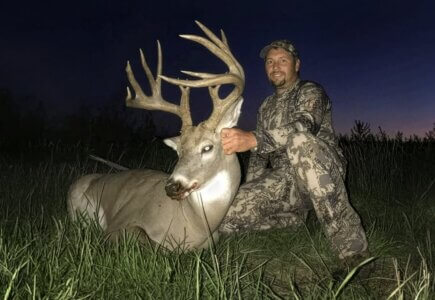
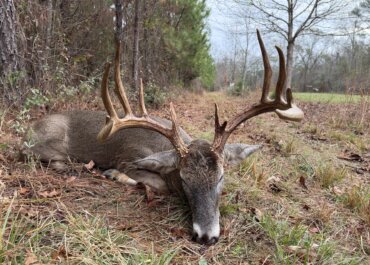
5 Tips to Improve Your Odds Taking Early Season Whitetail Deer

  1. Scouting Locations:

Utilizing aerial photos to predict pinch points, travel corridors, food sources, and water sources to find early season whitetail deer. Use a tool like OnXmaps to make sure you are on public land or have the proper access from the correct landowner. In states where you can bait by setting up bait stations and minerals in the proper locations, feeders and corn should be set up close to some sort of edge habitat where the deer feel protected and can access it very easily. Minerals should be used early on when the deer are trying to get as many nutrients into their body as possible for optimum horn growth; I like to put these on a trail that is really close to a water source.


  1. Trail Cameras

Using trail cameras is a huge advantage because it allows you to see which deer are utilizing a certain food source, water source, or particular trail and the exact times they are using these things. It allows you to pattern these deer which is a critical factor in early season success. If I have trail cameras on water or food, I typically have the trigger set at 2 minute intervals. That seems to work really well, and if it is a location that is getting hit really hard you will be glad you used that delay or else you will have thousands of photos of the same animals. If my camera is on a trail, I like to set it on video mode with a short trigger delay or in burst mode on a short delay. In the early season, these bucks are in bachelor groups, and they will likely be on a trail one after another, so you want to make sure you are taking as many photos or as much video as possible to get all of the deer that are in that particular group. If your delay is too long, you will miss deer.

  1. Low Impact

Being as low impact as possible is paramount when preparing to hunt a big whitetail or while hunting a mature whitetail. If you are in a place where you can glass from a long way off, definitely utilize that and make that an advantage for yourself. If you are running a trail camera, whether on a bait sight, trail, or water source, go in there and pull those cards as sparingly as possible. I would recommend going in no more than once every two weeks, because mature whitetail will pattern you with ease and go nocturnal if something doesn’t feel right to them. The same thing goes for your bait and/or feeders. Leave enough feed to get you through a couple of weeks at a time to minimize your impact.


  1. Stand Location

This will vary depending on weapon, but for the sake of this article we will look at archery and muzzleloaders. For both I recommend areas that are easy for you to get to without disturbing any ground that is anywhere close to where the deer are potentially bedding. Make sure that you have multiple routes into the stand to help you get in there undetected even if the wind changes on you slightly. For Muzzleloader, set ups I like are ladder stands or tripods about 100 yds from the food source, water source, or trail that you are hunting. Always make sure the wind is in your favor and don’t even risk going in there and hunting if conditions are not right. The same rules apply for archery, just at an amplified level. I want to avoid disturbing bedding area at all cost, and I want to be within thirty yards of my desired location and hunting out of a Lock-on or ladder stand. For my early season archery set ups, I like a set up with my back to the west if at all possible; this does two things: it gives optimal lighting in the afternoons and really late in the day with archery gear, and if a deer were to bust you, it is very difficult for them to silhouette you with the sun in their eyes.


  1. Scent Control

Scent control is extremely important whenever you are hunting, especially with early season whitetails. I make sure:

#1 that the wind is always in my favor. I will flat out not hunt if the wind conditions are not favorable.

#2 Your clothes have to stay scent free. I wash them in scent-free clothes wash and dry them by themselves, and after that I immediately put them in a scent free tote or bag and do not take them out until I am in the field getting dressed. I encourage you to shower and wash with scent free wash, too. This will help immensely. Finally spray down with your favorite scent-killing formula spray.


All of these things will help you become a better hunter and put more early season whitetail deer in the dirt.
Recent Articles

Popular Whitetail Deer Hunts

Draw Required
Whitetail Deer   ·
Kansas
From 
$11,000
Outfitter #164
WTA Exclusive
Deer, Whitetail Deer   ·
Oklahoma
From 
$4,950
Outfitter #1085

Related Articles

Apply for Alaska’s Most Coveted Tags

Apply for Alaska’s Most Coveted Tags

Most sportsmen don’t think of the draw when contemplating a hunt in Alaska. That’s because, for most of the big…
Limited-Entry Alaska Dall Sheep: North America’s Pinnacle Hunt

Limited-Entry Alaska Dall Sheep: North America’s Pinnacle Hunt

As the December 15 deadline to apply for Alaska’s most coveted big-game tags approaches, one opportunity stands above all others: limited-entry Dall sheep. If you’ve ever dreamed of pursuing this iconic high-country species, now is the time to apply.

Why this Hunt Matters More than Ever

In the not-too-distant past, Alaska suffered back-to-back-to-back severe weather events that dramatically impacted Dall sheep populations across much of the state, resulting in fewer over-the-counter opportunities and even closures. Hunters have been forced to look to Canada, where hunts are now largely sold out through 2027 and prices have surged beyond $60,000. Even at such outrageous prices, availability is scarce.

This shift has made Alaska’s limited-entry draw areas for Dall sheep one of the most valuable options left for serious hunters. With hunts priced between $28,000 and $35,000, applicants can still access very high-quality white sheep at nearly half the cost of Canadian alternatives.

Exceptional Success Rates

Despite the challenges statewide, the limited-entry regions—managed by very conservative tag allocations—continue to produce outstanding results for the lucky applicants of WTA TAGS:

  • 100% shot opportunity during the past three seasons,
  • 90%+ harvest rates on mature rams,
  • Some of the largest Dall rams in North America.

For those willing to embrace the physical challenge, this hunt represents the ultimate North American mountain adventure.

Why…
Against the Odds: Drawing Back-to-Back Sheep and Goat Tags 

Against the Odds: Drawing Back-to-Back Sheep and Goat Tags 

Drawing a sheep tag with 1-in-5,300 odds is amazing. Drawing a mountain goat tag the next year? That’s lottery luck. That’s why it didn’t seem real when my WTA consultant, Jordan Roche, called me two years in a row with that news!

I’d been working with Jordan at WTA TAGS for about five years, letting him manage my hunting applications in multiple states while I focused on staying in shape for whatever hunts might come through. When he called about the Tok Range Dall sheep tag (the only non-resident permit out of 10 total), I knew it was special.

After the excitement of drawing my tag settled in, it was time to find the right outfitter to make my hunt a success. WTA recommended one of their top partners for that area and handled every detail. My outfitter made it clear: this would be a backpack hunt in some of Alaska’s toughest sheep country. At 64, with two hip replacements, I can’t run anymore. But I can hike. So that’s how I prepared—I hiked mile after mile with a weighted pack, knowing the Tok doesn’t care about age or medical history.

We went in a day and a half before the season opened and spotted a band of 14 rams, including one heavy-horned giant that immediately caught our attention. Then Alaska did what Alaska does best. Weather rolled in, the rams vanished, and we spent the three days scouring valleys and ridges to find them again.

When we finally relocated them, we had to break camp and make a major move. After a full day’s work, we spotted six rams bedding down as evening fell. The next morning, we made our play.

The wind that day was unlike anything I’d ever experienced. It sounded like a freight train roaring up the mountain; gusting, dying, gusting again. At 320 yards, I had to time my shot during the lulls. My first shot went wide in the wind. The second shot dropped him—a beautiful 39″ ram. Honestly, I didn’t care about the number. That’s not why I hunt. I’m in it for the experience and a good animal. This ram was both.

The pack-out was its own adventure. We crossed the glacier-fed Tok River multiple times before Matt showed up with a Korean War-era military vehicle that could go just about anywhere. After nine days in the mountains, that slow, bumpy ride was a step up from travelling another 10 miles on foot. This was a trip I’ll never forget.

When Jordan called me in February 2025 to tell me I’d drawn a mountain goat tag, I actually laughed. “Figure out something for next year,” I told him, knowing the odds of a three-peat were one in a million. But first, it was time to prepare for my goat hunt.

I flew into Homer at the end of August, expecting to start hunting on Tuesday. By Monday evening, my outfitter, Paul, was warning me about the incoming weather. “We might not get you in until Friday,” he said. He wasn’t kidding. We sat through three days of howling wind, driving rain, and zero visibility before finally getting our chance.

Paul operates from a landing craft that serves as a mobile base camp. But getting from sea level to where the goats live? That was the hardest climb I’ve ever done, and I’ve completed five sheep hunts.

It was only 1,500 vertical feet, but every step came wrapped in devil’s club thorns, soaking brush, deadfall, and rain-slicked cliff bands. We hiked for what seemed like an eternity before stopping for the night to set up camp.

The next morning changed everything. Once above that coastal jungle, the alpine opened up to reveal why we’d suffered through that brutal climb. There were mountain goats everywhere. Good billies. The kind that makes you forget about devil’s club and exhaustion.

I took my billy on August 30, the first day of actual hunting after being sidelined due to weather. While packing him out, we witnessed something I’d never seen: ravens harassing a billy goat. They would swoop within inches of his head, and he’d swing his horns, trying to knock them away. Paul had told me about this strange relationship between ravens and goats, but seeing it firsthand was incredible.

The trip down gave us one more show. A black bear, fat from gorging on berries, army-crawled through the blueberry patches, entertained us from 400 yards away. I had a bear tag, but watching him was worth more than any trophy. Crossing salmon-choked streams on the way out completed the full Alaskan experience.

Both hunts worked because of solid preparation and connections with the right team. Jordan, my WTA consultant, had been helping me strategically build points and select units for years. When the draw results came through, WTA’s network meant proven outfitters were ready and handled every detail. They provided thorough gear lists, arranged logistics, and coordinated air charters. Everything was dialed in.

Some guys chase record books. Others chase hunting milestones. I finished my slam in 2019 with a desert ram, but what excites me most these days is the experience—the hunts that test you, humble you, and stay with you long after the pack is unloaded. When you work with the right people and put in the preparation, amazing things can happen. Jordan’s already working on my applications for 2026, so we’ll see what adventure comes through next.

Contact WTA TAGS to learn more about drawing the tags of your dreams: 1-800-755-8247

Get Started with WTA TAGS

Get Trip Specials & Cancellations,
Right Where You Want It.

No spam. Just the good stuff. Opt-out anytime.