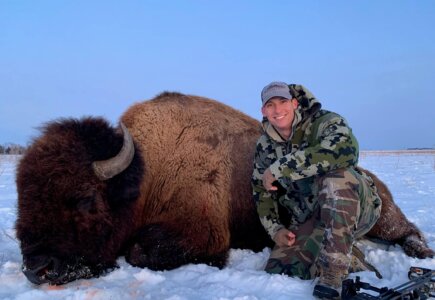
Rifle Coues Deer –“The Grey Ghost” by Mark Peterson
Coues whitetails are a small subspecies of whitetail deer; they are found in Arizona, New Mexico, and Old Mexico. You can’t hunt Coues deer like typical whitetails, as the desert country they call home is too big and too wide open. Hunters have got to be able to glass well, stalk long distances, and be able to take long shots. The Coues deer have developed a reputation of vanishing from sight as quickly as they have been seen and because of this they are often referred to as the “Grey Ghost”. Famous Author and Hunter Jack O’Conner has written that the Coues deer is “the most difficult of all deer to kill”.
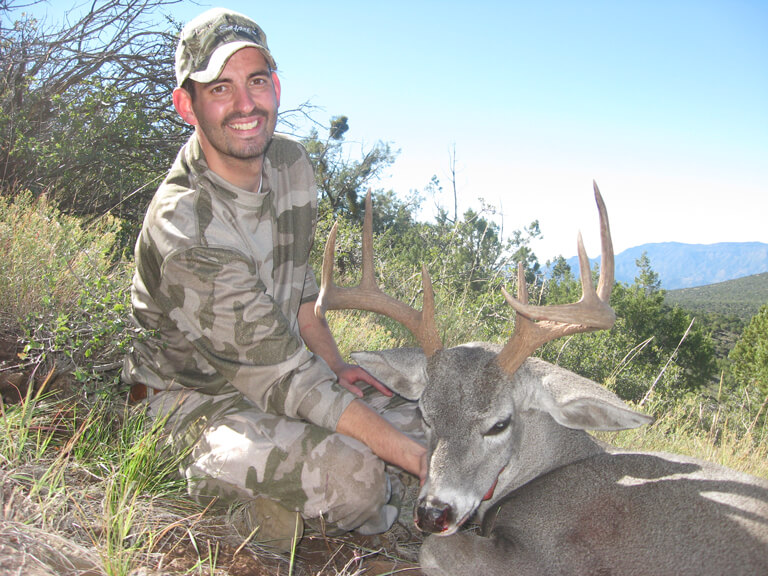
I have been fortunate enough to hunt Coues deer three times so far. After my first hunt I was hooked. I was fortunate to draw a tag in Arizona in 2009. I drew this tag using Cabela’s TAGS at the time, which of course is now WTA TAGS. Eric Pawlak was my consultant and after talking with him about my portfolio I added Arizona Coues deer, and as luck would have it, I drew the first year. To this day Eric is still my TAGS Consultant.
The Arizona hunt was what I like to call a traditional Coues deer hunt; Get up high and start glassing. I was lucky enough to draw a very good unit that had high density and quality. It didn’t take long for us to start turning up deer. I remember being fascinated by how we could spot just parts of a deer moving and then, like a ghost, they would disappear. But, if we stayed at it long enough, we could glass the deer up again as it would continue to move along the mountain side. Right at last light of the first day hunting, we turned up a big buck, but it was too late to make a move on him. So we glassed him until dark, with the plan of coming back in the morning and trying to glass him up again. I remember hardly getting any sleep that night as I was hoping that the buck wouldn’t move too far.
As luck would have it, we glassed him up again the following morning right off the bat. He had gone about ½ a mile but still was in the same draw. With plenty of time we made a plan and started our stalk. We were able to get within 350 yards and get set up for a shot across the canyon to where he was on the opposite hill. Being a Michigan boy, this was, at the time, the longest shot I had ever taken. After getting that first shot out of the way as a practice, I remember telling my guide I just wanted him to raise his head up after the miss. I made the 2nd one count and down he went. Another real eye opener to me, about the terrain, was how long it took us to walk from the spot I shot to where he was laying. It was a 350 yard shot but it involved us going down and up which took about an hour. What a great ending to my first Coues deer hunt!
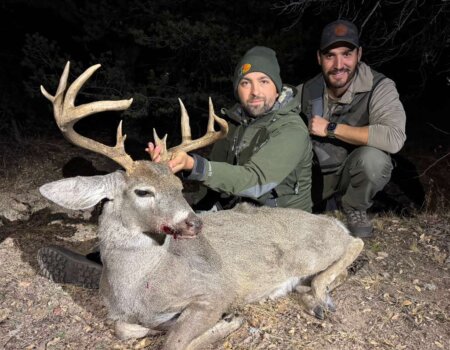
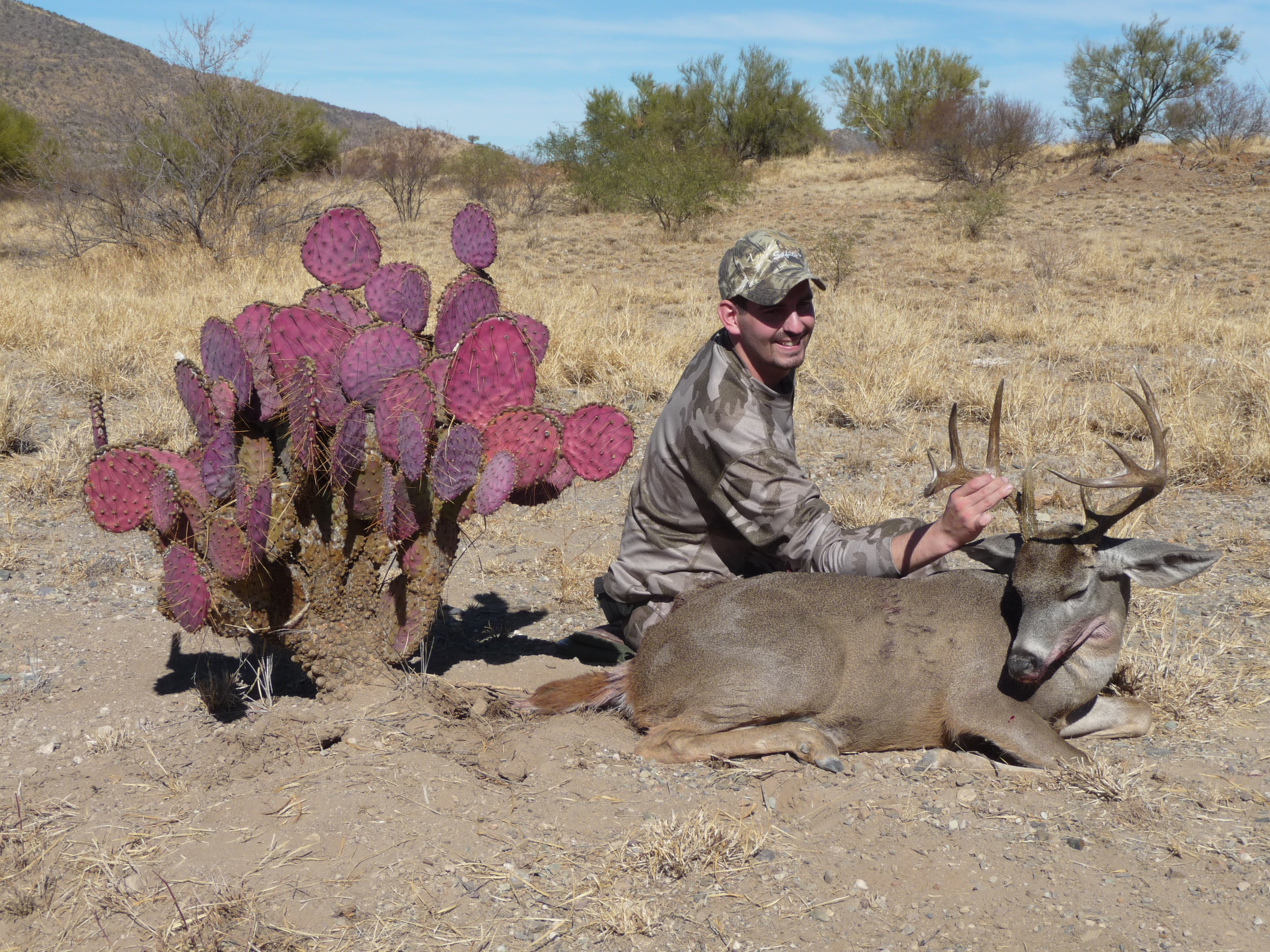
On my 2nd Coues deer hunt, I traveled south of the boarder into Sonora Mexico. The ranch we were hunting was very mountainous, so it was perfect Coues deer habitat. Our trip was in the middle of January and on this particular ranch the rut was in full swing. Anywhere we saw a doe there would be a buck close by. By far, this was the most fun I have ever had glassing. Every time we would set up high glassing, down on the desert floor we would see bucks chasing and pushing does all over. This made for some non-stop action. On day three we climbed up high on the side of a hill, which allowed us to glass for miles in either direction. There were also some water troughs for cows that we could see. The Coues deer also used these as it was their only water on this ranch as the rivers dry out except for during the rainy season. A couple hours after sunrise, we caught a doe coming to get a drink, and not far behind was a buck. It took one quick look to realize he was a no brainer shooter. We made a quick game plan and down the hill we went and up onto a little pop up hill. During this time, the buck and doe stayed in sight. As we topped the pop up hill, we set the pack down and got ready for the shot. At just over 400 yards it was over almost as quickly as it started. Upon walking up we realized just how big this buck was, as he measured 122 inches, and was a monster Coues!
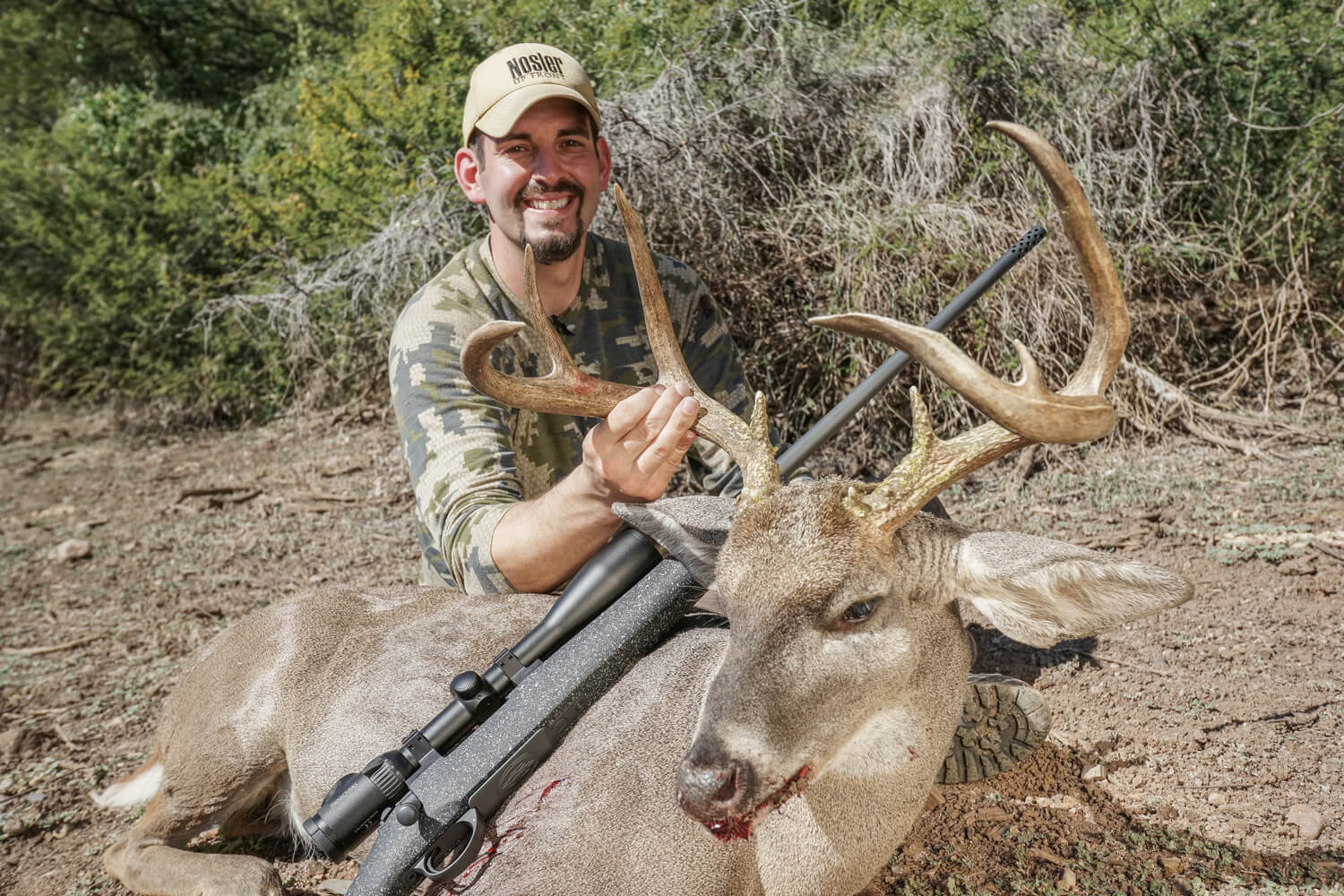
On my last Coues deer hunt, I went back to Sonora, but this time to a different ranch. This ranch had a history of producing big Coues bucks. The difference on this ranch is that it was extremely thick and had a series of ponds that were put in for the cattle. The thickness of the vegitation made glassing from high above problematic, as it limited our sight path. So our plan of attack was to get up high and glass in the mornings and evenings. But mid-day we would sit the waterholes and try to catch a big buck coming in for a drink. Temps would get up in the high 90’s during the day, so water was a must for the deer. We had success seeing bucks glassing but they were all young bucks. On the third day, we choose a smaller pond to sit at, but it was protected by thick brush. It didn’t take long for the sweat to start pouring; about 2 hours into the sit we caught a glimpse of movement. Then, just like a ghost, this big buck appeared out of the brush and started for the pond. It didn’t take me long to realize he was a shooter. I may have got a little excited as I had a shot off instantly. As we made our way over to him, the width he had on his rack stood out. It isn’t very common for Coues to get as wide as he was. Another great Coues buck down!
I can honestly say that Coues deer hunting is one of the most enjoyable hunts that I have gone on. It is also a hunt that I plan on doing many more times in the future. If you’re looking for a great hunting experience, make sure to look into Coues deer hunting. WTA offers hunts with the best outfitters in Mexico. We could also customize a TAGS portfolio for you that includes applying for Arizona Coues deer. Both are amazing hunts and even better experiences.