Muzzleloader Quebec/Labrador Caribou, by Mark Peterson
In his quest for the North America 29 X 3, by taking each with a Rifle, Muzzleloader & Bow, Mark Peterson shares his hunt stories in a series we call “Triple Threat”.
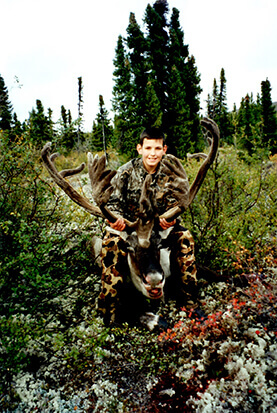
It had been 22 years since my dad took me on my first big game hunt outside of Michigan. I remember, all of those years ago, counting down the days until we could leave. I had just turned 12 and the hunt was a caribou in northern Quebec. Leading up to the hunt, we watched every video we could find on Caribou in Quebec. In doing so, it built up my anticipation even more as I learned about the caribou’s migration and I couldn’t wait to experience it. As it turned out on that hunt, those years ago, we were a bit early and the temperatures were warm. There was no migration in sight. We were able to take a couple of nice caribou on the trip but saw less than 20 on the entire hunt. I learned a lot of life lessons on that trip, and it also helped cement the passion for the outdoors that I have today.
Fast forward 22 years later. I learned, from SCI, that the government in Quebec was going to be shutting down caribou hunting after the 2017 season. There are rumors that it may open up again in the future, but the same rumors had been circling when Labrador closed its caribou hunting in 2013. Rather than chance missing this 2017 hunt, I spoke with WTA Consultant, Jason Berger, about getting a hunt booked for this fall. I remember Jason, in previous conversations, saying he had a great outfitter in northern Quebec. I booked to arrive the last week of the season which should have increased my chances of seeing the caribou migration. As the weather, later in the year, tends to be worse, these conditions should get the caribou moving south.
As the trip approached, I kept in contact with how the outfitter and his hunters were doing and everything I heard was all great news. His hunters were all tagging out in the first couple of days. As the 2nd week of season began, I heard that the migration was starting and hunters were starting to see large number of caribou. This was great news but also a little concerning as I was still a month away from making my trip north. Luckily, the migration continued on, and every day it was stronger than the last. The group of hunters in camp, the week before my arrival, all tagged out by their third hunt day. One of my good friends, Brandon, was in camp and he kept me updated. He said they were seeing hundreds of caribou every single day as the group fished in the river in front of camp. With this news I was very optimistic as I packed up and started my travel north. It took two days of travel from Michigan to camp. First we had an overnight in Montreal and then a couple of charter flights, the last of which was a float plane, taking us to the shore alongside of our camp.
The weather on the flights in was starting to turn from fall to early winter. As it worked out, all of the new hunters for my hunt week were able to get into camp. But, there were six hunters from the previous week who had to wait a couple of extra days for a break in the weather to get out. This gave us a good chance for those hunters to share their stories with us and help us get ready for our hunt.
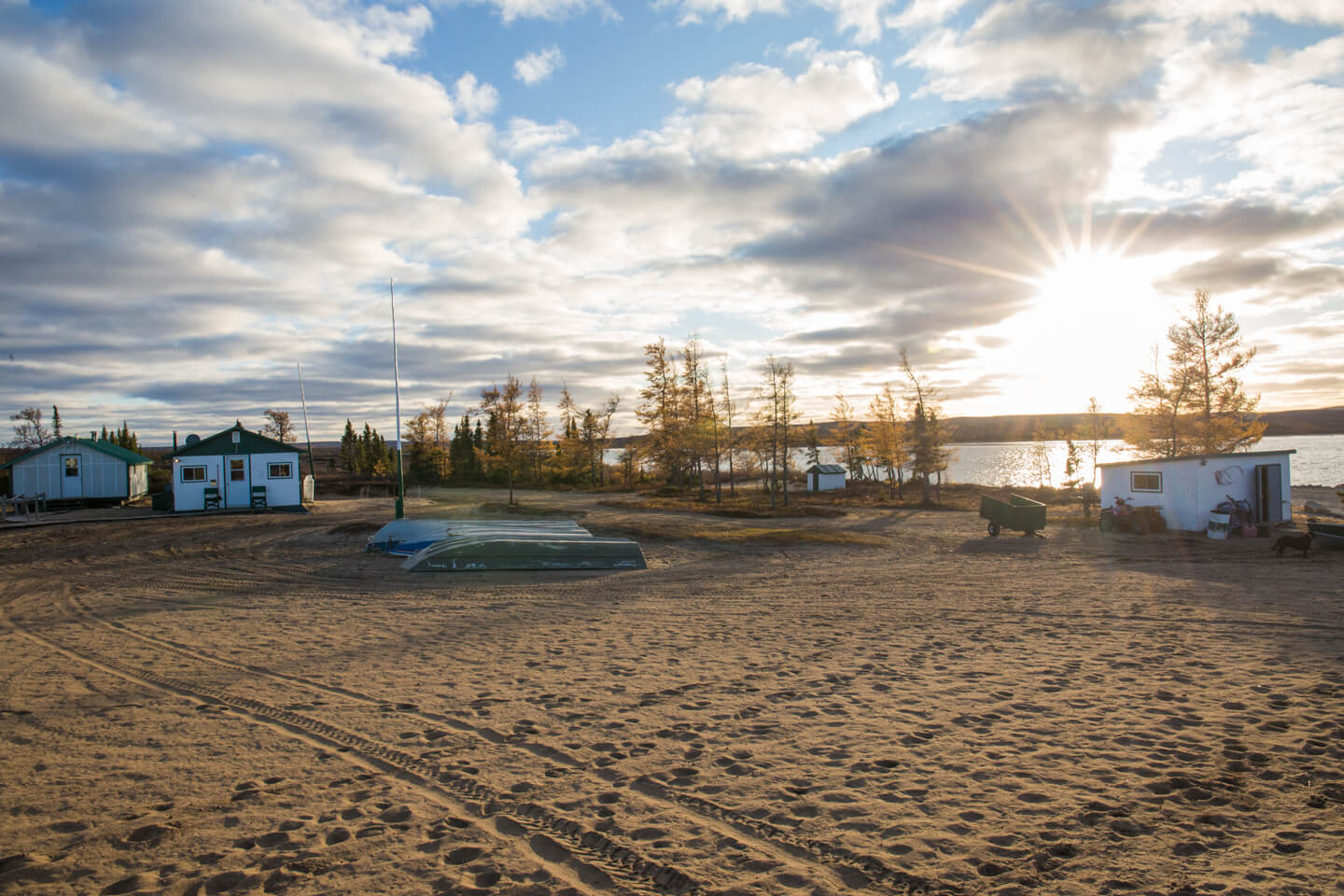
As we woke up the first morning of our hunt, it was raining and there was a steady wind of about 25 mph, with gusts up to 50 mph. This limited our options for travel on the river, so after talking to Louis, our guide, we decided to take it slow that morning and see if the storm would break. As we were relaxing in camp, Louis spotted a group of bulls come over the ridge on the other side of the river and bed down. After looking at the group thru the spotting scope, there was a “no doubt shooter” in the group. We decided to load up in the boat and make the trip across the river in the hopes of getting a shot at him.
McKenzie Sims, a friend from various hunts together, was my hunting partner for the week and was up first. We loaded up in the boat and, as expected, it was a bumpy trip across the river but we made it. Once we made it to the other side, we secured the boat and McKenzie got his gun and pack, and moved out to stalk the caribou. The rain was coming down sideways, which made it miserable, but also it relaxed the caribou. We shifted our position and came up on them downwind. With the way that the hill laid out, we were able to get within 100 yards before they could see us. Upon popping over the crest of the hill, the caribou saw us and jumped up. McKenzie has spent a lot of hunting time in the field, and he instantly hit the nearest rock and made a great shot on the biggest bull in the herd. As we loaded the caribou in the boat to go back across the river, the storm was gathering intensity and I could tell it might be awhile before we were able to get out and hunt again on this trip.
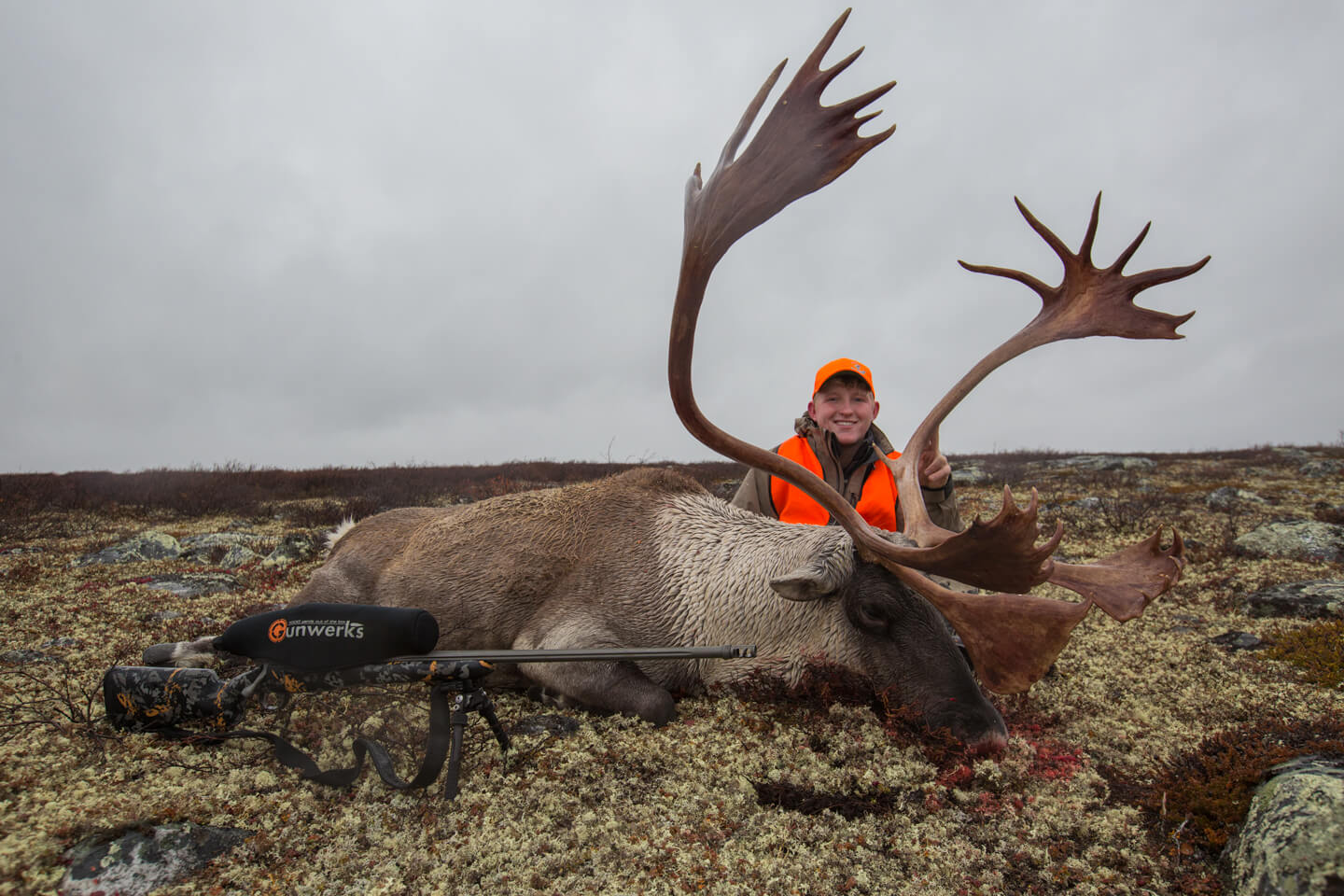
The rest of day one and all of day two were cabin days, as the weather was too rough to make it out on the river. During this time, some of the other hunters in camp had success on finding big bulls in the hills behind camp. We stayed in camp as the “sideways” rain was too much to go out in with our cameras for any attempt to film.
To our surprise we woke up on the morning of day three to sunny skies and hardly any rain. After a quick breakfast, we jumped into our boat and headed down river. We traveled about 5 miles before we secured the boat and climbed up the riverbank to start glassing. Instantly upon climbing up the bank, we saw two big groups of caribou that each contained over 100 animals. They were about 4 miles away but were traveling a ridgeline from north to south. I know that once a hunter gets behind caribou walking, he has no chance of catching up to them. We took off at an angle to cut the herd off, and we gave it our best shot but showed up about five minutes after the group had passed the spot we were targeting. It was amazing to see such a large group moving. We did glass up big bull in the group, but again there was no catching him.
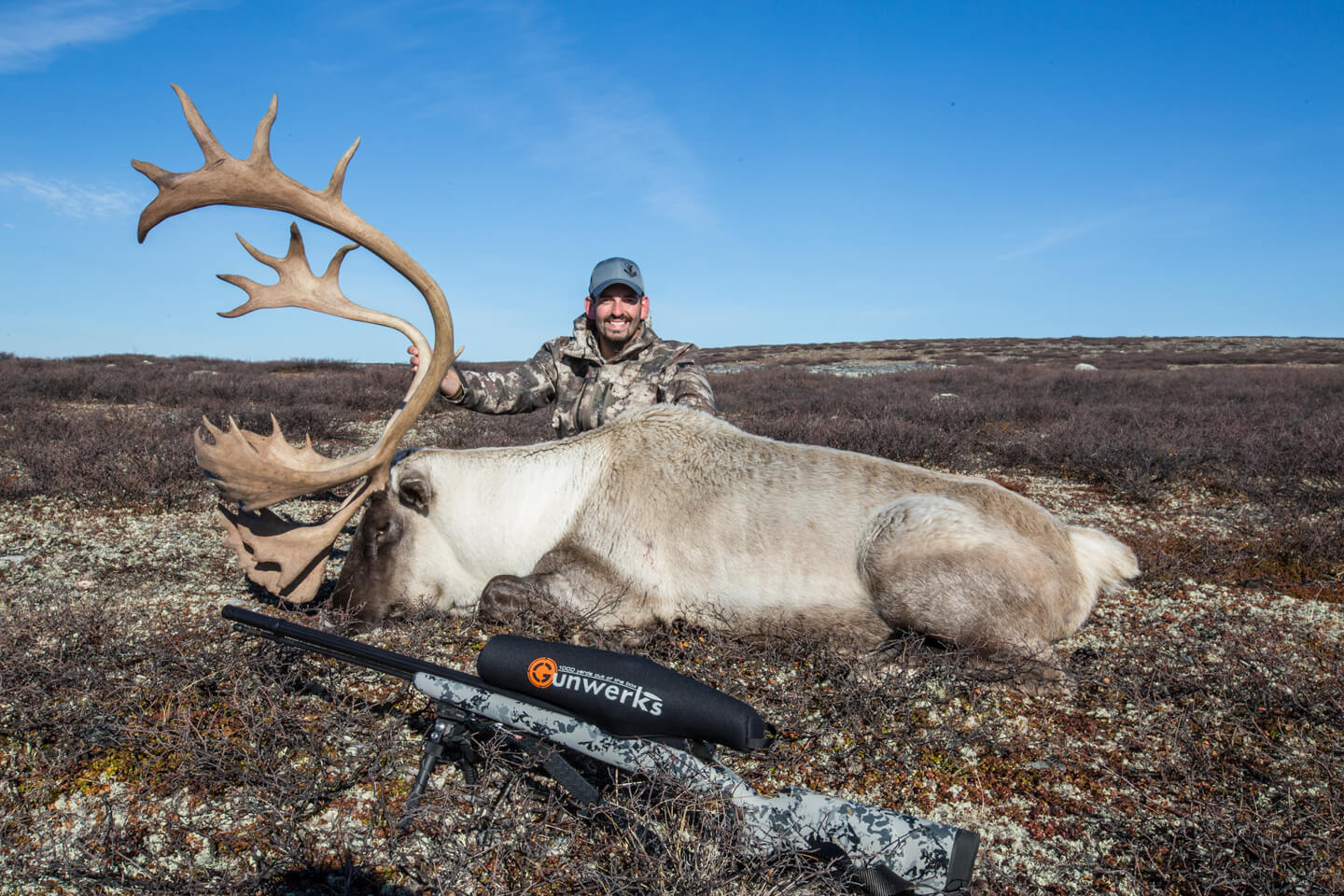
Normally missing a group like that would be very discouraging, but on this day it seemed like every hillside was moving with caribou. We glassed north on the same ridgeline that the previous group had walked, and saw that there was another large group heading our way. At first it didn’t look like there were any big bulls in the group, until the last of the herd topped the hill. The last bull in the group was a giant double shovel bull and they were heading our way. We moved up a couple hundred yards and got setup. The group continued to take the same path as the previous herd. They just kept getting closer and closer. I started ranging at 250 yards, and then 175 yards, then 100 yards and the herd just kept getting closer. I was all set up on a rock waiting for the bull to clear. It took a few minutes, but he finally cleared and my muzzleloader barked. He was a great old bull!
This was much more of a trip than I could have ever hoped for. I was able to share camp with a great group of hunters, the camp was amazing, and the guides and cooks were awesome. This was the first caribou migration I had ever seen. My Quebec caribou hunt was truly a great experience. I can only hope that Quebec caribou hunting will be opened back up soon. When it does, I will be back up, with my bow, to take my final Quebec/Labrador caribou.