I ended my most recent Argentine hunt with a Chiloé Wigeon. This species put me at 10 of my targeted 13 species for Argentina. On the evening of that hunt, we discussed the best ways to target species number 11, the Black-Headed Duck. They are more challenging to hunt than the previous 10 species. The Black-Headed Duck is a very early flying duck, and they don’t come in to decoys. They spend the majority of their days feeding in heavy reeds. We decided our best chance for success was to hunt early over larger water, and be prepared to take a shot at the very first light the morning provided.
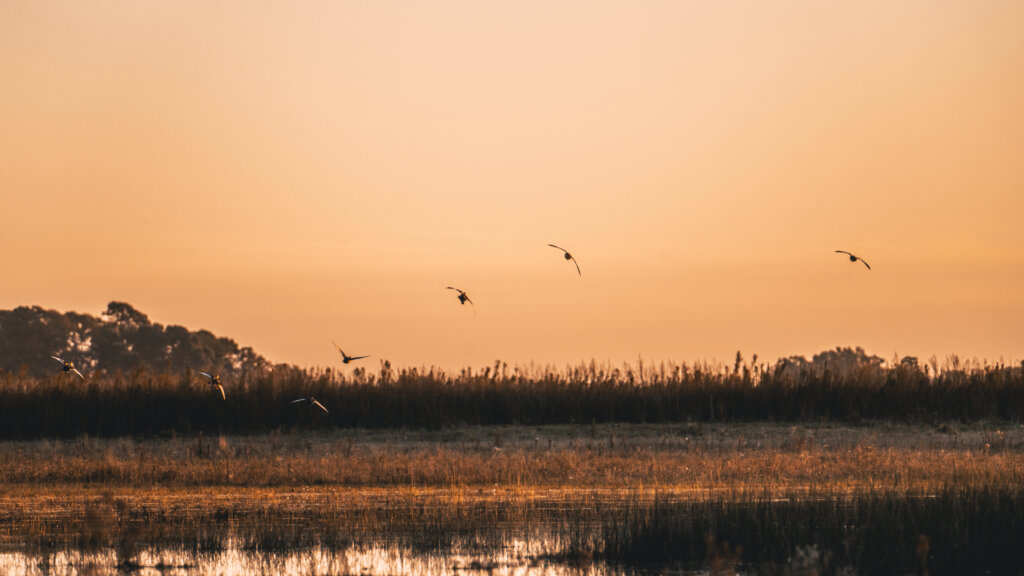
It was pitch-dark when we left on day four of our Buenos Aires Provincial hunt. We took our longest drive from the estancia to another large lake surrounded by reeds. The wind was perfect for the location of this lake’s blind. As the sun cast its first light across the lake, ducks were diving all around us. I quickly spotted two potential Black-Headed Ducks and dropped them both off to my left. I wasn’t able to initially identify them as Black-Headed Ducks with absolute certainty. As the sun rose and made the area brighter, I anxiously focused my binoculars on the pair I had knocked down. To my delight, I had dropped a pair of Black-Headed Ducks, one of which was a bright black male. Number 11 was down! Only three species in Argentina remained.
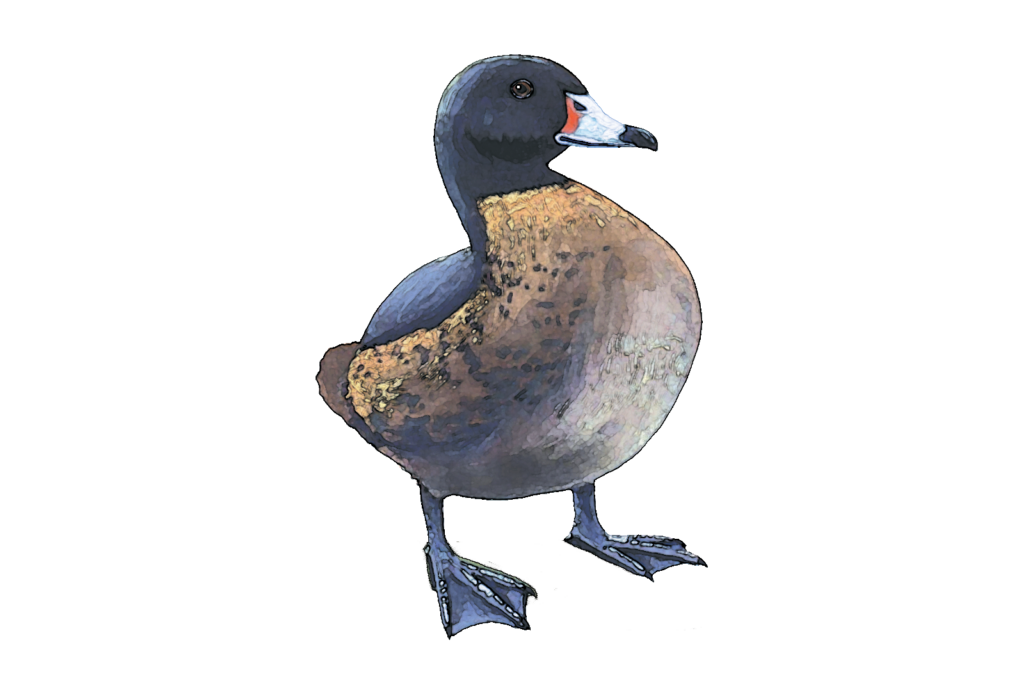
The Black-headed Duck is found exclusively in southern South America and is considered a diving duck that dabbles on water plants and insects. They are smaller in size than other ducks in this area. The darker drake has a black head and mantle with a paler flank. The hen is pale brown overall. One unique characteristic of this duck is that the hen does not build her own nest. She lays her eggs in the nests built by other ducks, earning her the local nickname of cuckoo duck. The Black-Headed Duck’s conservation status is also considered “of least concern.” The action was again fast and furious as I added Pintails, Teal, Fulvous, and White-Faced ducks, plus a couple of wigeon.
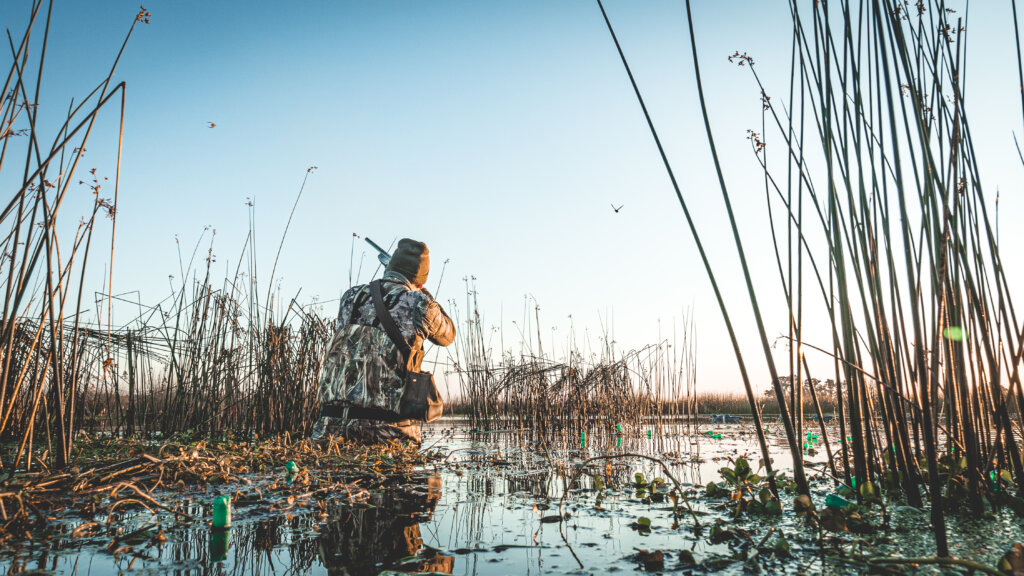
With the morning hunt drawing to a close, a pair of Red Shovelers flew high overhead and landed about half a mile away. Since I hadn’t taken a shot at this species yet, I grabbed my shotgun to try to jump shoot them. Justin and Lee followed as I searched for them in the reeds. They were nowhere to be found. Disappointed, I looked back in the direction of our blind, and decided it would be a quicker hike if I continued through the reeds and waded towards the blind.
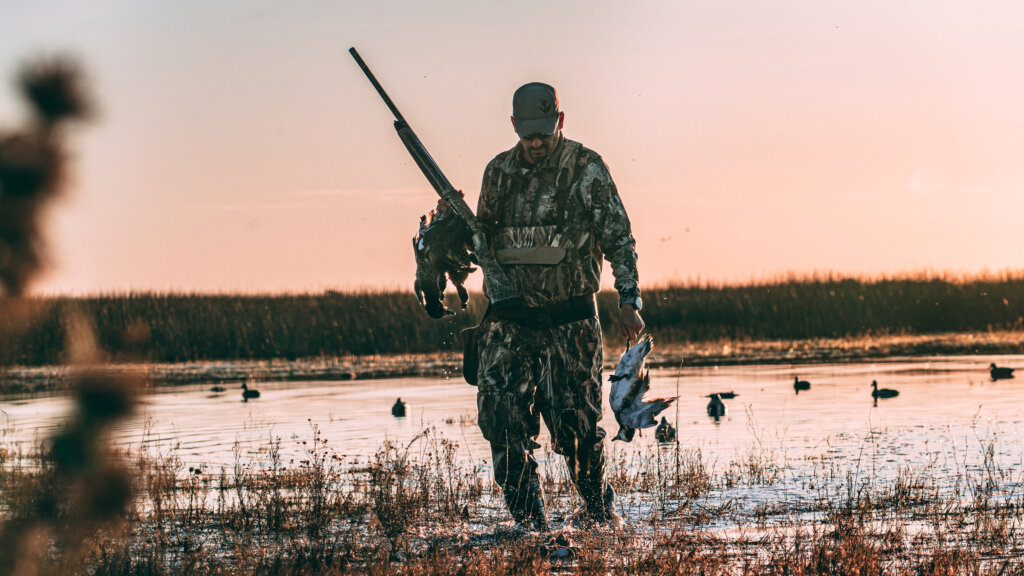
I took my shell belt off and held it above the water while I started my trek back. About halfway to the blind, I looked up and saw a drake Red Shoveler coming fast from left to right. I pulled up and instinctively swung to my right, aiming just ahead of him. I lead him just right and dropped him! He fell about 50 yards away. I looked back to see that Lee had his camera up. He captured the entire sequence. Number 12 was in the bag. Matt was hollering in excitement from the blind, nearly as excited as I was.
The Red Shoveler is a distinctive, pretty duck. Another native species of southern South America, they have a spatula-shaped bill and a green speculum. Drakes vary in color from deep red to paler shades of red. The Red Shoveler is also listed as “of least concern” conservation status.
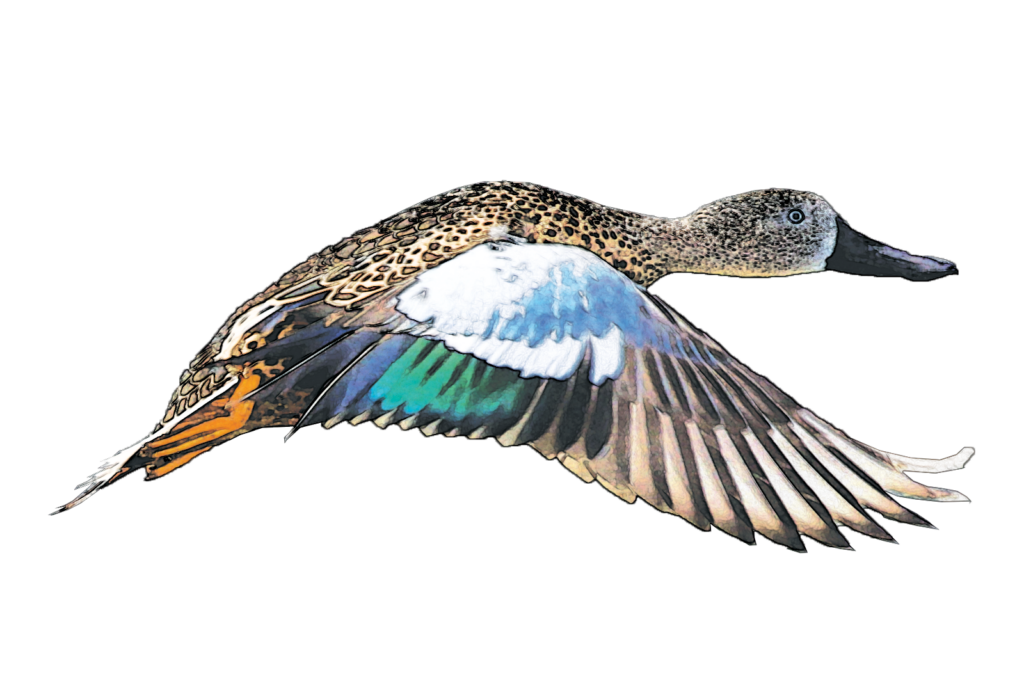
The Red Shoveler put me at 12 of the 13 targeted species in Argentina. The only species remaining was the Brazilian Teal. Two weeks earlier the estancia’s ponds and lakes were full of them. Unfortunately, they are quite sensitive to cooler temperatures. A cold snap just before we arrived moved most of them to slightly warmer areas north of where we were hunting. Brian and Maxie assured me that flocks of Brazilian Teal would be back in a week or two as the weather warmed back up. I wasn’t able to wait around an extra week for them to return, and I hadn’t worked a second trip to Argentina into my plans. I decided my best option was to hunt hard and hopefully get lucky and find a straggler.
Matt left the estancia following that morning hunt to visit a pigeon outfitter on the other side of Argentina. He hoped they would be an acceptable addition to WTA’s portfolio of Argentine outfitters for booking hunts. If you’re looking for hunting options in South America, give WTA a call and work with one of the experienced consultants. They’ll hook you up with some phenomenal hunting. Whether it’s pigeon, waterfowl, or another species, check out WTA for the best outfitters around the world!
I decided to grind it out and concentrate on teal ponds. Hoping for a lucky afternoon hunt, I set up on a small pond that’s known for holding teal. I shot Silver Teal, Ringed Teal, and Speckled Teal. It was a great hunt, but not a single Brazilian Teal showed up. I headed back to the lodge that evening with a single target species left to wrap up my 13 for Argentina. Dinner was great, as always, but I couldn’t help worrying about the Brazilian Teal. Another trip to Argentina to complete my South America Waterfowl Slam was a concerning possibility. Needless to say, I didn’t sleep well that night.