I have been a turkey-hunting addict for 30 years and have travelled all over the U.S., Mexico and New Zealand to hunt these beautiful birds. One of my absolute favorite destinations to pursue hard-gobbling Easterns is the Bluegrass State of Kentucky.
Kentucky has great turkey numbers, and depending on the year, the population is estimated at 330,000 to 440,000 birds. The season opens the Saturday closest to April 15 (In 2022 that will be April 16.) and runs for 23 days. Birds usually gobble well during this timeframe, and by the end of season most hens are on the nest. There is all-day hunting, a two-bird limit and license and tags are available over the counter.
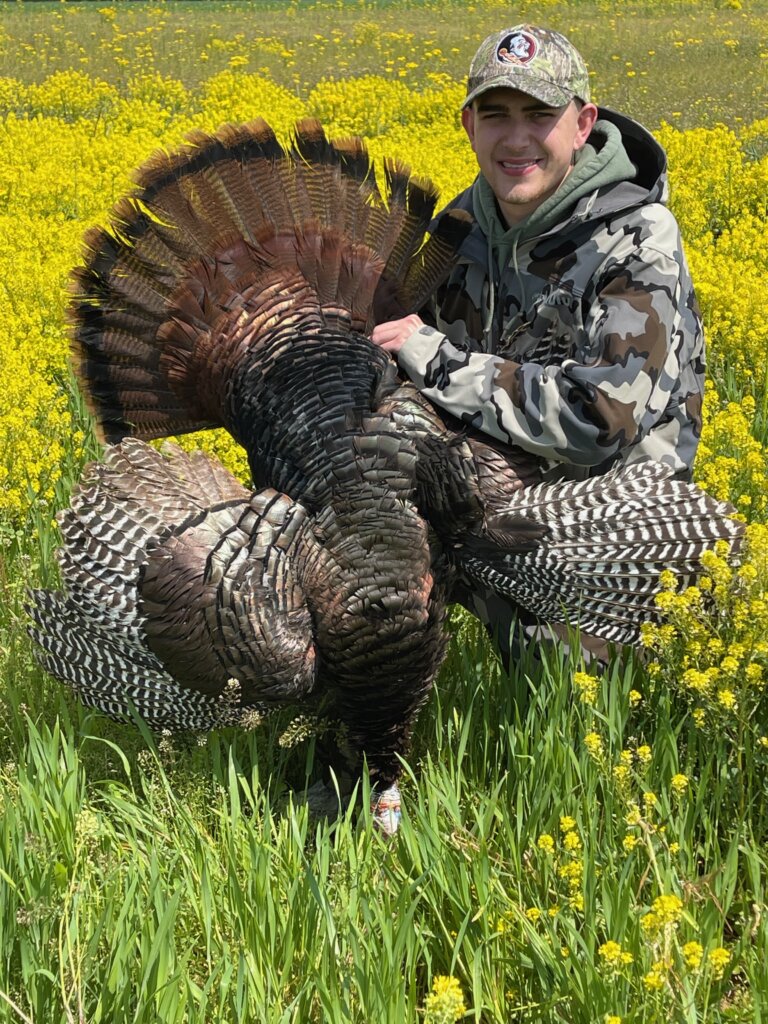
WTA has great outfitters in Kentucky and last year I was able to visit and hunt with a couple of them during the first week of the season. For the opener, I took my son Drew to our western Kentucky outfit and we had a great time. The evening before our hunt began we scouted with the outfitter and saw a couple gobblers and a flock of hens in an old crop field that was overgrown with beautiful yellow flowers. We knew they wouldn’t go far before roosting so Drew and I had high hopes for the next morning.
It rained overnight so I didn’t expect much gobbling, but at daylight a hen flew into our decoys and soon she was joined by a few more ladies that fed in from the end of the field. Within 10 minutes I spotted a big tom making his way toward us from 150 yards out, but he came very slowly and never gobbled. He strutted at 90 yards for what seemed forever, and then made his way to 60 yards and hung up in full strut for more than nine minutes. Then for no apparent reason, he broke and came right in and jumped on my strutting decoy and demolished it. Drew and I watched the show for a bit, and then he dropped the big Kentucky longbeard at about 30 yards. What a start to season!
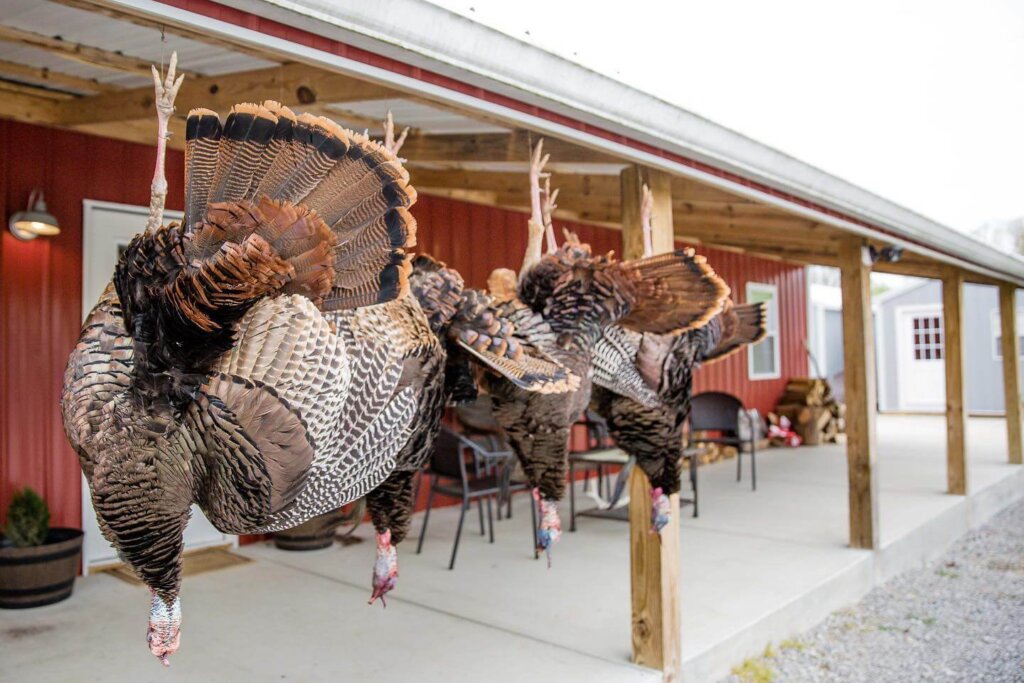
When we got back to the lodge, we learned every other client in camp had also taken a bird so it truly was an excellent morning. We had a bit of bad weather after that, but on the third morning I scored on a great old bird that strutted in to 25 steps.
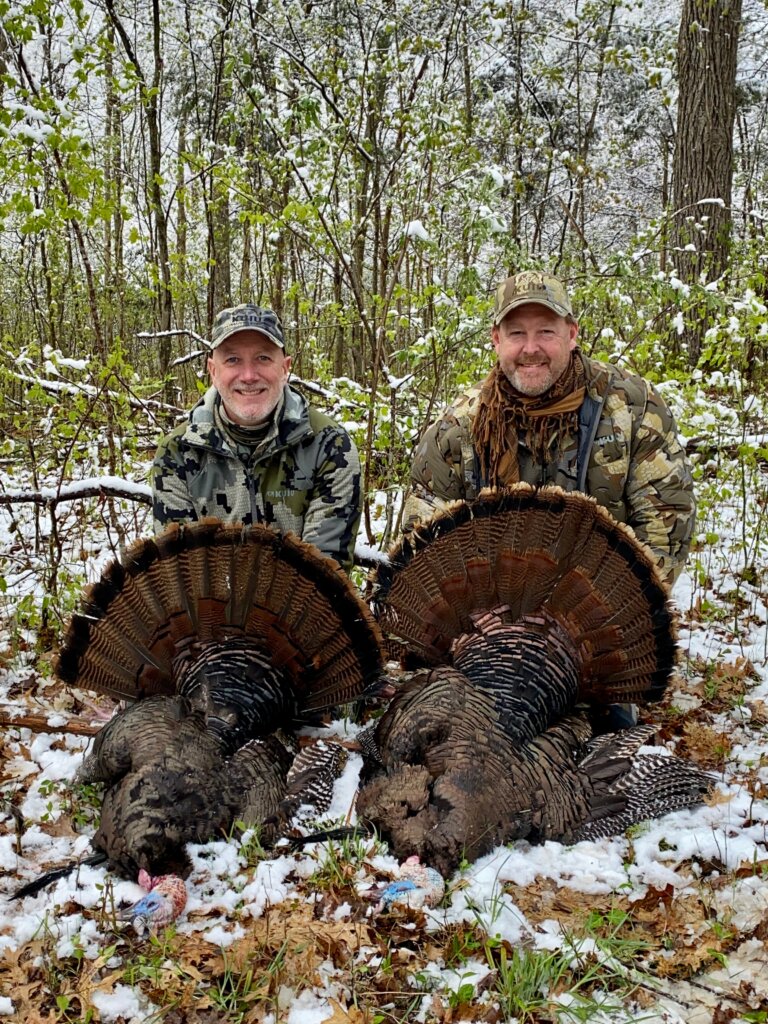
Two days later, I visited our other Kentucky outfitter in the central part of the state. I was leading a WTA-hosted hunt there with eight clients and, again, we had a great time though Mother Nature threw us a major curveball the first day. We knew the temperatures were predicted to plummet overnight with possible sleet but we were all shocked when we woke to three inches of thick wet snow. Oh well, you can’t kill them from bed, so out we went.
I was hunting with old friend Tom N. from Michigan and we went down in a creek bottom to just listen and see if we could hear a bird gobble close enough to allow us to make a setup. It didn’t surprise me when we didn’t hear a thing at daylight and rather than run around the property possibly spooking silent birds, I decided we should climb in a blind the outfitter had set up and just be patient.
I called off and on about every 10 minutes, but we didn’t hear a gobble until a crow flew over about 8 a.m. making a loud racket. A gobbler fired back at the crow; I called on a box call and was greeted with a double gobble. My next call was answered and we could tell that there were two turkeys – and they had cut the distance.
I saw them enter a food plot about 150 yards from us, and they answered every call. One strutted the whole time, but his buddy was playing lookout and seemed a bit nervous. It took a while until they finally made their way in front of us and within shooting range but they were in the woods just above the food plot.
Both birds broke into strut as the morning sun illuminated their iridescent feathers, and Tom and I got ready. On a 1-2-3 count, we fired simultaneously and both birds dropped. It was a hunt that neither of us will forget on that strange snowy morning in Kentucky. Of course, two days later temperatures were back in the high 60s and things were back to normal.
Both of our Kentucky outfitters boast extremely high success rates every spring. They have comfortable lodges and serve good hearty meals, which combined with camp camaraderie, always makes for a nice relaxing trip. The hunts do book up early, so give us a call at WTA and let us help set up your Kentucky turkey trip so you too can enjoy what the Bluegrass State has to offer.