I have to admit that I have only dove hunted, in the traditional style, one time during my life. I live in Michigan, which is one of only a couple states where dove hunting is illegal. That’s another story, but more about that at another time. In the past, while upland hunting outside of Michigan with my dogs, I’ve taken a few happenstance doves. I had also previously, many years ago, taken part in a single Mexican dove hunt after hunting waterfowl.
While I was planning the Upland Slam this past spring, a major question was “what birds to include or exclude from the slam”. There were lots of ideas and suggestions from others, some of which were rock-solid, and others that were off-the-wall (no, I am not including a crow). I was looking for any and all information on what others, in particular experts, classified as upland birds. Lists available were not consistent with each other. Eventually I came across an article that SCI had just released with a list called “Game Birds of the World; I used their online program and divided out the game birds from North America. From this grouping, I divided the North America birds into the 3 buckets of Upland, Waterfowl and Miscellaneous. It was during this process, that I started to consider that doves would fit best in the upland bucket.
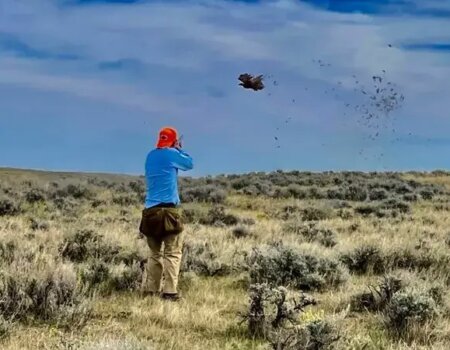
As part of my Upland Slam, I included four doves and they were the Eurasian, Mourning, White-Wing, and Inca. While in Wyoming earlier this season, hunting for Hungarian partridge and Chukars, I had a Mourning Dove get up in front of Arrow and I made a quick shot on him. Heading to Mexico, I already had 1 of the 4 in the bag. In previous talks with Sergio, my outfitter in Sonora, he always talked about how great the dove hunting was in his areas near Hermosillo. Hopefully I would have a chance to complete the dove portion of my slam with him.
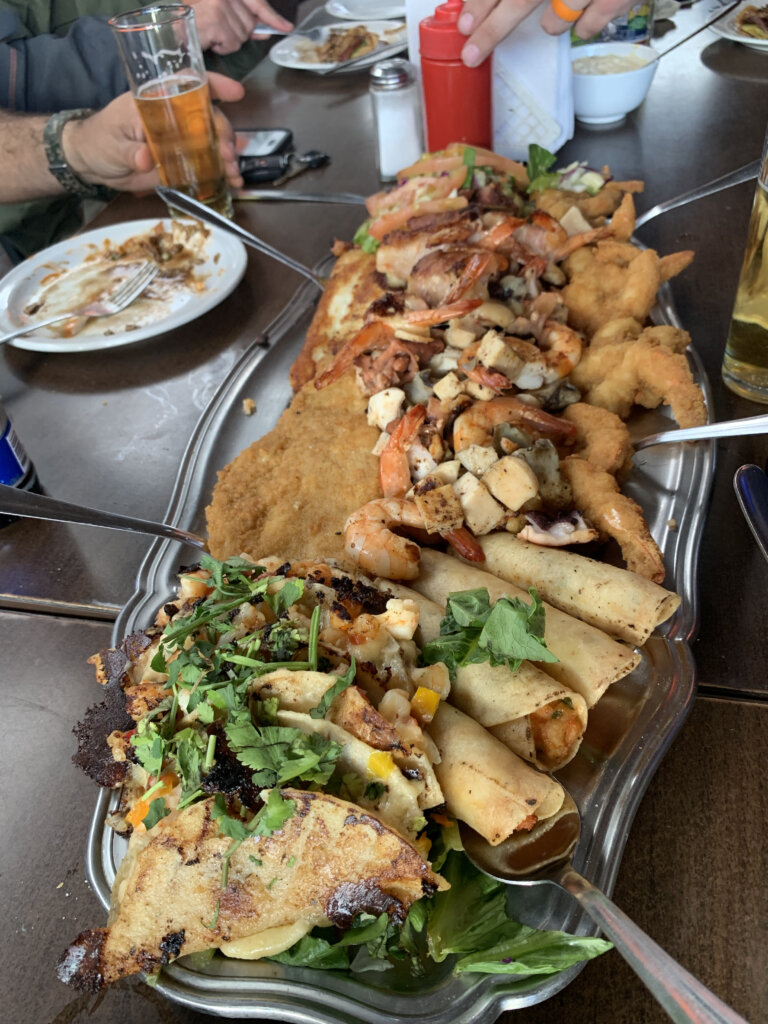
We arrived into Hermosillo late one February morning, and after clearing our guns and dogs through customs, we grabbed a quick lunch in town prior to settling in at the lodge. The lunch was tasty and great, just like so many of the meals I have had, over the years, in Sonora. Back at the lodge we settled in. Sergio asked if we would rather rest or head out for a late afternoon dove hunt. The dove hunt “won”, and we loaded up. He suggested that we each bring a case of 20ga shells. And, I loaded up my Kent 6’s.
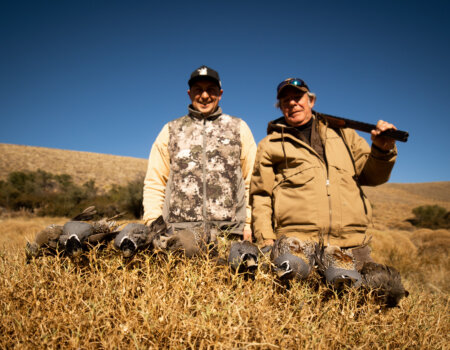
There were three shooters in our group, my father Earl, Justin McGrail, who is a close friend and also great dog trainer, and myself. Justin has done a lot of great work with almost all of my gun dogs for the past 20 years and I was pleased he could join us in Sonora.
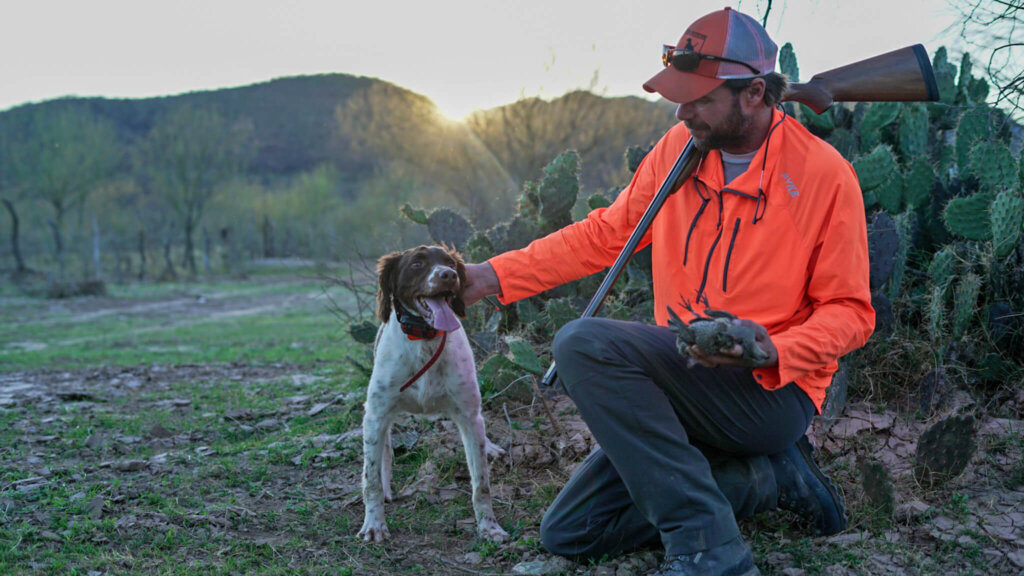
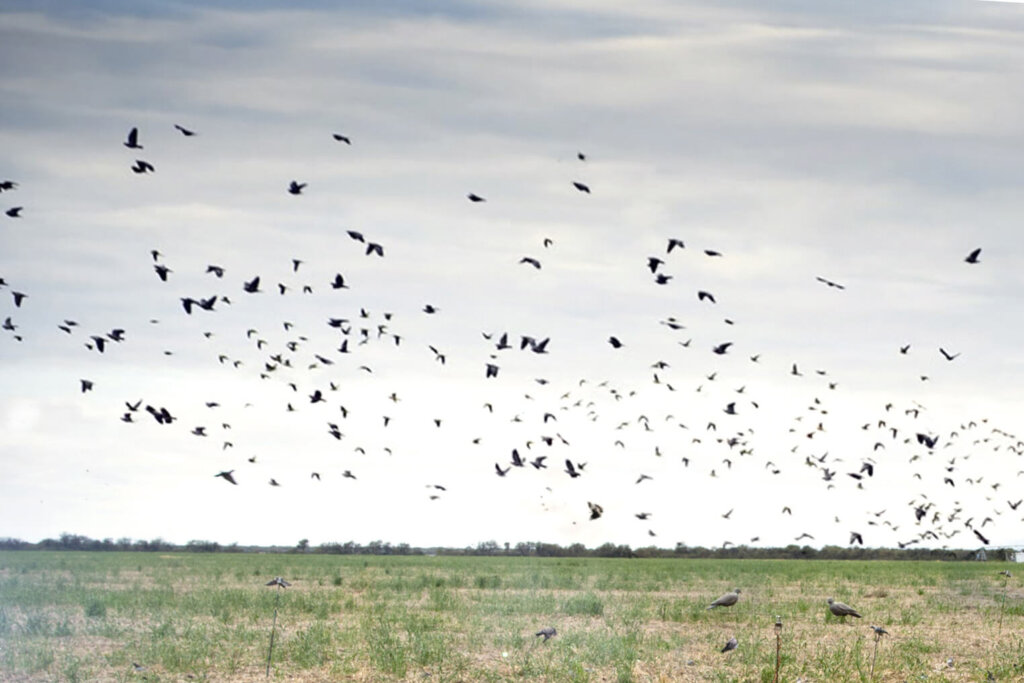
Sergio set us up on the edge of a large field with waist high grass and scattered scrub trees. We were near a large agricultural area. It didn’t take long to realize that the doves would continually go back and forth between the scrub trees and the food source. Being new to traditional dove hunting, I wasn’t used to the fact that you get multiple, and almost continuous, shooting opportunities. During my quest for the Upland Slam this fall, there was a lot of luck involved. Too often, my chance at a species came down to one single shot and whether it was true or not. I had to always be ready and not let a single opportunity pass. As we were getting set up and everyone was positioned 50 yards apart in a line, there were doves zooming past, from every direction.
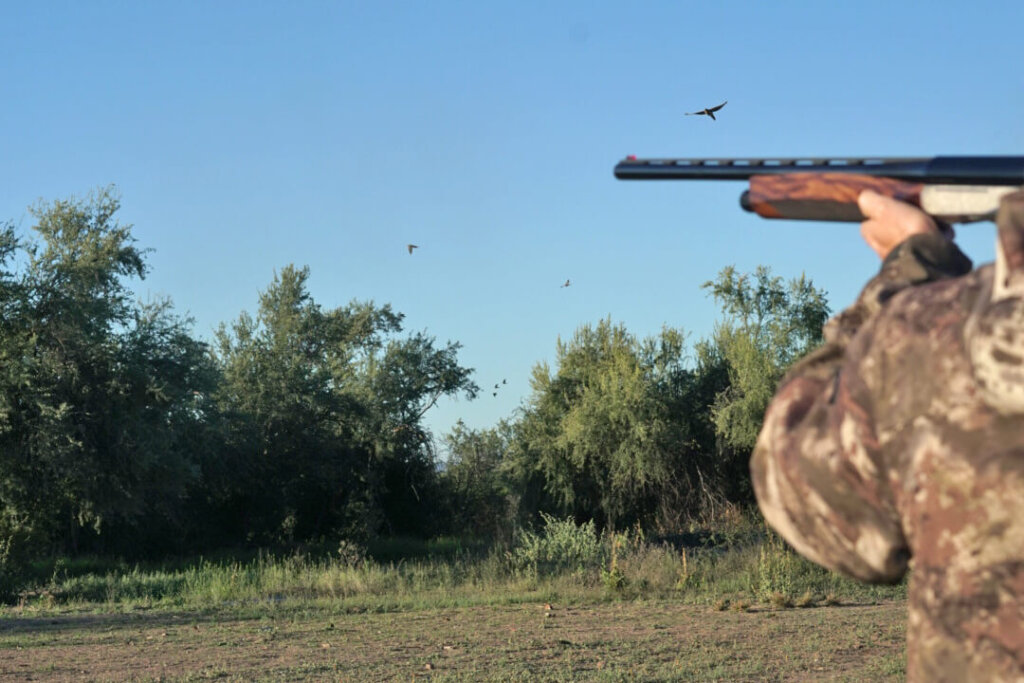
In about 15 minutes, we were ready to go and the green light for shooting was given. Shots were to be taken in any direction except to our sides, as that is where the other shooters were lined up. The doves were continuous and before I knew what was happening, I had completed my first box of shells and saw doves laying on the ground. This was a much different experience than the rest of the Upland Slam. Many days of walking 15+ miles, we only took a few shots. As I settled in on the dove hunt, my shooting continued to improve the longer the afternoon went on. With more experience I could see the doves coming from farther out and anticipate their movements in plenty of time to make some good shots. I continued to empty boxes.
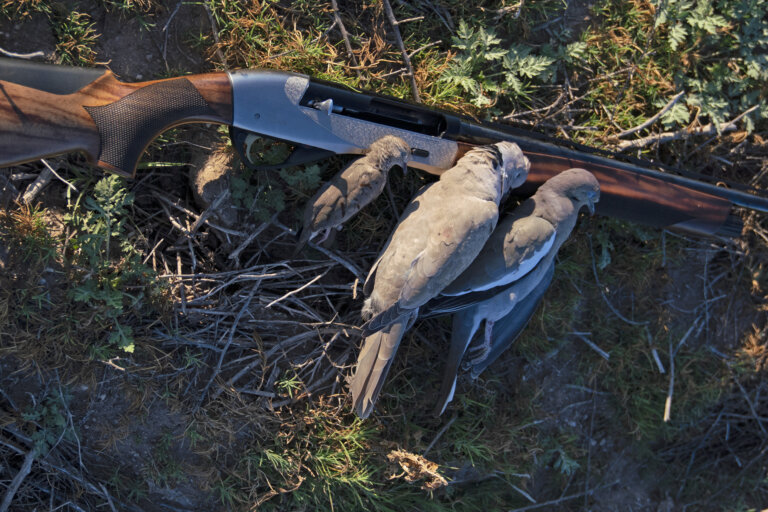
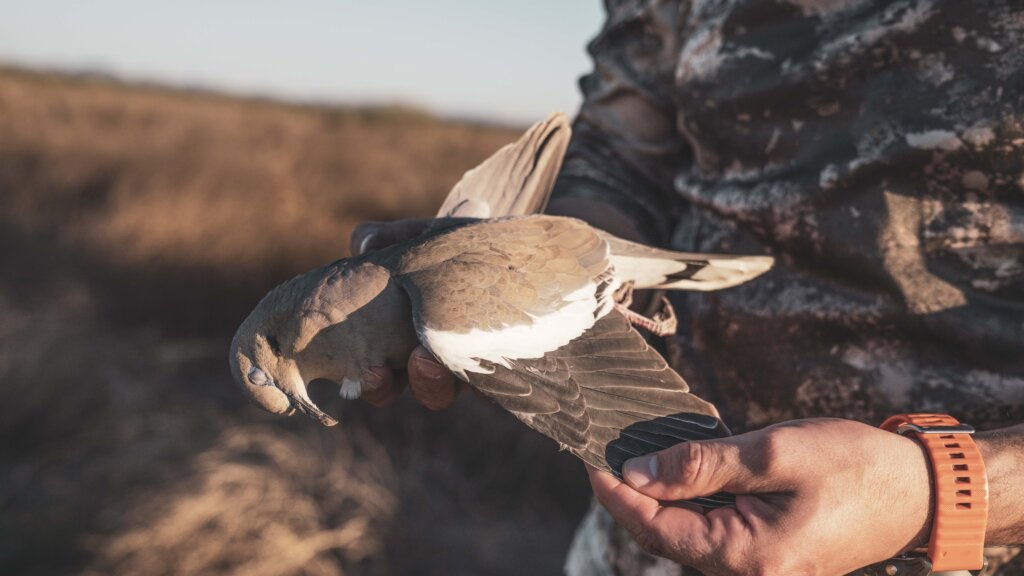
During the shooting, we would stop and take breaks to assist in the picking up doves, that we had shot, from the ground. Seeing the different species close-up helped me to start to identify the different doves in the air as well. After an hour, we did a more thorough pick up and I found myself with Mourning, Eurasian and White-Wing Doves. I realized that I was an Inca Dove away from completing the dove portion of the Upland Slam.
Sergio came over to check in on us to make sure everything was going ok. At the same time, he also wanted to let me know that he found a different area, nearby, where there were a lot of Inca Doves. He really wanted to pick me up and bring me over there as Inca Doves were more difficult to find and sometimes almost impossible to find. Sergio knew exactly what I was trying to accomplish this year with the Upland Slam and was doing everything he could to help me succeed. I grabbed my Benelli Ethios and we headed for his pickup truck. We drove about ½ mile to the other side of the big field to an area that had been recently mowed. The mow job had caused grass seeds to be on the ground. There were doves all over the place.
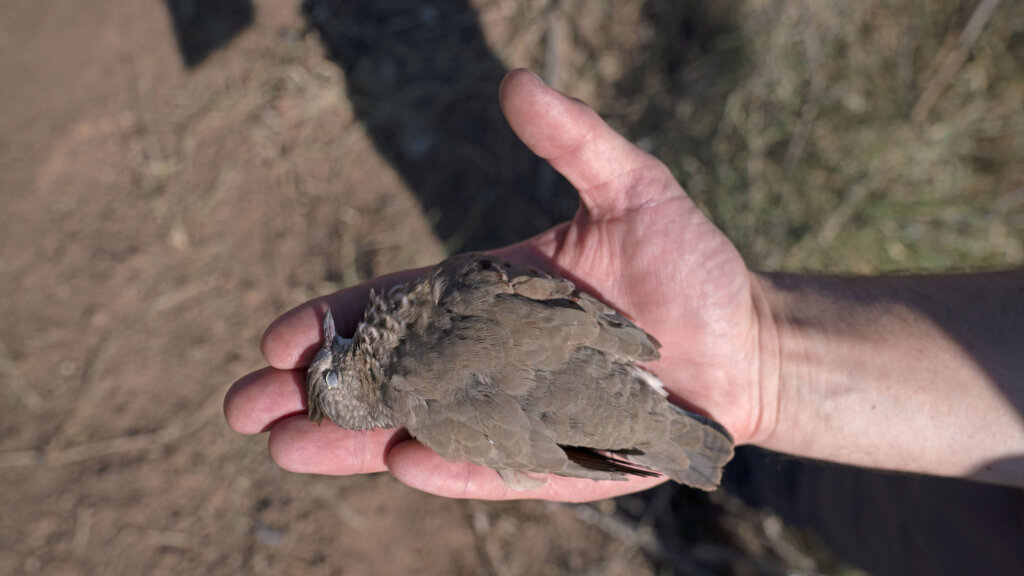
Sergio pointed out the tiny doves, which were a fraction of the size of the other doves we were shooting. They were Inca Doves. They fly low, only 10 feet or so above the ground, unlike the high flying of the other dove species. They tend to fly short distances and then set back down. Sergio suggested the plan. I would walk into the cut grass area and jump shoot the Incas as they took flight. It worked and I came back a couple of minutes later with a handful of tiny Inca Doves. The Inca is so different and unique from the other dove species. During our first two-hour Sonora dove hunt, I had successfully taken all four species of doves. This traditional dove hunting was growing on me quickly.
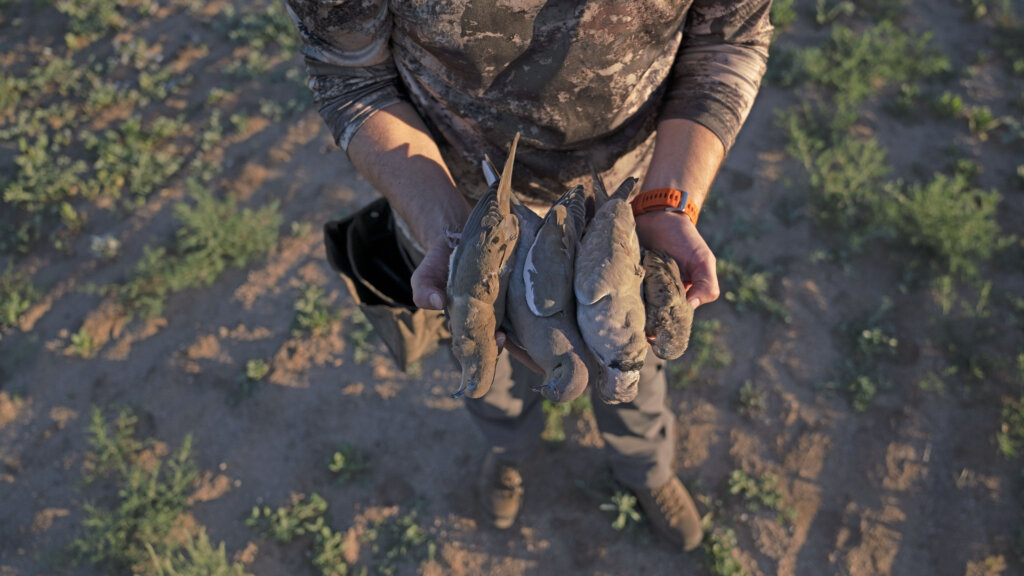
On our Sonora trip, we did three other dove hunts; one in the morning and two more in the afternoon. All three of these shoots went the same as our first. Birds flew almost the entire time, along with a limited number of other species mixed in. On our morning hunt, I was also able to take a Rock Pigeon, which I had listed as an “opportunistic” addition to the slam. I had also been able to take an “opportunistic” Scaled Pigeon in California.
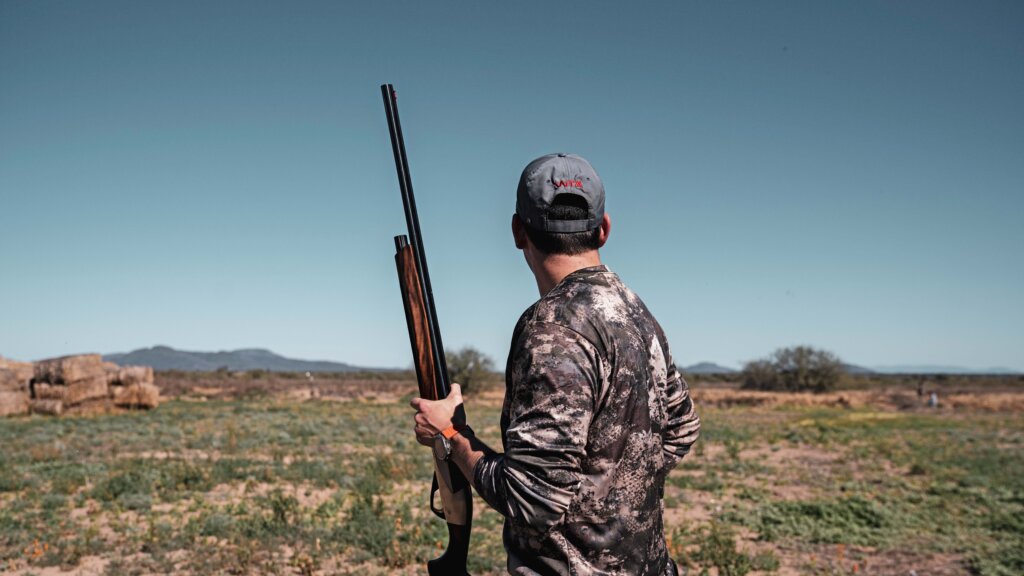
I know that Argentina gets all of the love when it comes to dove hunting and Argentina is amazing. But, if you’re looking for a great dove hunting experience a little closer to home, with some great hospitality and fantastic food mixed in, consider Sonora. Make sure to give the team at WTA a call to discuss the dove, upland and waterfowl hunting opportunities that Sonora has to offer. As for me, I’m already booked on my next trip to Sonora. I will be back next winter when I come to explore the great waterfowl hunting that the area holds. It will be tough for me, next winter, to leave cold, snowy Michigan for sunny, warm Sonora, but someone has to do it!
Happy hunting to all.