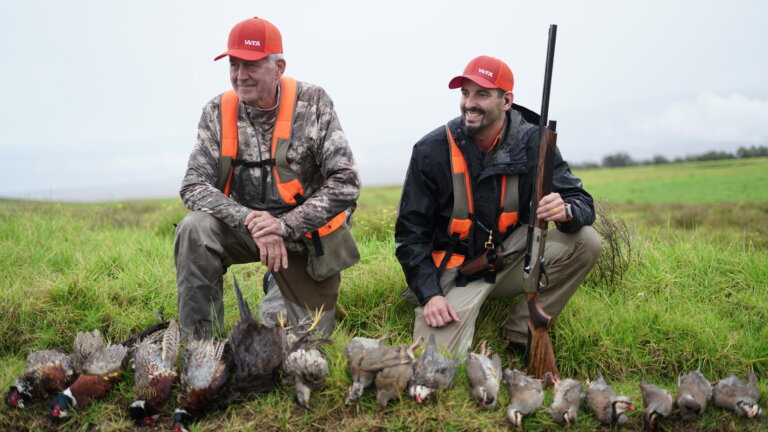
Not many upland hunters think of Hawaii when it comes to planning a hunting excursion, but it truly is an “Upland Hunter’s Paradise”. During our recent hunting trip to Hawaii, my Dad and I hunted both the Big Island and Molokai. Our hunt was in January, but we started our trip planning 4-5 months before. The many upland species that call Hawaii home would be our focus, but we would also go after some of Hawaii’s big game animals. We wanted to bring our own dogs with us, as we had everywhere else during this year’s Upland Slam travels. This is where the extra planning work came in.
Hawaii is Rabies free and has an extensive program in place to make sure it stays that way. It meant that we would need to cover a few extra steps in order to bring our bird dogs to Hawaii. We learned the details on how to accomplish this and for those other upland hunters who might want to give Hawaii a try, my next blog will detail the process for getting dogs into our 50th state; for more information please review that. If you have an upland dog who travels with you to hunt, you need to give Hawaii serious consideration. The extra hoops are well worth it.
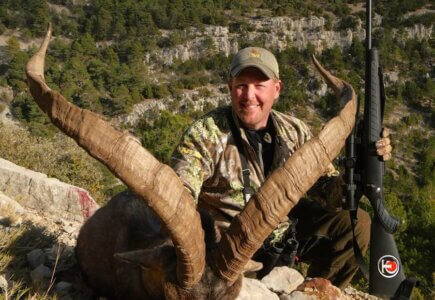
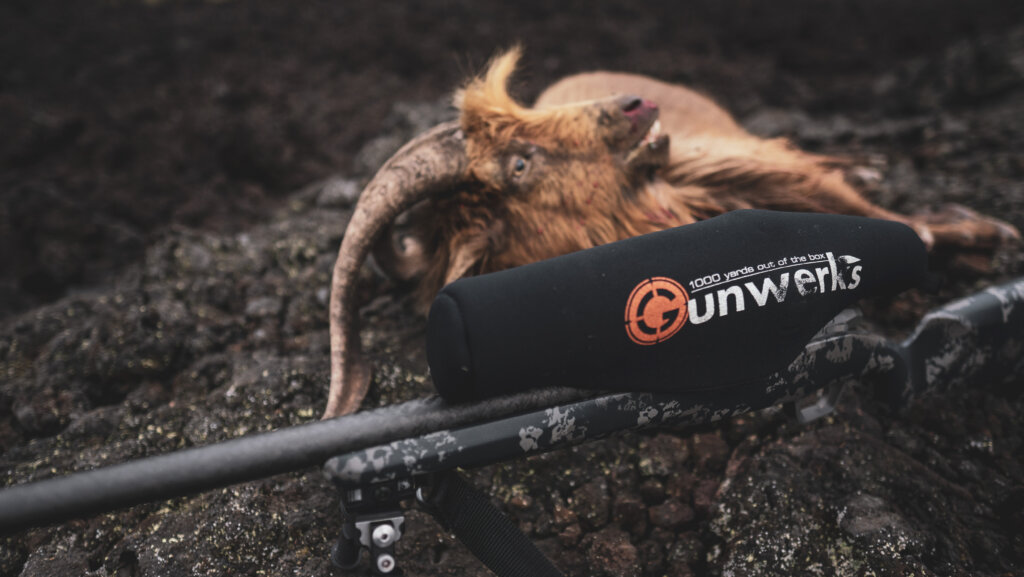
I’ve been fortunate to have hunted the Big Island twice before, but this was Dad’s first experience hunting there, so we decided to spend some time going after Spanish goats and black Hawaiian sheep. Hunting Spanish goats on the Big Island is different from any other goat hunting I have ever experienced. The goats were originally dropped off on the Hawaiian Islands by Captain Cook in the late 1700’s. They spend the majority of their day on old rocky and nasty lava flows that have formed, off the original edge of the island, out into the Pacific. These flows have zero cover and almost zero food. Because of this, it is almost impossible to hunt on the lava flows as the goats can see you coming before you can reach shooing distance. Just at dark, however, they leave the lava flows and head up the cliffs to find grass fields where cattle graze. The best way to hunt them is to get to the area just before dawn and try to catch them either in the grass fields or on their way down the steep cliffs from the grass fields to the lava flows.
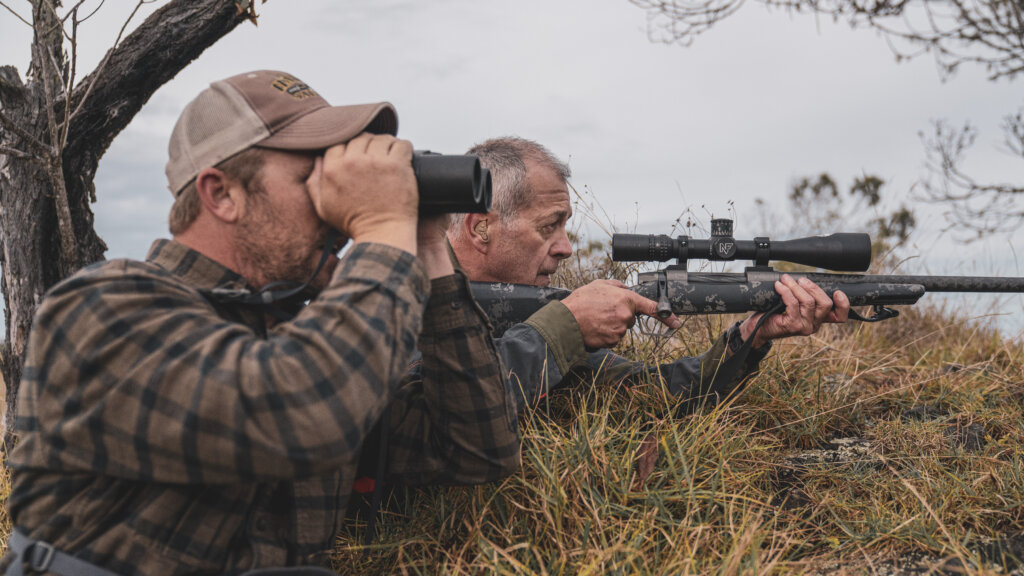
We arrived plenty early the first morning and instantly started seeing goats. We started on the downwind side of the field and walked, slowly glassing, where the field edge met the steep cliff. We were constantly glassing up ahead but more importantly were glassing the steep cliff as the goats would often hang up in the rocks on their way to the wide-open lava flows. After covering a good portion of the field, our guide spotted a big Billy on the edge of the lava flow. Dad got set up off his backpack for the shot; at 350 yards his Gunwerks was true and Dad had his first Spanish goat. How awesome is Hawaii!
The other big game animal that we hunted on the Big Island was black Hawaiian sheep. I have done this on both of my previous trips and had such a good time that Dad and I decided to split up so we could both hunt at the same time. Black Hawaiian sheep are farther inland and inhabit higher elevation terrain that is a combination of rock and lava with trees and grasses. Hunting is done via spot and stalk, so once we arrived at the area we split up and went to good vantage points that allowed us each to glass. There is an extremely high density of sheep in the area; this is accomplished by great management from the outfitter and also the landowners in the area.
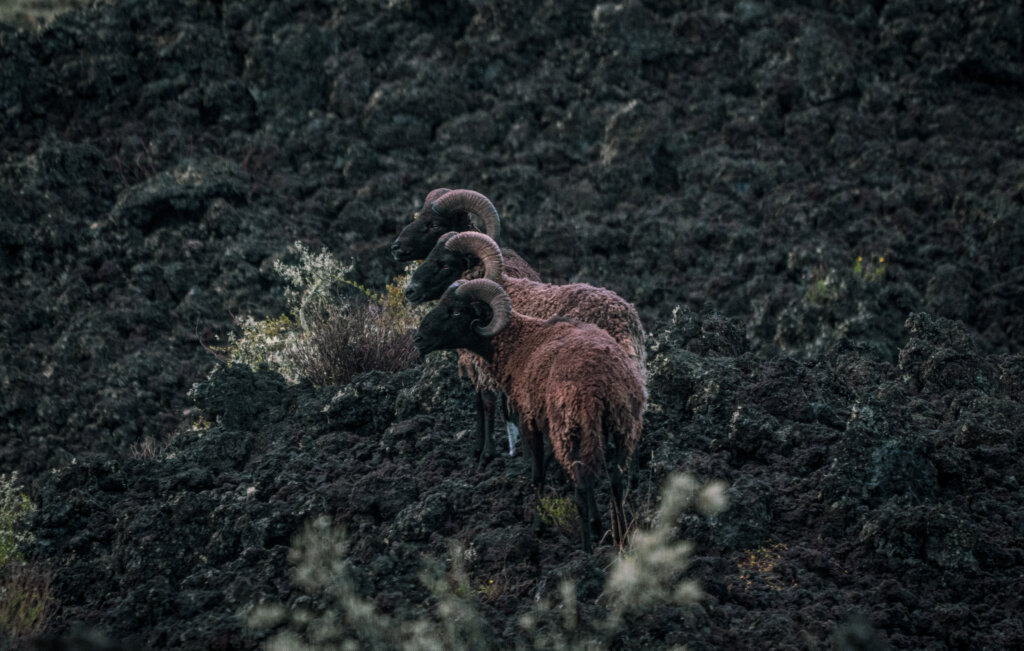
We saw sheep just about every time we stopped to glass. As the sun started to set for the day, a large group of sheep came into view and I spotted a big ram in the back. Just like that, we were off in pursuit. The sheep were feeding up the mountain and we were paralleling them about 200 yards below. After covering just over ½ mile, we finally got to a spot where I was able to set up for my shot. Because of the rocks and elevation changes, I used the Y of a tree branch to shoot; not ideal, but it was sturdy and the only thing I had to get me high enough to shoot over the rocks. The sheep eventually fed into an opening we were set up on with the ram trailing in the back. I was using my Gunwerks 7LRM and I can’t think of a more trustworthy rifle. It again did the job and we hurried up taking care of the sheep prior to sunset. As we were taking pictures of the great ram, the fog arrived with the sunset. The photos turned out to be some of my all-time favorites.
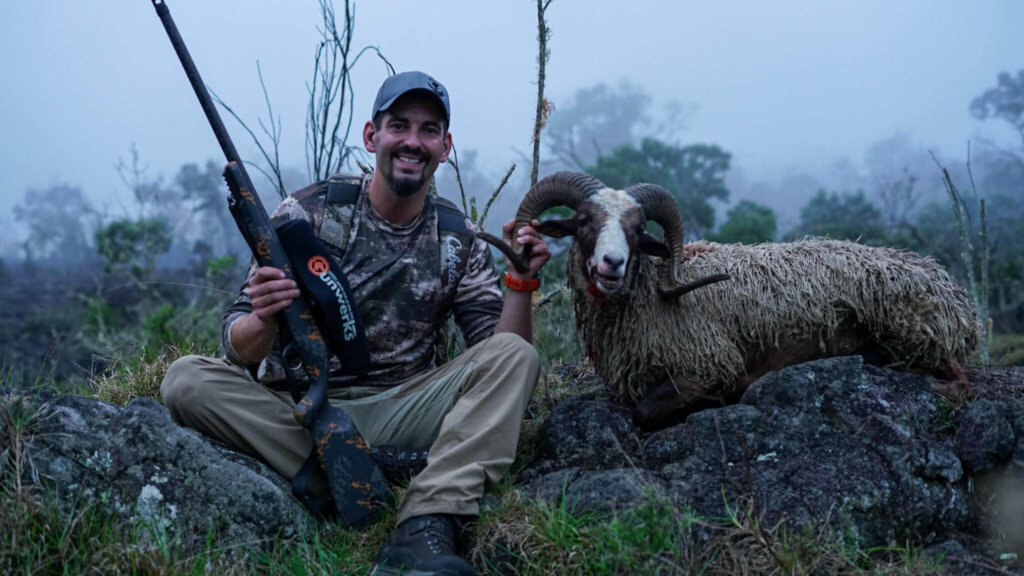
Back at the bottom of the mountain I waited for Dad. We shared our stories and his experience was similar to mine. His shot was just prior to dark as a large group of sheep stopped briefly to give him a chance at a big ram. Dad was very happy that we had spent the time to go after the Big Island’s goats and sheep.
Our dogs were, however, less than thrilled with our spending time big game hunting. They were in their Gunner kennels, waiting, when we returned back to our house. After taking them for a quick run, we promised them that it was their turn next. On the Big Island we were targeting several upland species. These were Erckel Francolin, Chukars, Blue Pheasant and Kalij Pheasants. To my knowledge, Hawaii is the only place in the world you can hunt wild Kalij pheasants.
Our first upland hunting spot on the Big Island was an area that was actually higher in elevation than where we hunted black Hawaiian sheep. We were going after Erckel Francolins. The Erckels are the largest of the three francolin species found in Hawaii. The terrain we hunted was rough and rocky. As the birds in the area don’t get a lot of hunting pressure, they hold extremely tight. Because of the rocky lava terrain, I spent the time to put boots on our dogs to protect their feet. It didn’t take walking very far to realize that this was a very good idea. It also didn’t take too far for the dogs to lock up on their first point. As I approached the bush, they were pointing a big male Erckel that exploded into the air. I was using my 20gauge Benelli Ethos, which turned out to be the perfect shotgun for me to use in Hawaii. My shot was true and 10 minutes into the hunt I had my first ever Erckel Francolin. The Erckel is much larger than I thought it would be. The dogs continued their great work. They were running a bit harder than normal but our trip to Hawaii was the longest they had every travelled and they had some built up energy. In a bit over an hour, Dad and I were back to the truck with our limit of Erckels.
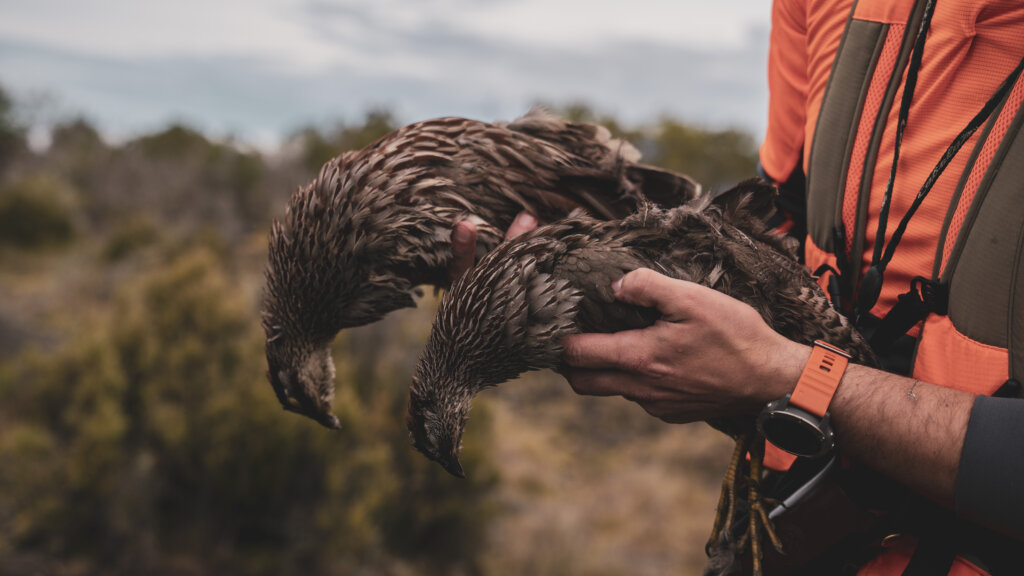
That afternoon we were at a lower, but extremely thick, elevation hunting for Kalij pheasants. The Kalij is, by far, the most prized upland bird in Hawaii. We spent hours looking for them and trying to get a shot. The dogs would lock up, but Kalij are known for running and wow, do they run. We were struggling to get them in the air. As the sun was starting to set, we bumped into a Kalij that took to flight. Both roosters and hens are legal to hunt. Instinct took over as I swung my barrel in front of its flight path. My first Kalij, a hen, fell from the sky. YES, my first Kalij. I called my dogs off so as not to mess up the feathers. Upon getting to the bird, it was in perfect condition. I hand carried the Kalij back to the truck and then right to the freezer.
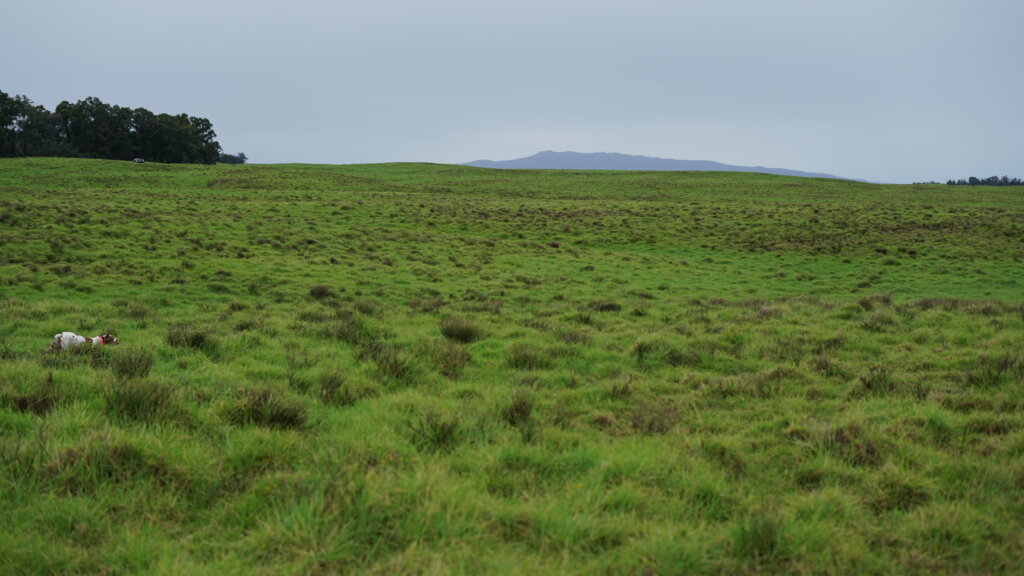
The next day we left early and drove about two hours to the far side of the island where it is much grassier. We were in terrain that I would compare to hunting the Dakota’s CRP land, but with more hills. Unfortunately, it was raining like crazy; with only having a couple of days before leaving for Molokai, we decided to tough it out. With the grass cover, the dogs didn’t need boots. We started the morning on the higher side of the property and instantly got into chukars on the rocky side hills. Dad had bummed up his knee while hunting in the lava after black Hawaiian sheep, so he took the low side and I walked on the side of the rocky areas, or on top, with the dogs working in front of me. We ended up doing pretty good on chukars with lots of shooting. As we were approaching the end of the rocks, where the chukars generally are, Shooter locked up as solid as I have ever seen him. I yelled for Dad to be ready, as I worked my way over the rocks to where Shooter was pointing. There was something in Shooter’s eyes I hadn’t seen before. I looked in front of him and saw the black blob; it was a hog facing the other way. Earlier, when we left in the morning, the rancher told us to watch out for hogs. Being from Michigan, I laughed and said “ok”. Now, here we were with Shooter, on point, literally two feet from one. Luckily, I was able to pull Shooter off and the hog never moved.
Our run in with the hog encouraged us to move to a lower elevation to focus on pheasants. The rain had turned into a lighter sprinkle, and even though everything was extremely wet, our dogs were having a great time and working well. We ended up with a couple of roosters and I was also fortunate to have a blue pheasant get up in front of me. As we finished the day walking and hunting, watching our dogs work, wearing a heavy vest and with Dad beside me, I realized just how lucky we were to have this great upland day in Hawaii.
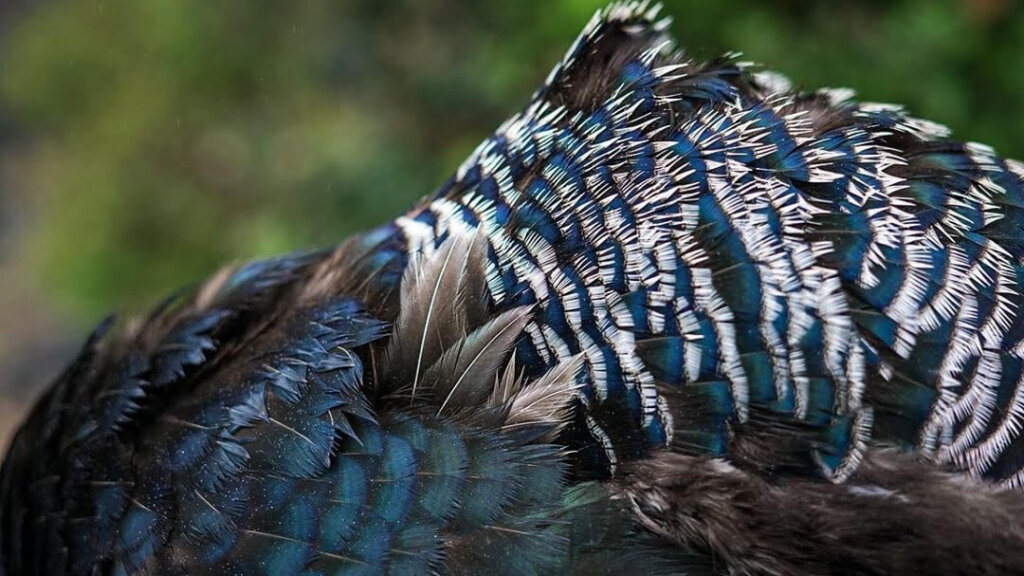
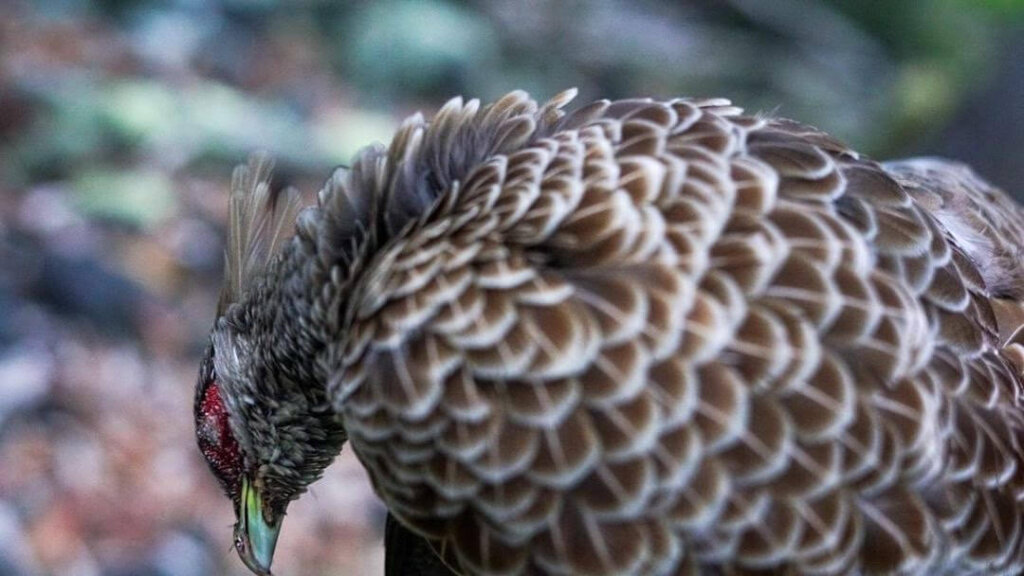
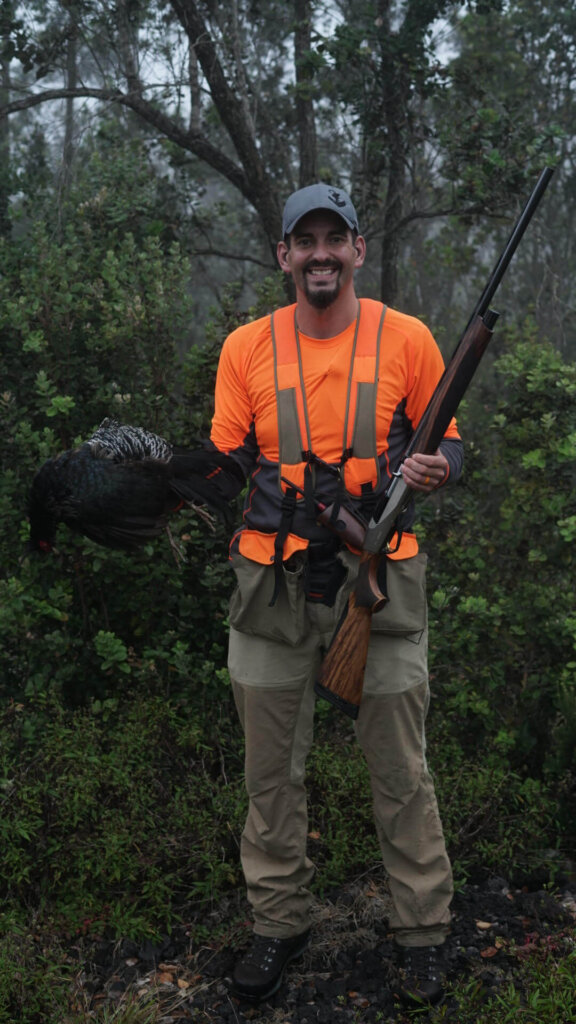
After an amazing day of hunting pheasants and chukars, we had one more day before heading to the island of Molokai. We would spend the day hunting Kalij. It was tough as the dogs would lock up on point, we would hurry to get up for the shot and the Kalij would run. The same scenario played out over and over again. Late in the day a pheasant exploded in front of Arrow as he was passing in front of me. I raised my Benelli and, as I covered up the bird, my brain told me that this bird was different than the previous Kalij I had shot. A quick trigger pull and I had my male Kalij, which was one of the most beautiful game birds I’ve ever seen. Just like the previous Kalij, I hand carried him to the truck and brought him straight to the freezer. The next stop for the pair of Kalij will be to Frank, at the Wildlife Gallery. For those of you that don’t know Frank Newmyer, he is a bird guru.
I’ve never been disappointed hunting in Hawaii and this trip to the Big Island was no different. We found amazing big game and upland hunting. If you have ever dreamed of hunting Hawaii or if you have a family trip planned to Hawaii and want to spend a day or two hunting, give the team at WTA a call. We book on all of the islands and can set up day trips or longer excursions. There is no need to worry about bringing rifles or shotguns as our outfitters have great ones you can use for the hunt.
Now, off to the island of Moloki…