Short, sweet, and grueling. That describes my mountain goat hunt.
I can’t stress enough just how grueling it was. It was a tough hike in and out. Even my camera guy, Mitchell Neeb, who is in better shape than I am, said, “Man, if I was in any worse shape I would have been struggling.” We filmed the hunt in partnership with Worldwide Trophy Adventures and Mathews Archery for my YouTube channel @ChrisBeeReal.
We were in remote northern British Columbia and the hiking was up, down, and sideways. We weren’t just hiking up a mountain. It was up one, across a spike, down, then side-hilling on shale. It was pretty gnarly.
That was the grueling part. The short-and-sweet part was on our first real day of hunting. We shot a great mountain goat about as fast as we possibly could. But that’s getting way ahead of the story.
I started thinking about hunting mountain goats after talking to hunters who’d done it. I talk to a lot of people, usually other hunters, and everyone said that mountain goat hunting is the most underrated bowhunting adventure. I believe it now. Essentially, the experience is everything you would get on any sheep hunt, but at a third of the price or even less. You get the bush planes, the remote location, the mountains, all the rugged stuff, plus the weather. We lucked out and got good 40–50° weather, but that’s rare from what I’ve heard.
And mountain goats are huntable with a bow. (I was using the new Mathews LIFT bow, but more on that later.) They’re not easy to bowhunt, but it’s doable because they get themselves into places that are good for spot-and-stalk and you can get close. They rely on their noses so you have to be careful about your scent. But their eyesight isn’t great and you can get away with a little bit more. From my experience and talking with my outfitter, guide, and other hunters, the tough part is just getting to them because they can be in some nasty, mountainous terrain.
The hunt came together after I talked to Jason Berger from WTA, and the whole thing went super-smooth. The biggest benefit of working with WTA is they line up the logistics. You take this flight here, this flight there, and these are the hotels where you can stay. Especially for international travel like to British Columbia, it’s nice to have the peace of mind of having it all planned. We were traveling with a bow, so we didn’t have any problems getting into Canada. If you’re traveling with a rifle, it’s great to have WTA’s guidance on the paperwork and to make sure everything is in order. Plus, WTA connected me with the outfitter and it was great to get a run-through before the hunt, going over what to expect, what to bring, and the details.
I hunt a lot and I’m on the road more often than not, or so it seems, so it’s nice to have WTA’s guidance and assistance. You’re involved in the process, but they line it up for you. We were in Alaska for over a week hunting caribou before this hunt. I only had a couple days before I was off to hunt again. It was nice to have WTA setting up this mountain goat hunt. I didn’t have to worry about anything. It gave me peace of mind knowing everything was squared away.
But back to the hunt.
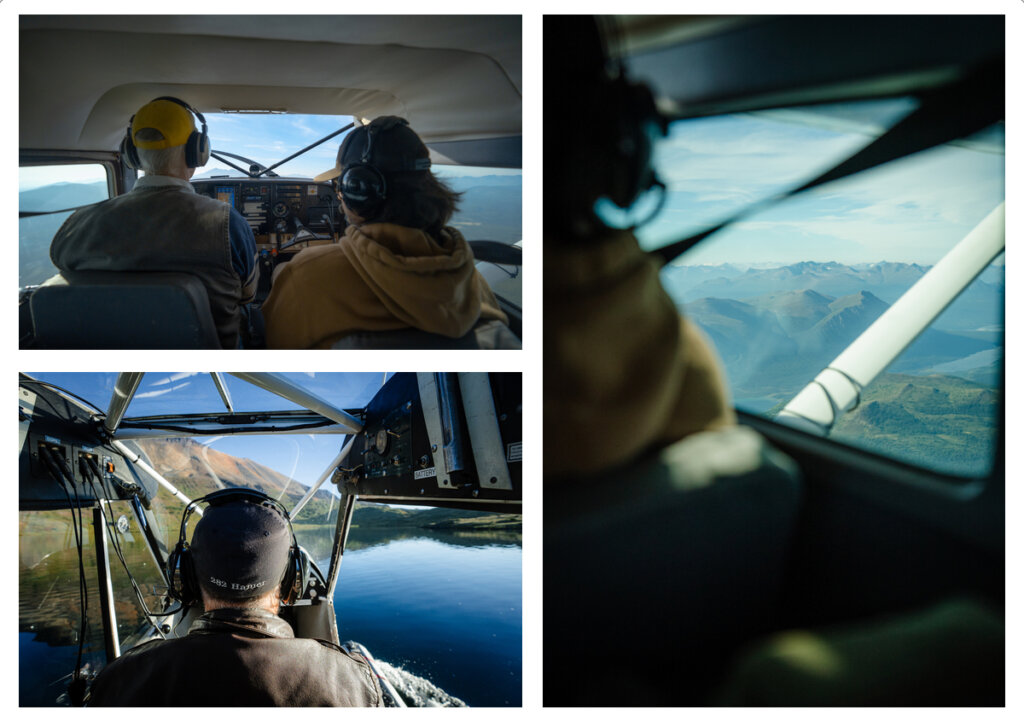
We took a commercial flight to Whitehorse, the capital of the Yukon Territories. From there we took a charter plane to base camp. You rough it in the bush, but this home base for guides had some amenities. We didn’t stay there long. They had a float plane waiting for us and it was a short, scenic flight to a super-remote alpine lake, which was beautiful, super-awesome.
We met our guide Brad and restructured our packs to make sure everyone had food and everything they needed. Then we took off on a 5½-mile hike into spike camp, which was the roughest hike I’ve ever done in my life. We were up in shale rock and we had to do some rock climbing with a heavy pack. It was tough, for sure.
We got into spike camp in a spot Brad had found on maps. He’d never been to this exact area because it’s a semi-new concession for them and they’re trying to explore new areas. It was a beautiful spot to camp. There was a melting glacier that had super-fresh water, plus a little saddle in the mountain that protected us from the wind.
It took us 5–6 hours to get to spike camp. We were pretty smoked. I remember my legs twitching in my sleeping bag. It was intense.
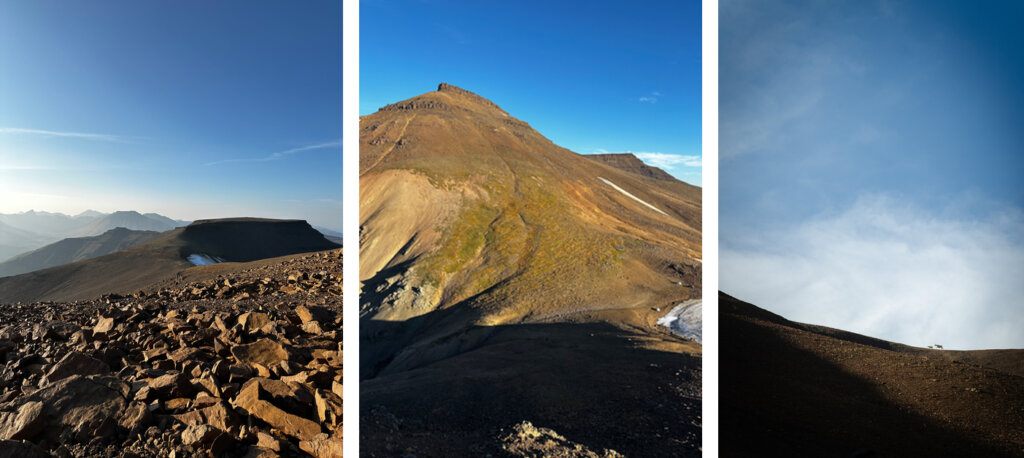
But the next day we didn’t wake up at the crack of dawn and we took it easy. We got up at a decent time and took an hour to restructure our packs again, making sure everything was good before hiking again. After about a mile, we stopped to glass and saw some goats. And that’s the thing up there. You see goats fairly often, usually far off on the mountainsides. That morning we saw 20+ goats, sometimes a mile away, and we got a spotting scope on them to see if they were anything we wanted to go after.
We ended up seeing two billies tucked up on the side of a cliff pretty far away. We circled around, got to a high point, and put ourselves in a position to see what they were doing. They were bedded right there. As we were making a game plan for stalking them, they got up and started coming toward us, which worked out really well. About halfway between their bedding ground and where we were hiding, about several thousand yards away, there was a super-green area where they came down to feed. That’s what they do—position themselves to quickly access flat points to feed on, but with an escape route to the gnarly mountainsides nearby.
It was midday, and they were feeding, and then we lost them. There was a rise and we couldn’t see them over it, so we tried to reposition again. We just kept working to a point where we figured we were probably a few hundred yards from where they would be. We dropped our packs and worked around a rock face, peeking over the edge to see if they were bedded down. Nothing, nothing, nothing…we went back and got our packs and moved up. There was one more spot left, higher in the drainage. We circled around and sure enough, I saw them straight below us. They were bedded, maybe a hundred yards down. We backed up and around to get a better elevation to come at them. We took off our packs and worked toward them, maybe 50 yards. They were downhill, so we were maybe 60 yards from them, but they were just over a rise so we couldn’t see them, and they couldn’t see us.
We took off our boots and then it was just the three musketeers, Brad, Mitchell, and me, moving slowly and quietly. Finally, Brad peeked over and said, “They’re right here. Get an arrow nocked.”
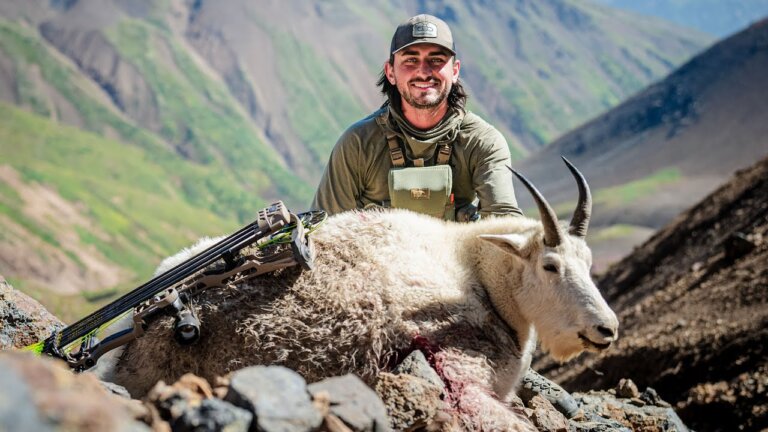
We all poked over and sure enough, one of them stood up. Brad was able to get a range for me and I went to full draw. It was right at 30 yards. He was standing broadside and I released. It was a perfect shot, right behind the shoulder, double lung.
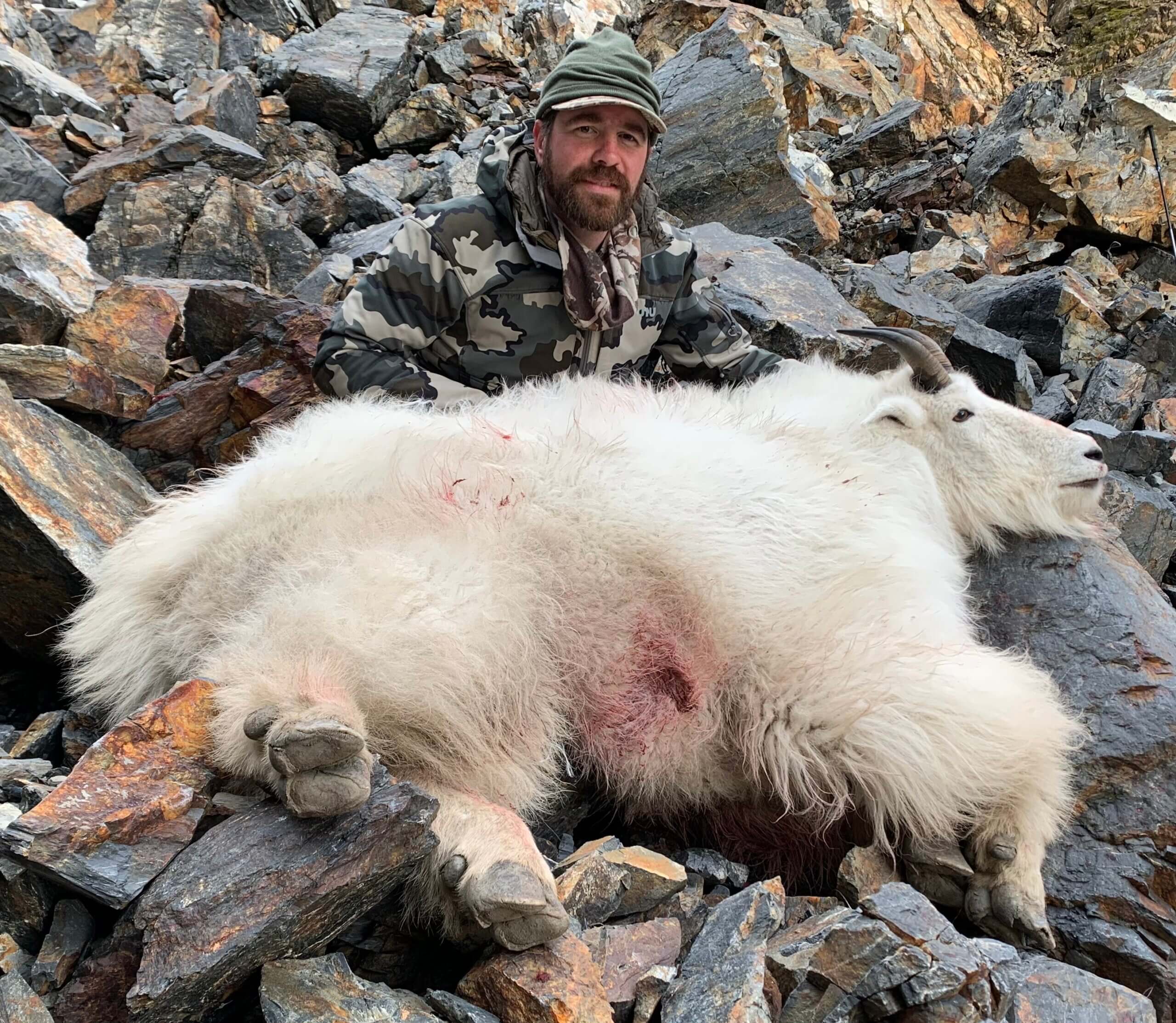
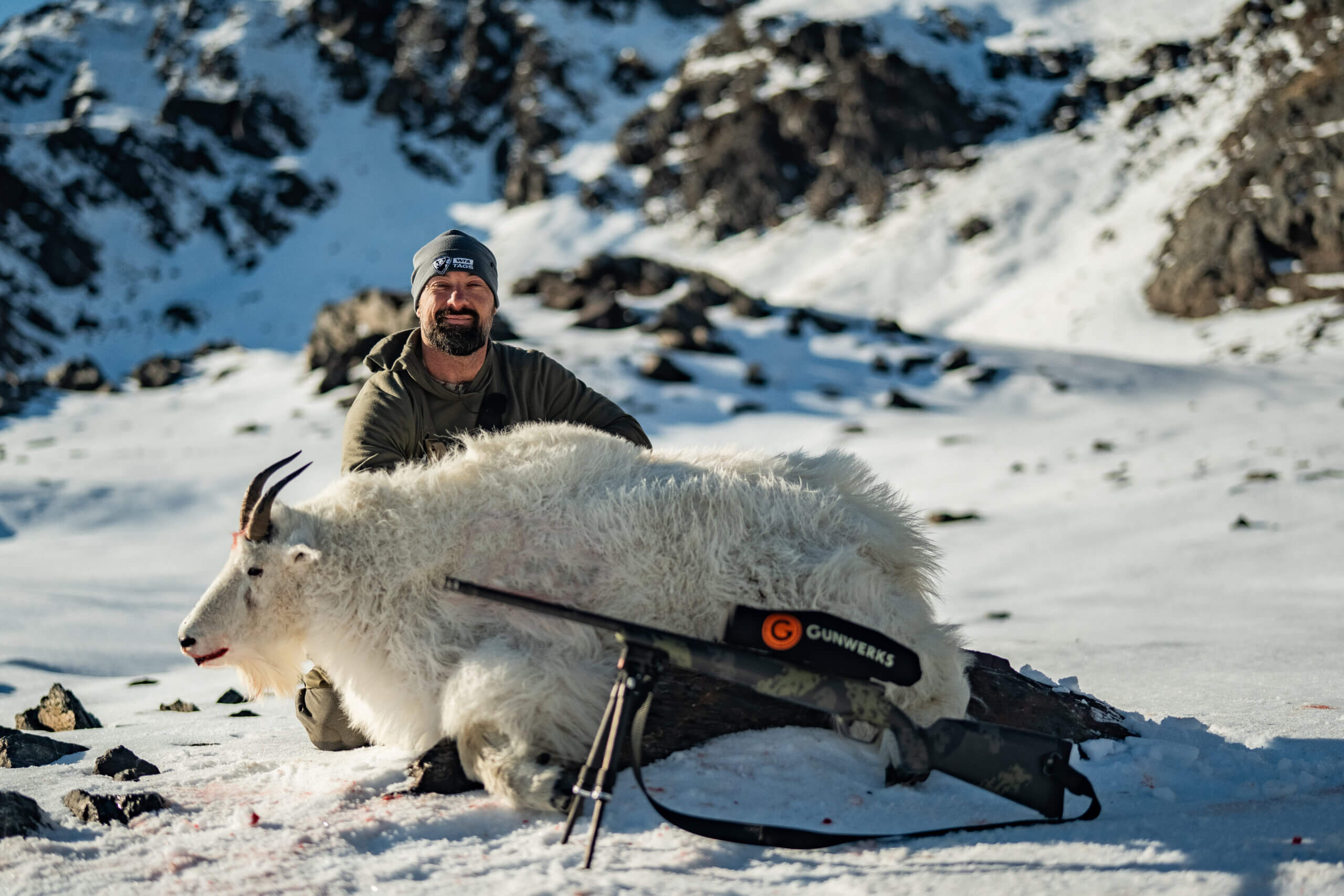
There were two billies, remember, and the one I shot was a very respectable billy that went something like 47–48″ and the other billy was even bigger, probably mid-50″. We wanted to shoot the big one, but in the confusion and excitement of the hunt, the other one stood up and Brad said, “He’s right there, shoot him.” After I shot, the bigger one stood up from behind a little cliff 15 yards away, between us and the one I shot. We were like, “Noooo.” But I’m super happy with my goat. He’s Pope & Young and just shy of Boone and Crockett. A fantastic goat. After the shot, he just ran down, a short way up the opposite mountainside, then took a soft tumble down.
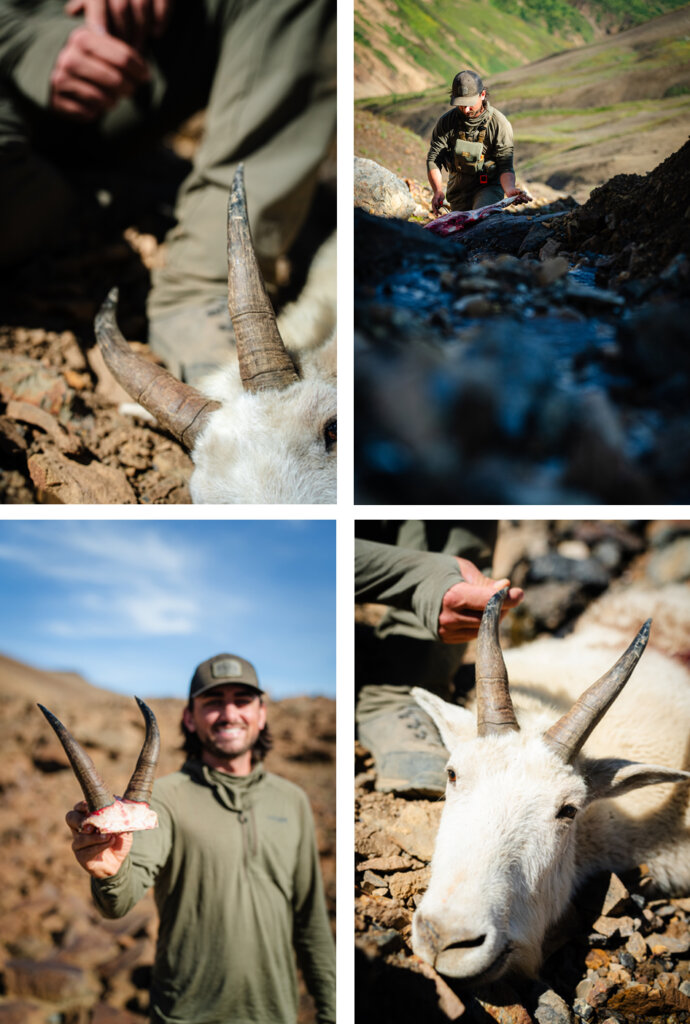
We got down there and took photos and began field dressing and caping him. We couldn’t help but notice what a beautiful spot he died in, right next to a little waterfall. As we were working on him we could get fresh water out of the stream, probably from a melting glacier up on the mountain.
It was about 2 ½ miles back to spike camp with the meat, hide, and head. We were pretty loaded down. We got back to camp that night and joked that because we were prepared to be out there for 10 days and we had so much food with us, we’d have to either carry it back out or eat it all that night. We ate a ton of it!
That’s when it soaked in that we had shot the goat about as quickly as possible, unless one had been standing right outside our camp on that first morning. It was awesome, especially with a bow. Maybe with a rifle, you might get on one that soon. But everything had worked out perfectly for us. We spent the night, then took a couple of hours in the morning to finish the cape a bit, get packed, and rest before the hike out. We were pretty worn out, it had been a lot of hiking in just two days.
It took us 7–8 hours to hike back to the base camp. We left just before noon and got there right before dark. We figured everyone was carrying about 65 pounds in their packs, a pretty good load.
We were packing less food and water, but a lot more mountain goat.
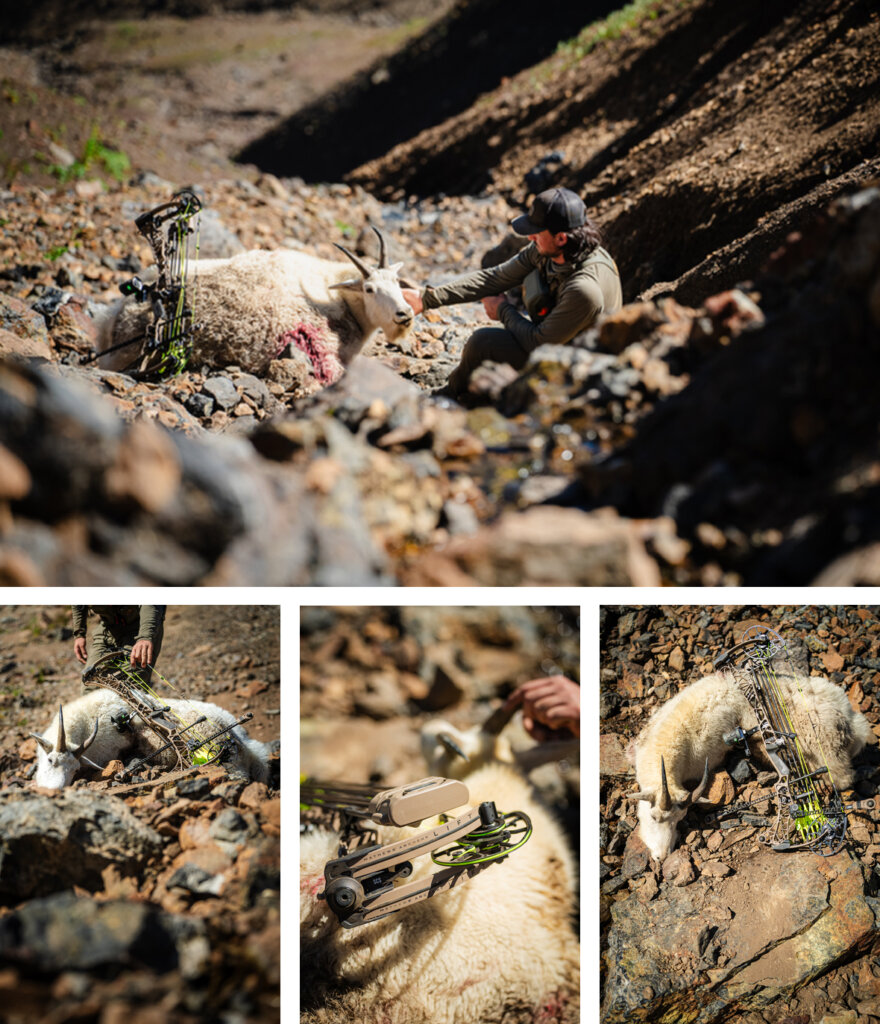
Now, let me tell you about Mathews’ new bow, the LIFT. It was great for this hunt and it performed flawlessly. On the hike up, the bow was on my pack, banging into this or that and getting a pretty good workout. When we got to camp there were no targets to shoot. I found a little flat, bare spot on the tundra to shoot an arrow as a confidence shot. I backed up 40 yards and shot; it was dead on. Somehow the arrow survived so I shot it again, but this time I hit a rock and it blew up. But at least I knew my bow was still on.
The advantage of the Mathews LIFT is it’s super-light, under four pounds, and a fantastic choice for a mountain hunt like this. You wouldn’t want to pack a super-heavy bow up there in mountain goat country.
Also, mountain goats are tough animals. When we were deboning it, it was amazing to see how strong their joints, bone structure, and muscles were from living in such steep, difficult terrain. They are built for those mountains. My point is that it takes some power to bring down those tough animals. My LIFT has an 80-pound draw weight, so it is very, very fast and has a lot of kinetic energy. I was using an expandable broadhead and the arrow passed through the goat, flew another 70 yards, and bounced off the mountain into the river at the bottom. It’s a sweet bow.
Looking back on the hunt, I can’t help but think how hunting takes you to incredible places. Mountain goat country is right up there with the best I’ve ever seen. It was just beautiful. There are no people, the views are incredible, and you see those white-topped mountains. The views are amazing. And it puts into perspective just how small you are in the big scheme of things. Photos don’t do it justice. You feel like an ant. It’s just unbelievable.
If you weren’t on a mountain goat hunt, there’d be no reason to go out there, unless you wanted to do some extreme backpacking. People do it, but I wouldn’t if I wasn’t hunting. I need a carrot at the end of the stick. As I said, hunting takes you to incredible places.
Watch Video
Be sure to enter our current sweepstakes where you can win a mountain goat hunt with the same outfitter in 2024! Enjoy the video and check out the sweepstakes where you can hunt for mountain goats with a rifle or a bow.