Some of the first memories I have of hunting, while I was not yet old enough to carry my own shotgun, were with my Dad following our almost pure white English Setter Casper, who was working the thick timber regrowth’s of Northern Michigan. I would have been, maybe 6 or 7 years old. After school was out on fall Fridays, we would load up our pickup and head a couple of hours north to stay at a small cabin that Dad had rented for weekends during the previous year’s hunt. This would be our home base and from there we would spend the next two days hunting and following Casper in search of Ruffed Grouse and Woodcock. About dusk on Sunday night, we would head home for a late bedtime and school again on Monday morning.
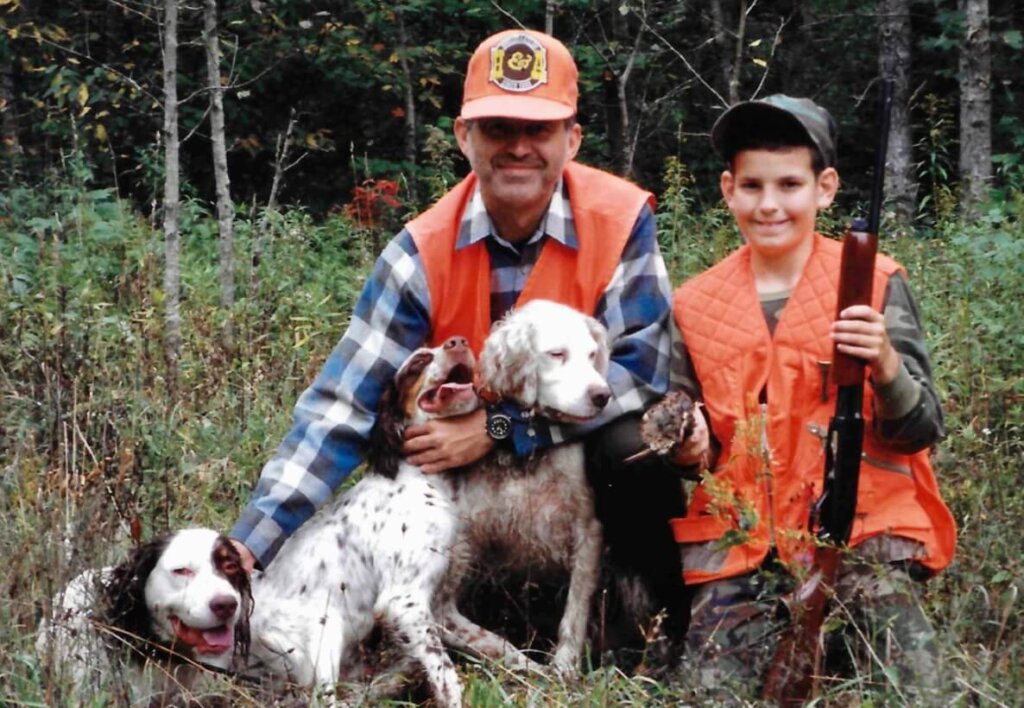
These numerous trips to Northern Michigan not only cemented the great relationship I have with my Father, but also the love that I have for bird dogs and upland hunting. As upland hunters know, once you catch the upland bug, it becomes a lifelong quest. It becomes a passion. This passion has led me to have multiple bird dogs during my life and, at many times, several more than one at a time. My loving wife has now accepted this as part of my normal, thus making it our family’s normal. We wouldn’t, or couldn’t, have it any other way.
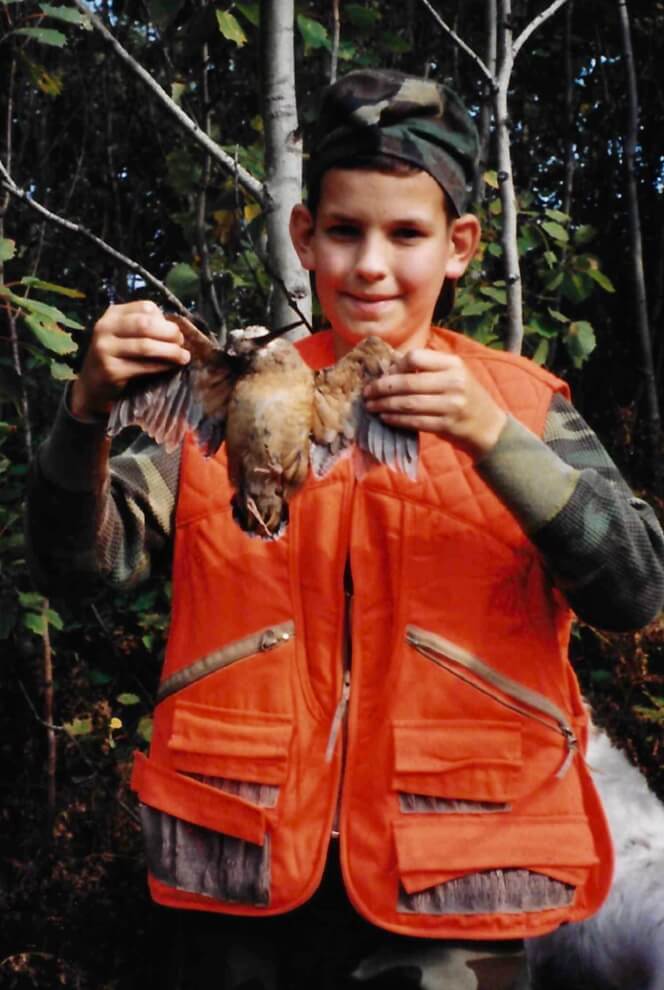
I learned early on that Michigan’s west coast is one of the major flyways for woodcock when they migrate from their breeding grounds in the Canadian north, to the much warmer south, where they winter. There is a two week stretch in late September or early October when this migration is in full swing. Those two or three weeks are magical for upland hunters. Woodcock are known for holding extremely tight in extremely thick cover, which means a close working pointing dog is perfect for the hunt. When I say, “in extremely thick cover”, that is no exaggeration as woodcock hunting is the only time I run with a bell on my dogs. Although they are close workers, I literally can’t see them for 75% of the hunt. But, once that bell stops, I know it’s “game time”. Woodcock are said to be the slowest of all upland game birds, but at the same time, woodcock have these extremely erratic flight patterns. It’s all too common to flush one and just as you raise up to shoot, the bird has disappeared with a sideways dive back down into the thick cover. Woodcock seem to fly without a pattern as they seem to be “kin” to a helicopter rather than a regular upland bird. There really isn’t another upland hunt that is similar to woodcock hunting. It is closeup and quick as shots are often through young cut-over aspen, where 20-25 feet is often beyond visibility. For those of you who have not tried it, it is addictive.
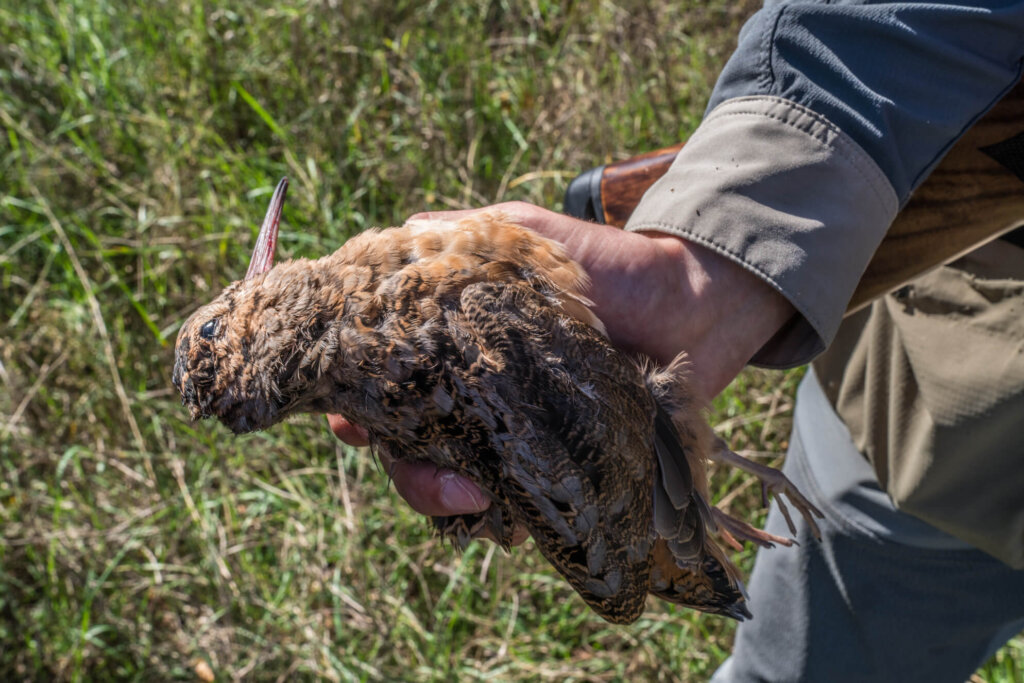
The ideal habitat for woodcock is regrowth forest, and the thicker the better. This was the main reason, as I was growing up, we always focused on the northern portion of Michigan’s lower peninsula. We were always able to find different ages of aspen tree cuts to hunt. These regrowth forests are also great for turkeys, deer, and squirrels. Knowing this, my family and I are a part of Michigan’s Landowner Forest Stewardship Program. We have 20-year plans, for our various parcels, that are designed by ourselves and a Professional Resource Manager. Our plans, which are verified and approved by a DNR Service Forester, are designed to promote forest health and conservation while maximizing healthy populations of wildlife, waterfowl and upland birds. Unfortunately, too many landowners are thinking that good conservation means allowing their forests to mature into a park-like setting where all undergrowth is gone. That might be good for a walk, but it eliminates the heavy cover needed by woodcock. On our local hunting property, near Lake Michigan’s western coastline, we have a selective cutting program that has been going on for almost 10 years now. We have different year cuts that allow for all of the animals and upland birds to find food and cover. Woodcock, in numbers, use some of our regrowth aspen cuts during their migration. Providing the thick aspen cover the woodcock need, gives us the numbers we saw when I was growing up. We knew exactly where we would go for our fall woodcock hunt, and it would be the closest hunting location to home for the entire fall’s Upland Quest.
In between our trip back from California hunting Mountain Quail, and our trip north to hunt Spruce and Ruffed grouse in Saskatchewan, we loaded up the truck again. This time our drive was only 20 minutes before we let the dogs back out. Our family’s hunting property is special in so many ways. Originally my Grandpa Pete owned some of the property and my Dad grew up there and added acreage. Through the years as neighboring parcels became available, they were also added. Our “River Property” holds so many great memories. It’s where I hunted for the first time with my Dad. It is where I was able to harvest my first whitetail, turkey, squirrel, grouse, woodcock, duck, and goose. It is where we gather for the deer season opener every year as a family. Grandpa Pete is no longer with us, but his stories still are. Photos of Grandpa Pete are on the cabin wall along with a few deer and upland mounts. My children and their cousins join my generation, and Mom and Dad, while sharing our stories and traditions at “the River”.
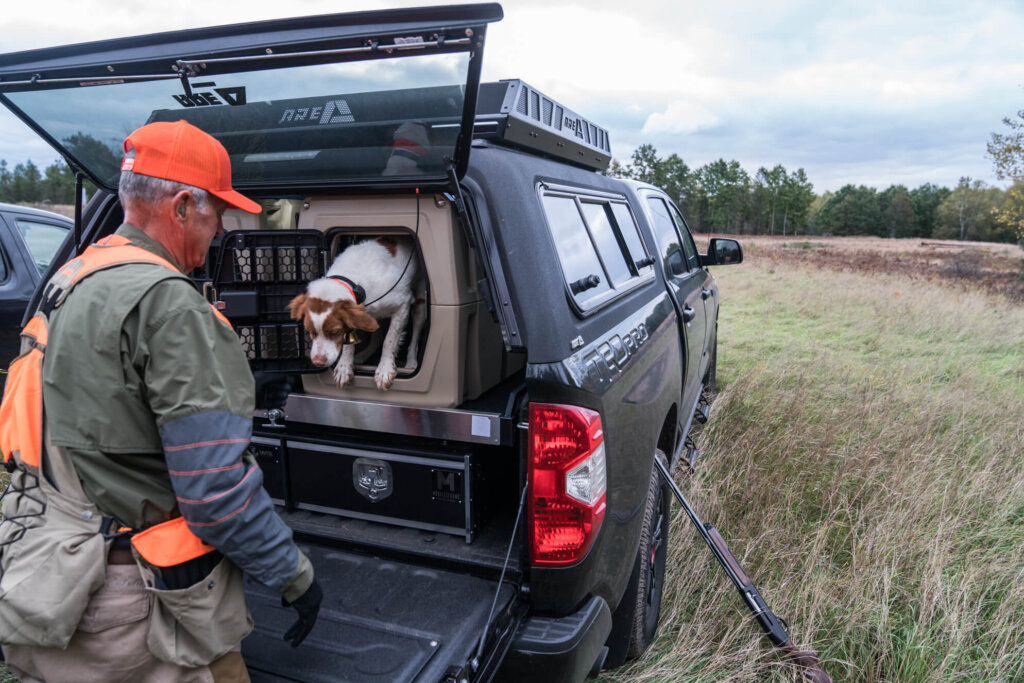
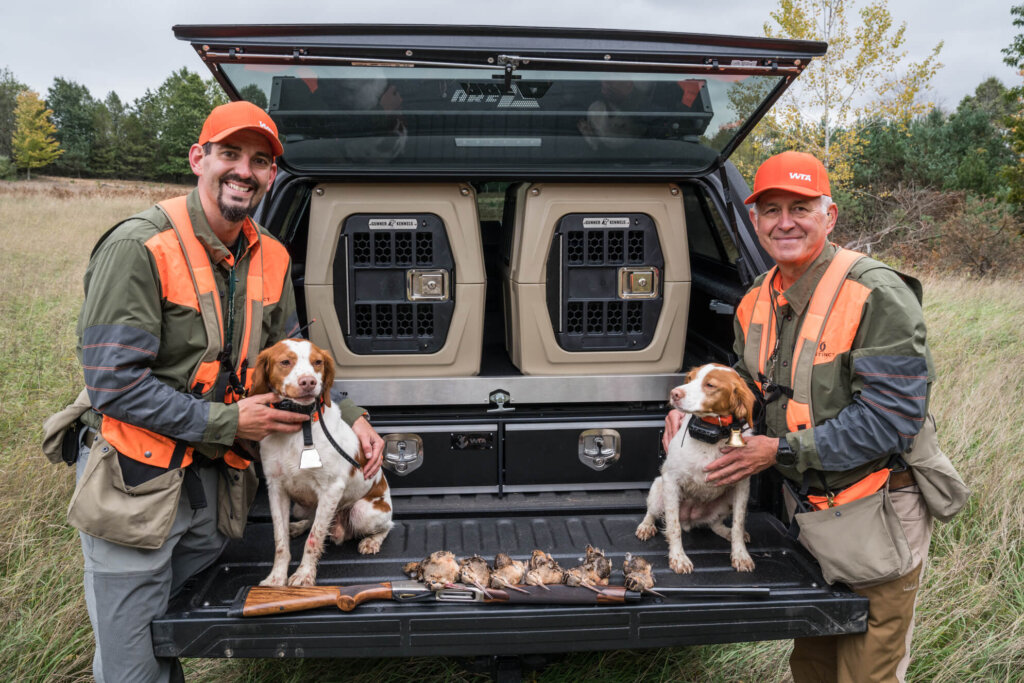
An hour after daylight, on a crisp early October morning, we let Arrow and Dad’s dog, Tiny, out of the truck. I had the feeling that this was going to be a special morning in the woods. We walked into the first aspen regrowth and, within seconds, Tiny was locked up right in front of me. I slowly walked in and the first woodcock exploded at my feet right in front of where Tiny was pointing. I would like to say this is where I made the perfect shot and I had my woodcock for the Upland Slam. But instead, let’s just say “I knocked the rust off”. Just as I squeezed the trigger, the bird did a nosedive and disappeared into the thick aspen cut-over.
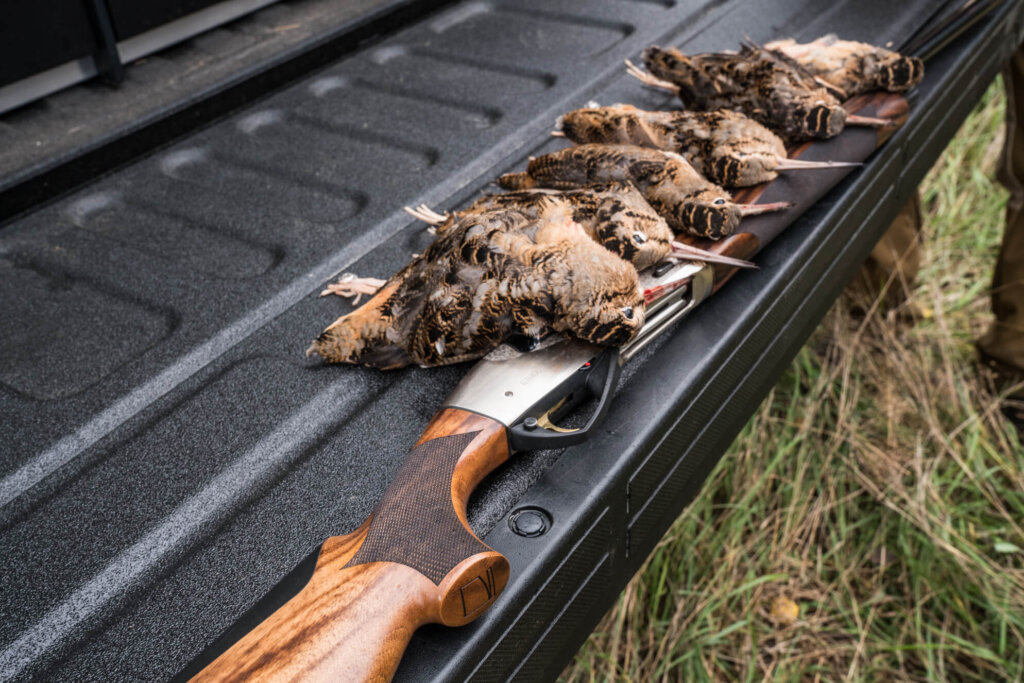
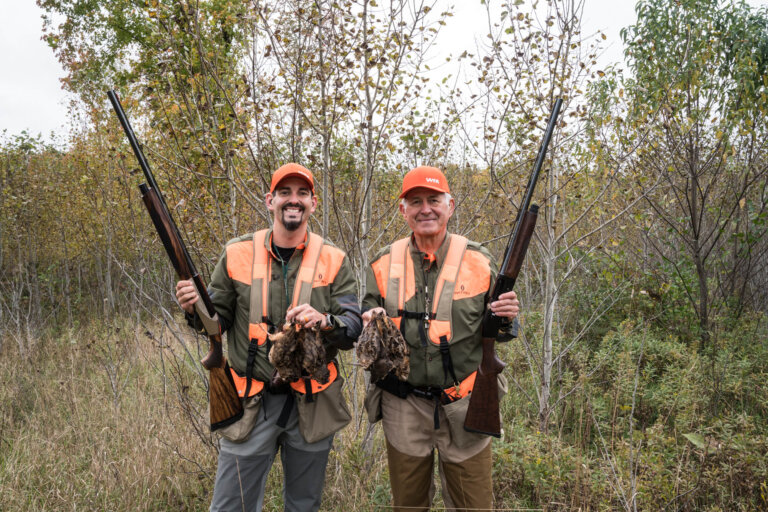
As it turned out, that would not be the only woodcock our dogs would point on this day. The migration was on and the regrowth cuts were absolutely loaded with woodcock. We found out that Tiny was the perfect woodcock dog, as she works close and carefull through the thick heavy cover. After a hunt of less than an hour, Dad and I were walking back to my truck. Alongside of us were a couple of happy Brittany’s, who still had a lot more in the tank for the day. But our day was over as we each had already reached our limit of 3 woodcock. It was another memorable day in the field with Dad and our great dogs. Our management plan and our hard work was paying off as we were doing our part to bring back the woodcock numbers of old. When our Upland Quest was over later this season, there would be a special meal where we spoke of this hunt and ate our traditional woodcock wrapped in bacon.
For those of you who love upland hunting or watching a great dog work, find the correct aspen cover and go woodcock hunting during the migration. You won’t be disappointed!