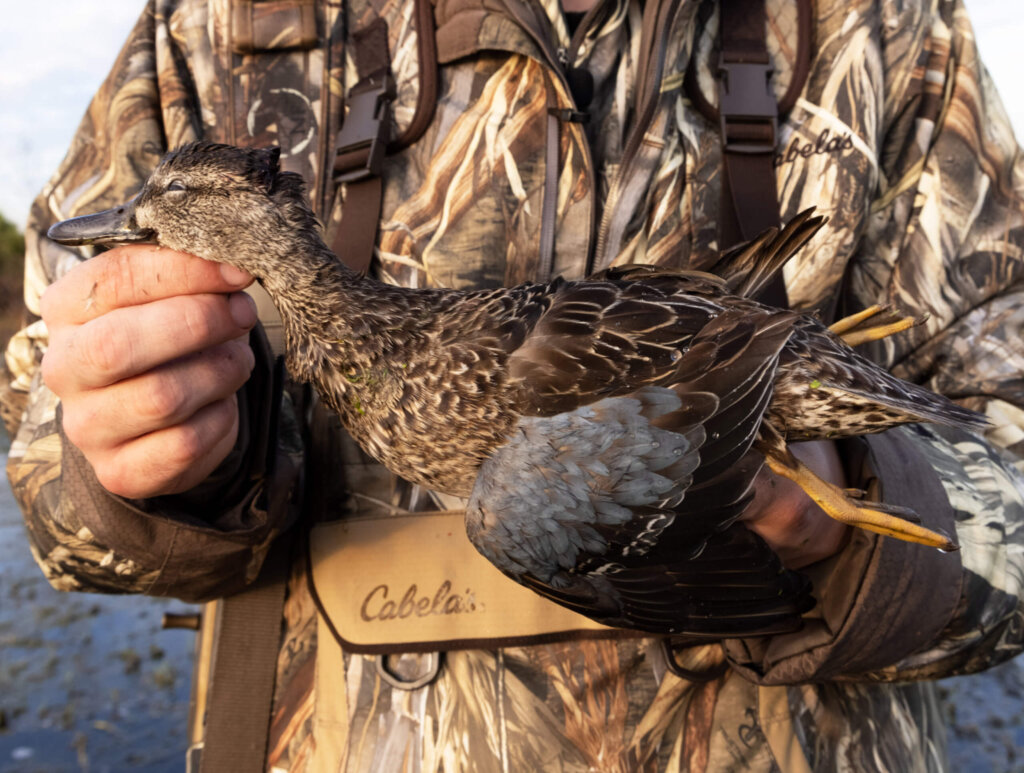
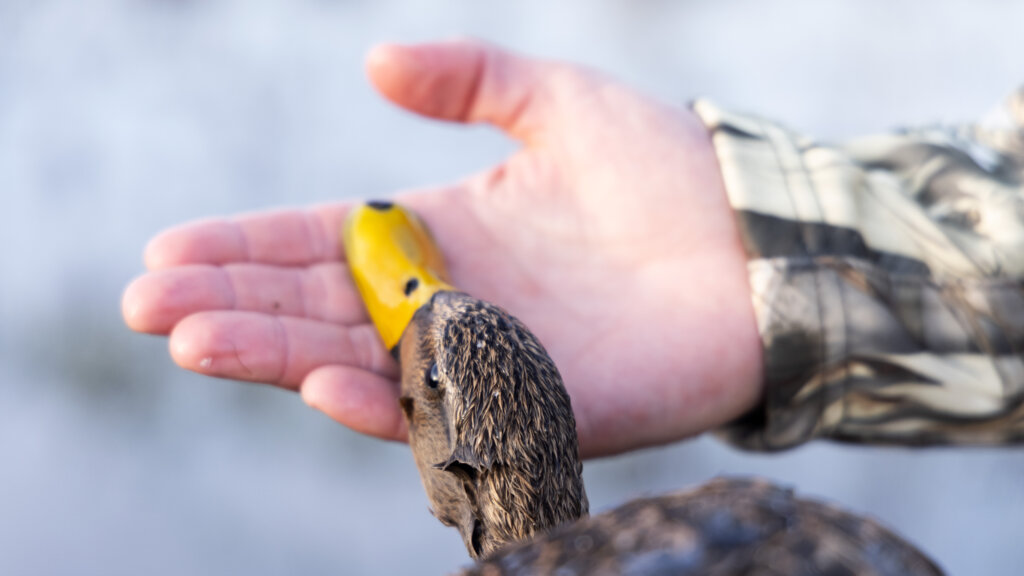
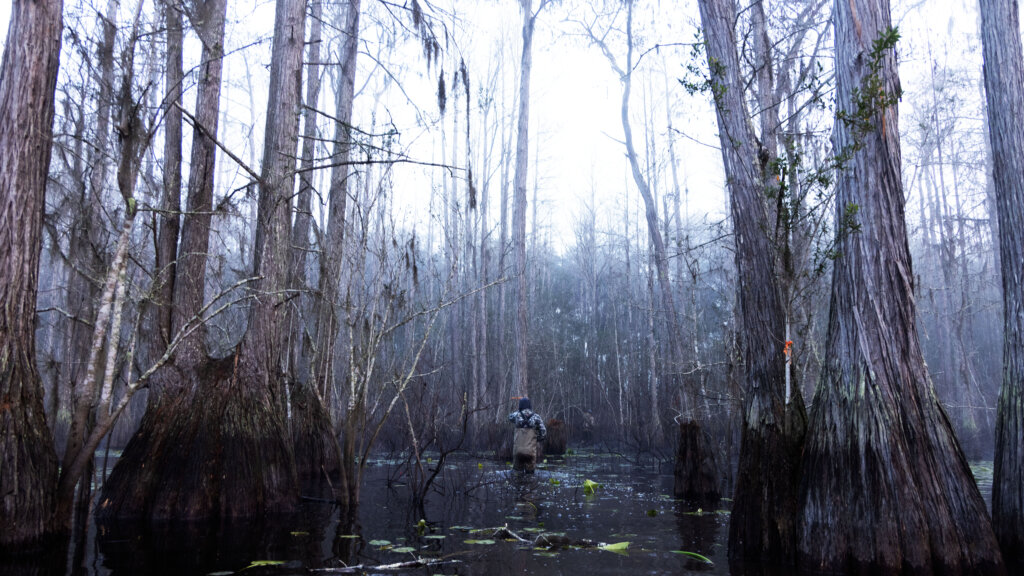


Billy is one of the most respected outfitters that works with WTA. The Osceola Turkey is the most difficult turkey species to successfully hunt within the United States, and Billy definitely knows how to get the job done. He leases a tremendous amount of land in north central Florida, and he’s extremely careful not to overhunt any of his parcels. The result is a very high success rate with WTA hunters. Billy also guides waterfowl hunters. We had tentatively targeted a Greater Scaup off Florida’s northern coast. After the weather pushed the Greater Scaup out of the area, I decided to make a Wood Duck my target.
Billy took us to one of his leases where he had recently seen good numbers of Wood Ducks. The amount of property he has available to hunt makes him an awesome outfitter for turkey and waterfowl. Whether you want to check an Osceola Turkey off your bucket list, or enjoy some of the best waterfowl hunting in the United States, contact WTA and they’ll hook you up on a hunt with Billy.
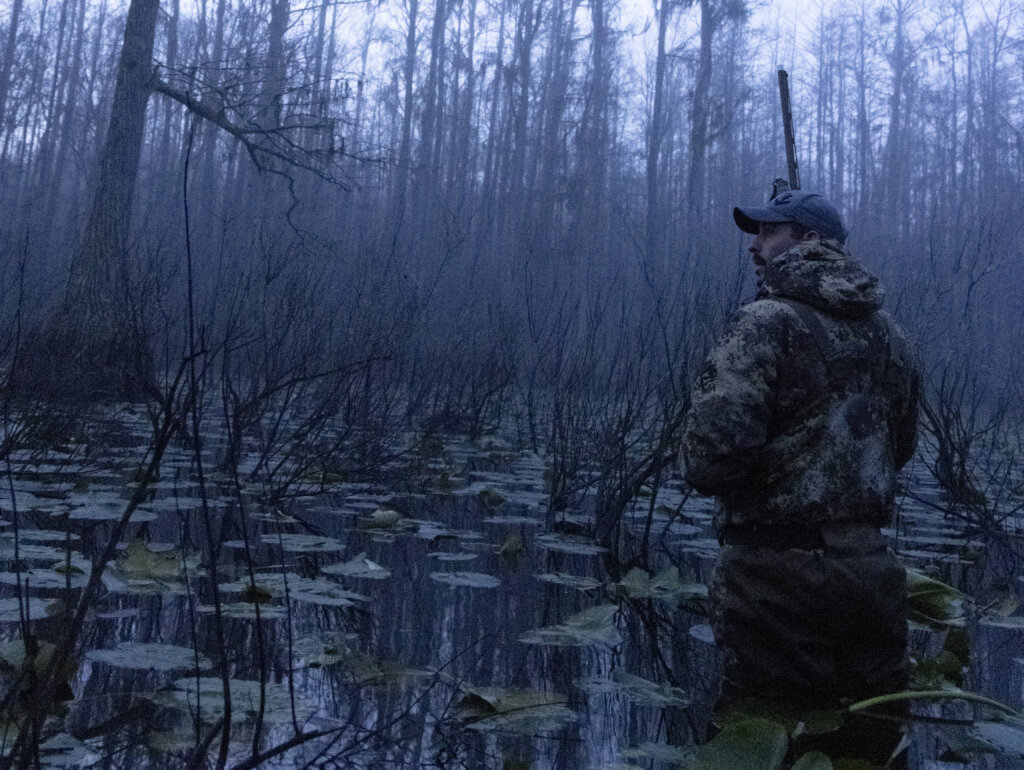
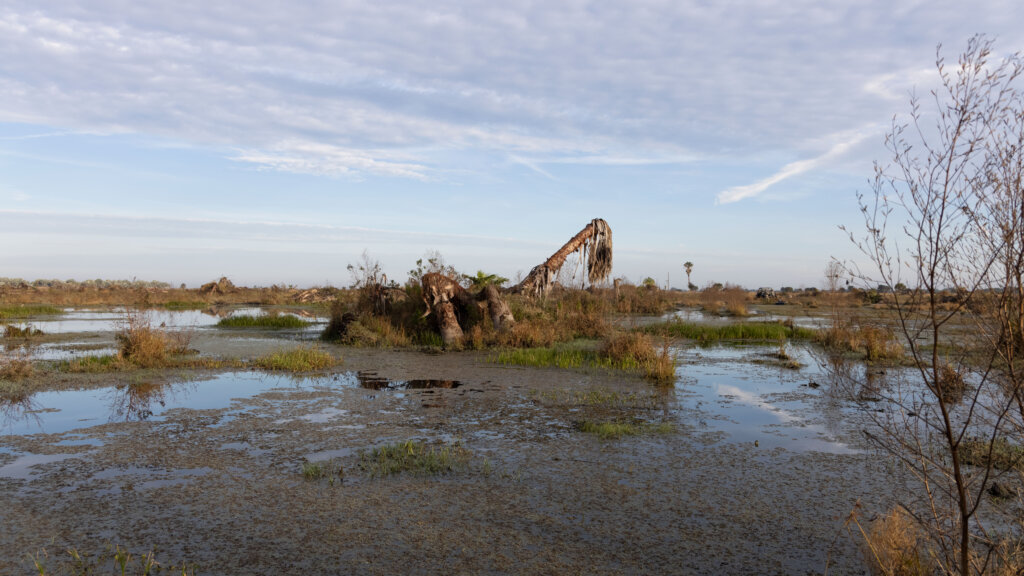
Well before shooting light, we were standing in eighteen inches of water. We expected most of our action to begin at shooting light—and as expected, just prior to shooting light, we had several Woodies buzz us. However, once we were able to start shooting, there were absolutely zero ducks in the air. We watched the empty sky for thirty minutes before Billy spoke up: “Let’s move.”
We drove about five minutes to another of Billy’s leases and parked. He explained that there were some small ponds on this lease that normally held Wood Ducks. We would try and jump shoot them. At the first pond, we quietly moved close to the edge and were able to see a group of about twenty Woodies on the pond. Before we were in position, the Woodies flew! I picked out a large drake and was able to drop him at around thirty yards. Number thirty-three was down! Unfortunately, he was in the middle of a thirty to forty feet deep pond. We couldn’t wade out to him. We didn’t have a boat. We didn’t have a dog. We had to get creative if we were going to get this duck.
My cameraman, Justin, came up with a good idea. Justin carried a drone in his pack during to film overhead footage of the various areas we hunted. His idea was to attach a small hook to a string and tie the string to his drone. We were going drone fishing for a downed duck.
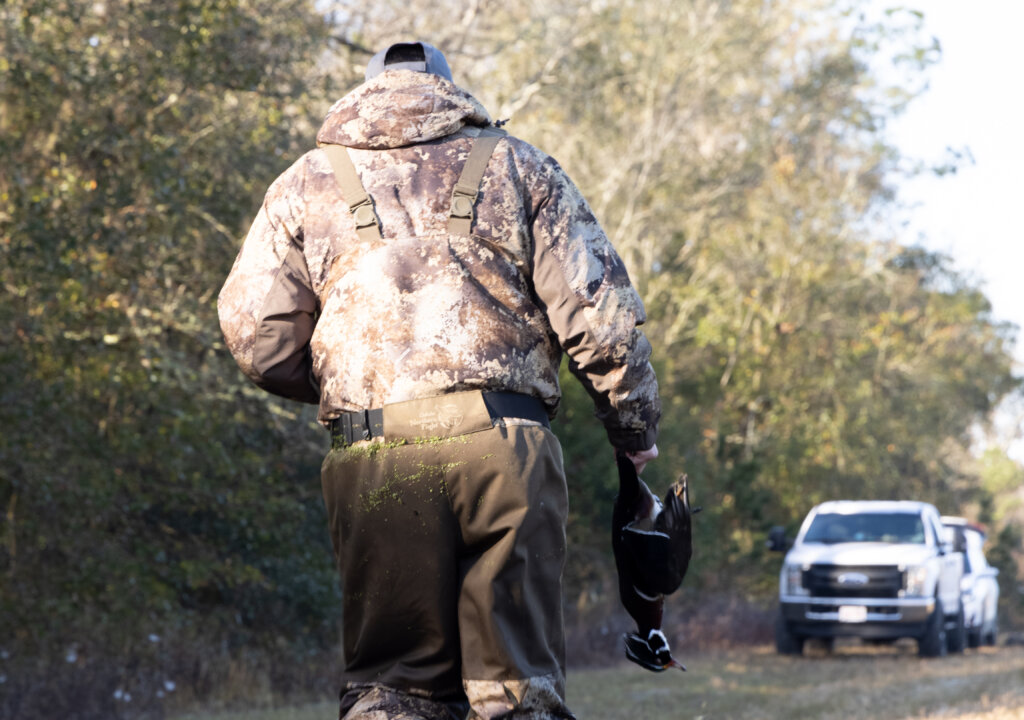
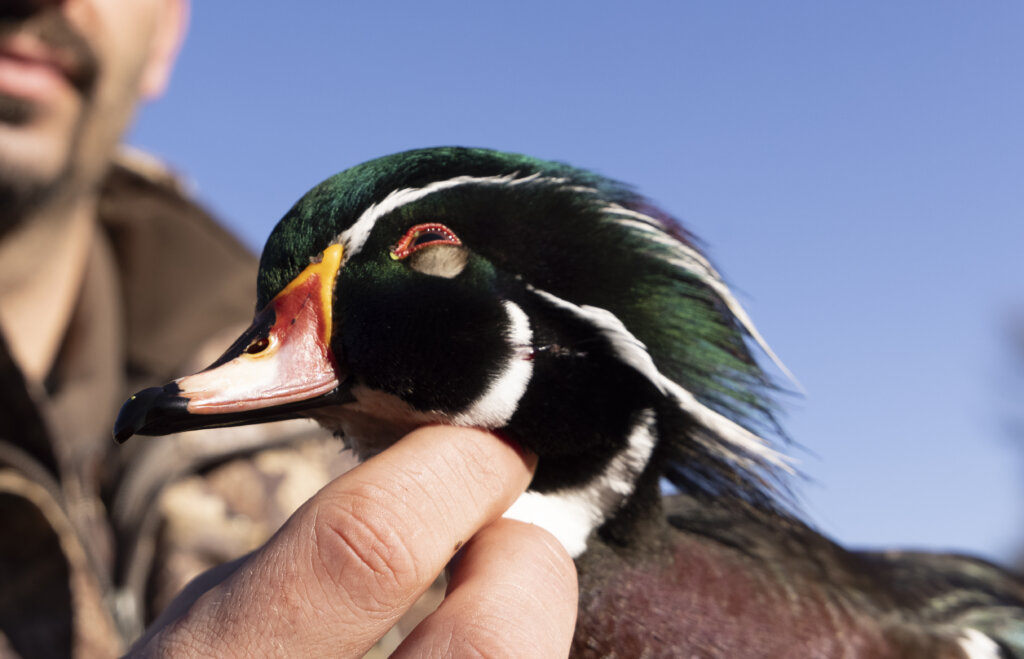
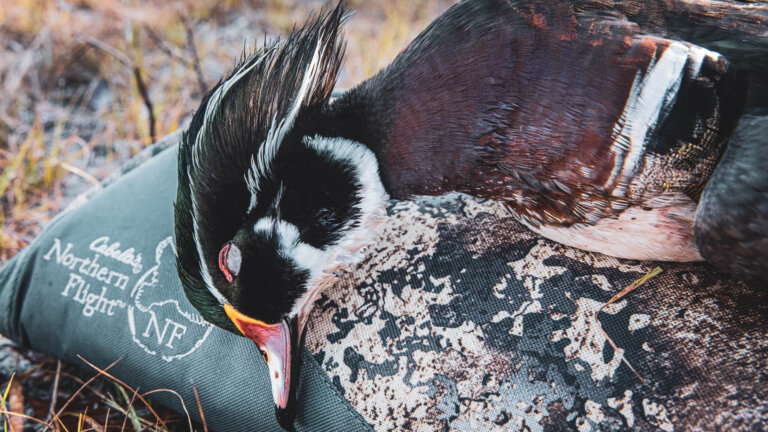
Prior to this point in my life, I honestly never would have imagined I’d be without a dog or boat, trying to retrieve a Wood Duck with a drone. The idea didn’t work out, but we noticed that the drone’s propellers created small waves in the pond. The drone made enough waves to push the Woodie toward the bank with the air from the drone’s rotors. In a relatively short period of time, I had the drake in my hands. This drake was not the typical Wood Duck I was accustomed to. He was a fully colored, mature drake with longer head feathers than any Woodie I had taken before. He was the most beautiful Wood Duck I had ever seen. Not only had I checked number thirty-three off my list, but I also had a beautiful trophy.
Billy wanted to take me to more of his leased ponds, but I decided we should move on. It was hard to pass up hunting the remainder of the day with Billy—but with every day that passed putting me one day closer to the end of the waterfowl season, I felt the pressure mounting. My goal here had been a Wood Duck—I’d accomplished that goal and decided it was best to continue chasing the ten Slam birds that remained on the list. It was going to be tough if I didn’t get a couple more checked off the list here in Florida.
Billy made arrangements for us to hunt in southern Florida with his friend, Kenny on Lake Okeechobee. By that evening, about 250 miles later, we were in a motel near Lake Okeechobee. The most prevalent waterfowl in the area are Blue-winged Teal, Mottled Ducks, Ring-necked Ducks, and Ruddy Ducks. The potential was there to check off at least three dabbling ducks.
Early the next morning, we met Kenny at his home. Kenny was excited to help me complete the Slam, and took us to a private lease that he normally saves for himself and his wife. We were set up to shoot off of a twelve-foot-by-twelve-foot grass island on an eighteen-inch-deep flooded field. Kenny put out a spread of thirty Teal decoys plus three motion decoys. He told us that he has found great success using motion decoys and almost always has one set up when hunting.
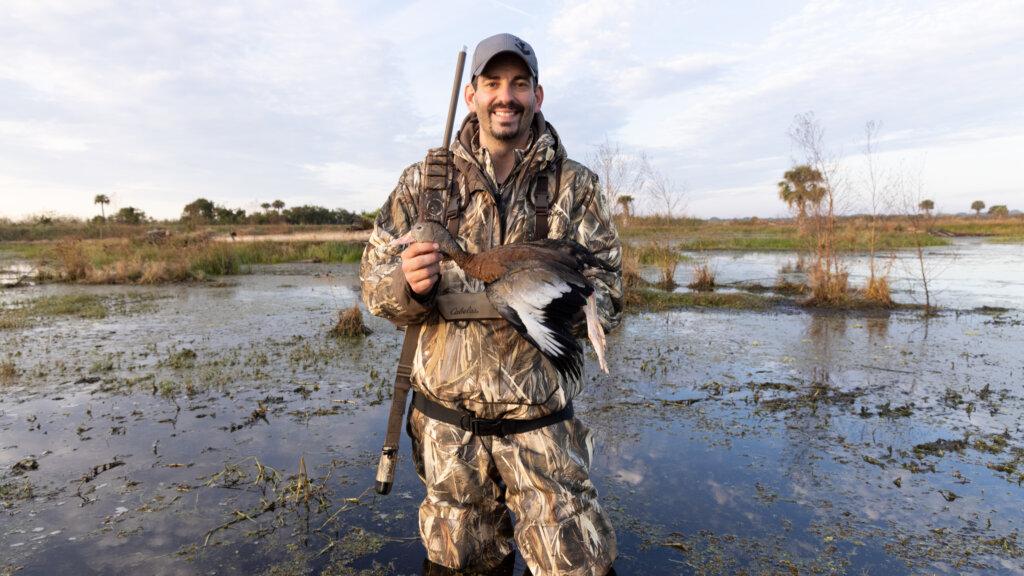
I had never hunted this area and was not sure what to expect. I’ll just say my first duck hunt near Lake Okeechobee was fast and furious. In twenty-two minutes, I had my daily limit—with one hen Blue-winged Teal, a drake Green-winged Teal, and four Black-bellied Whistling Ducks. Of the three species shot, two were target ducks! I checked number thirty-four off the list with the Black-bellied Whistling Duck, and although this Blue-winged Teal was a hen, I would get my drake later on in the hunt for number thirty-five. What a hunt!
On the way back to Kenny’s place, we scouted for Mottled Ducks, and Kenny showed us a little flooded hole with eight or ten Mottled Ducks on it. I’d already taken my daily limit, so these ducks would be safe that day. That flooded hole is where we started the next morning. Kenny put out four Black Duck decoys and one motion decoy. I hid in some cattails waiting for a drake Mottled Duck. The daily limit is only one, and I had to be sure I picked out a drake to count toward the slam.
While waiting for legal shooting light, a large flock of Teal and some Mottled Ducks landed in front of me. I could distinguish the drakes, as they sound similar to a Mallard—with a low, raspy “raeb” sound. Just after it was legal to shoot, a Mottled Duck circled and flew in front of me. I could see his brighter-colored beak and knew he was a drake. I took a single perfect shot—and dropped him for number thirty-six on the Slam list. We waited at the pond a bit longer and I took a couple of Teal. That day’s hunt was over in an hour. We loaded back up in our rental SUV, thanked Captain Kenny, and said goodbye. We never saw a Fulvous Whistling Duck in Florida.
When we got back to town, we booked flights back home, and with thirty-six species checked off the list, I was feeling a little more confident that the North American Waterfowl Slam could be achieved. I remain excited about that gorgeous Woodie I took with Billy, and smile whenever I think about “pushing” it across the pond with Justin’s drone. I had three days before leaving for my next hunt on the Atlantic coast.


The end of winter in the Northern Hemisphere gives me the itch to travel. I often visit Uganda to chase buffalo, before coming home for Spring turkey season. But this year, I switched it up. My wife, Alka, and I headed south to New Zealand for the last few days of February. We hosted two groups of hunters at two of WTA’s top outfitters and we all enjoyed a wonderful trip.
New Zealand offers endless opportunities for non-hunting companions while delivering a world-class hunting experience. Both lodges where we stayed had dedicated hosts who organized daily activities for the non-hunting guests. Shopping, visiting wineries, sightseeing in Mount Cook, jet boating, and many other activities filled the schedule. Once our hunts wrapped up, the guys joined the ladies on several of these excursions. I especially enjoyed spending a day exploring Mount Cook and an afternoon on the jet boat.
After flying to New Zealand and clearing customs, we caught a short flight to Queenstown. Queenstown is beautiful, situated on a lakeshore with steep mountains dropping straight to the water, making for postcard views. The local food scene is excellent. Alka and I tried multiple restaurants, checked out local shops, and rode the skylift to the top of the mountain. It was nice to have a day or two to acclimate to the 13-hour time difference.
We went to our first lodge, got settled in, visited the rifle range, and then had an incredible dinner.
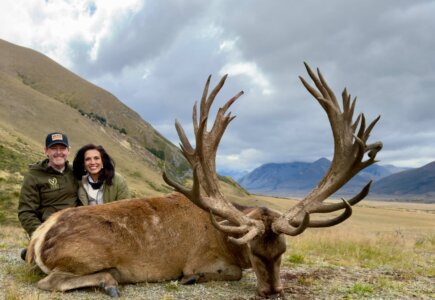
Alka isn’t really a hunter. She has taken a few animals, and somehow I talked her into hunting a red stag. We got out at daylight with our excellent guide, Victor, when the stags were roaring. We looked at a couple of groups and crept over a ridge to glass into a creek bottom. We found stags roaring, fighting, feeding, and moving all over.
We finally decided on a beautiful red stag with a tank of a body, heavy mass, great crowns. And you could tell he was old. He was also dominant. The others gave way whenever he came near.
After a couple of hours, our stag bedded with another away from the others, and we decided to make a move. Victor expertly maneuvered us down into the thick creek bottom with the wind in our faces. Eventually, we moved within 100 yards of where we thought the stags were. After a while, the other stag stood up and repositioned. When he bedded again, Victor wanted to shift for a better angle. We ended up at 65 yards and could see our stag’s antler tips.
We waited 3 hours for the big guy to get up. We roared, threw rocks, raked brush, but he was tucked in and didn’t budge. Finally, in the early afternoon, Victor raked some brush, roared loudly, and the stag stood. Alka quickly got on the .30-06 and with a couple of shots an inch apart to the shoulder, the big stag dropped. Celebration time!
Alka got a super experience with lots of stag action, a great stalk in close, and then the nerve-racking wait for the 525″ stag to stand up and offer a shot.
Over the next few days, our group of hunters took some incredible stags and fallow deer. Toward the end, a few of us wanted to hunt tahr in the southern Alps.
I cannot describe how beautiful and rugged those mountains are, and seeing them from a helicopter is an experience not to be missed. My hunting partner and I both scored on nice bull tahr the morning we went out, and then the chopper pilot took the ladies up for a quick ride to show them the beauty and majesty of the southern Alps. It was a morning none of us will ever forget.
Alka and I then packed up and transferred to our next lodge, where we met four other couples, including our good friends Russell and Cindy. Russell and I were going to hunt together, as we have all over the globe, and again, the ladies had a full palette of fun excursions planned.
During the first afternoon, we saw a number of great stags and some incredible fallow. What really excited me was seeing and hearing bugling elk. We returned for a 5-star meal (Be ready to gain weight in New Zealand!) and prepared for the next day.
Just after daylight, we were on stags and moving around the hills and canyons, glassing and enjoying the views and the number of animals. One of the hardest parts of hunting there is choosing the stag you want to pursue. There are so many, and they are all so different, it’s sensory overload. There are wide, heavy, drop tines, typical frames, and every other antler configuration imaginable.
While glassing some stags in a wallow across a canyon, I spotted a big bull elk up on a ridge. He was so regal standing on the skyline, I kept coming back to him with my binos. I must have talked about him non-stop, because my outfitter and guide Shaun finally said, “We can go after him if you want, but he is about a mile away, and it’s all uphill.” I told Shaun I was ready to go if he was, so off we went, trekking up the mountain.
When we got to the top, we couldn’t find the bull. Huge rock formations blocked us from seeing a number of areas, so we slowly moved from rock to rock, carefully glassing, until we found the big bull on the third set of rocks.
I quickly set up and Shaun ranged the bull at a bit under 300 yards, moving away. Shaun has suppressed Gunwerks rifles available for his clients to use. I knew with that setup, the shot should be easy if the bull presented a good angle.
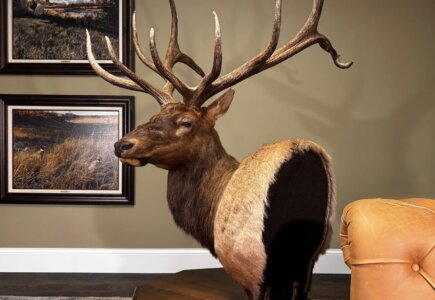
After watching him for a few minutes, the bull swung around, giving me a quartering away shot, and I tucked one in behind the shoulder. The big guy was done. When we got to him, he was way bigger than I thought, with 54″ beams and a huge frame, the 7×7 stretched the tape to 397″. I was ecstatic!
That afternoon, I went along with Russell on an exciting stag hunt where we got in on two great bulls. After a lot of maneuvering, they stepped out of a bedding area at 70 yards, and Russell hammered a beautiful stag with great crowns and kicker tines off both sides. Getting in close on these huge stags is an absolute blast.
The other guys in camp were laying down some great animals as well. On our second-to-last day, we all decided to go with the ladies for a jet boat ride up a glacial river, a short hike, and then a winery stop for apps and drinks. It was a fantastic day of seeing incredible scenery and relaxing with old and new friends.
On our last morning, Russell decided to find a good elk. An hour or so later, we found a big bull working a wallow. Russell and his guide made a stalk, Russ got on the sticks, and the next thing Shaun and I saw through our binos was the big heavy bull tipping over. What a great way to end our superb hunt!
We all headed back to Queenstown in the afternoon, had a great dinner at the Botswana Butchery restaurant, and then it was one sleep and a long flight home.
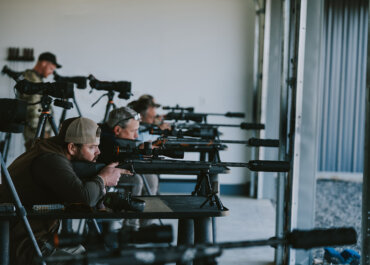
There’s a major difference between simply shooting a rifle and building a repeatable process that works under pressure in real hunting situations.
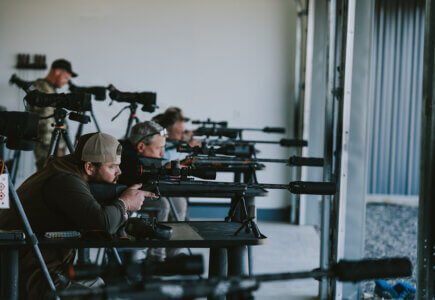
That was the biggest takeaway when the Worldwide Trophy Adventures team attended the Gunwerks Long Range University L1 and L2 courses in Cody, Wyoming. What started as an opportunity to sharpen our shooting skills quickly became something much bigger: a deep dive into confidence, communication, ethics, and the complete shooting system.
At WTA, we spend our lives helping hunters prepare for meaningful hunts around the world. We talk constantly about tags, gear, outfitters, strategy, and opportunity. But eventually, every hunt comes down to a single moment behind the rifle. That’s where Long Range University changes the conversation.
A lot of hunters hear “long range shooting” and immediately think about distance. The course focused far more on consistency, process, and decision making than simply stretching the range.
The Gunwerks instructors repeatedly emphasized that successful shooting is about understanding the entire system:
That holistic approach was eye-opening, even for experienced hunters and shooters.
Several members of the WTA team came into the class with years of hunting experience and a solid understanding of rifles and optics. But one theme surfaced almost immediately: many of us had developed bad habits over time, simply because we’d never received formal instruction.
By lunchtime on the first day, most of us were already identifying flaws in our setup, body position, and shot process.
Honestly, that was one of the best parts of the experience.
Confidence is one of the most important elements in hunting. When doubt creeps into your mind during a critical moment, things tend to unravel quickly. Long Range University focuses heavily on eliminating uncertainty by building a repeatable process.
The course blended classroom instruction with live-fire range sessions, translating concepts immediately into practical applications.
Topics included:
One of the most valuable lessons was learning to manage instability instead of fearing it. In the field, hunting shots rarely happen from a perfect, benchrest position. Hunters must adapt to terrain, weather, awkward angles, and time pressure.
The instructors did an exceptional job of simplifying complex concepts into practical, understandable instructions. Nothing felt overly tactical or intimidating. The focus remained on building ethical, capable hunters.
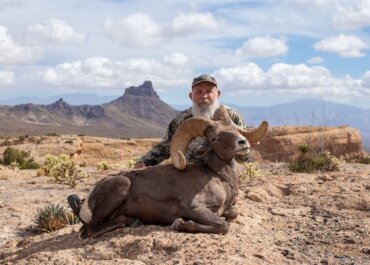
The Arizona deer and sheep deadline on June 2 marks the end of another application season. There are a few minor draws and point-only periods coming up, but the major deadlines have passed and the draw results have been posted. I hope this is your year to draw an awesome tag! If not, you’ve built another valuable bonus point for your future. That’s the name of the game!
If you successfully drew a tag, you received a call from your dedicated WTA TAGS consultant informing you of your good fortune. If you drew a tag and haven’t booked with an outfitter, this needs immediate attention. WTA’s owner Mark Peterson said it best: “After finally drawing a great tag…don’t screw it up at the end…hire a reputable outfitter!”
Arizona has a staggered deadline for its limited-entry big game tags. June 2 marks the deadline to apply for deer and sheep tags. For deer, we’re talking about mule deer and coues deer. And for sheep, desert bighorn and Rocky Mountain bighorn are both available.
Applicants in Arizona are restricted to one deer application. The state considers two choices on the application. You can utilize two mule deer choices, or two coues deer choices, or one choice for each. For example, first choice mule deer, second choice coues deer.
Consider this quick, low-level consultation when deciding how to apply for deer in Arizona. Arizona boasts the best mule deer hunting in North America. It is truly the land of 200″. However, these deer reside in a handful of units with VERY limited non-resident tags. This is a tag you may never draw in your lifetime.
Arizona also boasts the best coues deer hunting in the West. Early hunts in October and November can easily be drawn with 0–3 bonus points and we offer highly successful adventures with our TAGS-endorsed outfitters. The more sought-after late coues hunts in December are more difficult to draw, but the tag can be drawn within 8 years, hopefully sooner.