

I had two target species of Snow Goose for Arkansas: a Common Snow Goose and a Blue Snow Goose. I was taking part in what has become an annual conservation hunt for Common Snow, Blue Snow, and Ross Geese. The conservation hunt allows hunters to take as many of these Snow Geese, also known as Light Geese, as they possibly can. For nearly three months each year, from February 1 through most of April, this conservation hunt takes place and draws waterfowl hunters from across the United States. I’d never participated in this conservation hunt, but looked forward to hunting the “The Duck Hunting Capital of the World.”
Experts say that the Light Goose population needs to be cut in half. Biologists and wildlife managers from across North America have agreed that populations of Light Geese are becoming so numerous that they are over-browsing the fragile tundra habitats. It is estimated that the midcontinent number of Light Geese could be as many as five million birds. The only effective way to reduce the population is by increasing the goose numbers that hunters are allowed to harvest. As a result, conservation hunts have been set up with rules and regulations specifically for hunting Light Geese. The annual conservation hunt takes place immediately after the regular waterfowl season, during the Snow Goose migration. The most notable rules during this season include no bag limits on Light Geese, meaning you can shoot as many as you possibly can, and electronic calling is allowed.
On the evening of February 2, we traveled through Stuttgart and drove a few miles southwest to our lodge. It was an amazing lodge with beautiful views located on the banks of Crooked Creek. We met our guides, Colton and Joel, and settled into our first-class rooms. We discussed plans for the next morning and enjoyed a gourmet meal.
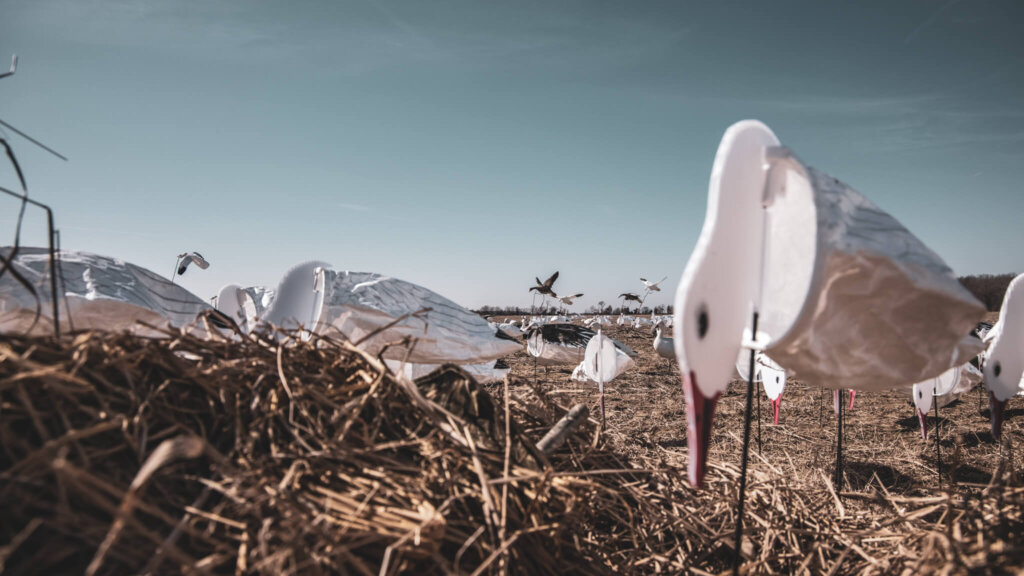
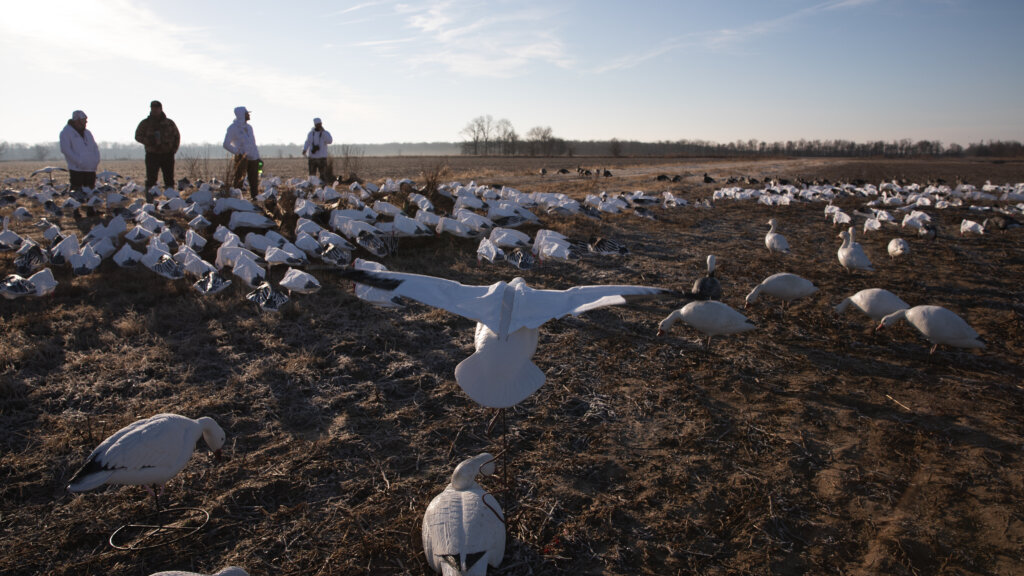
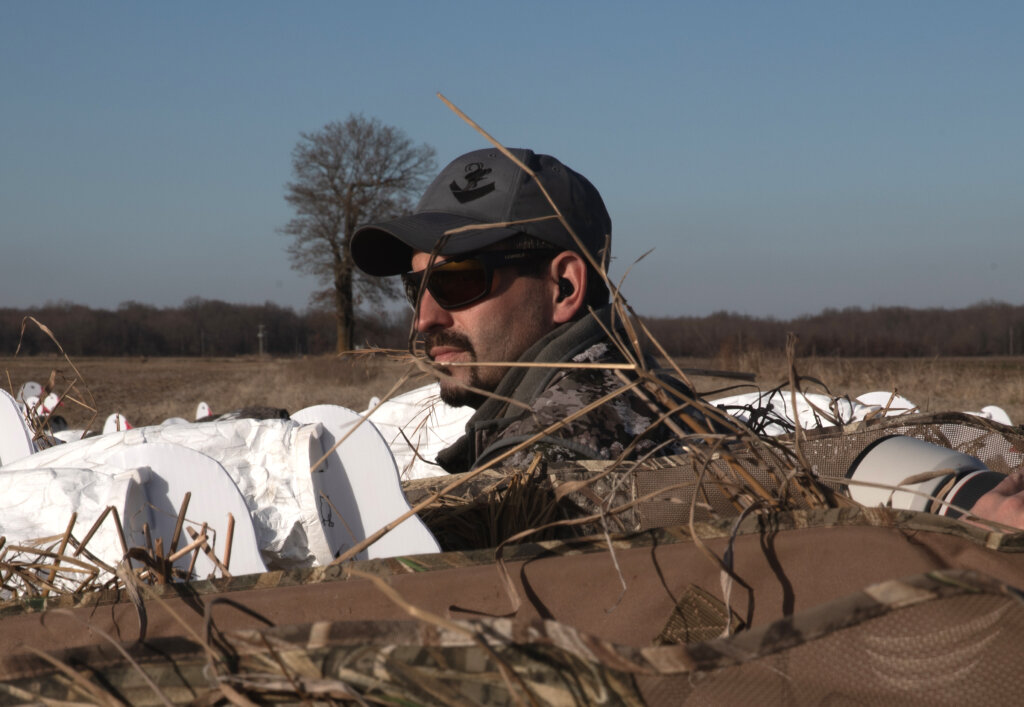
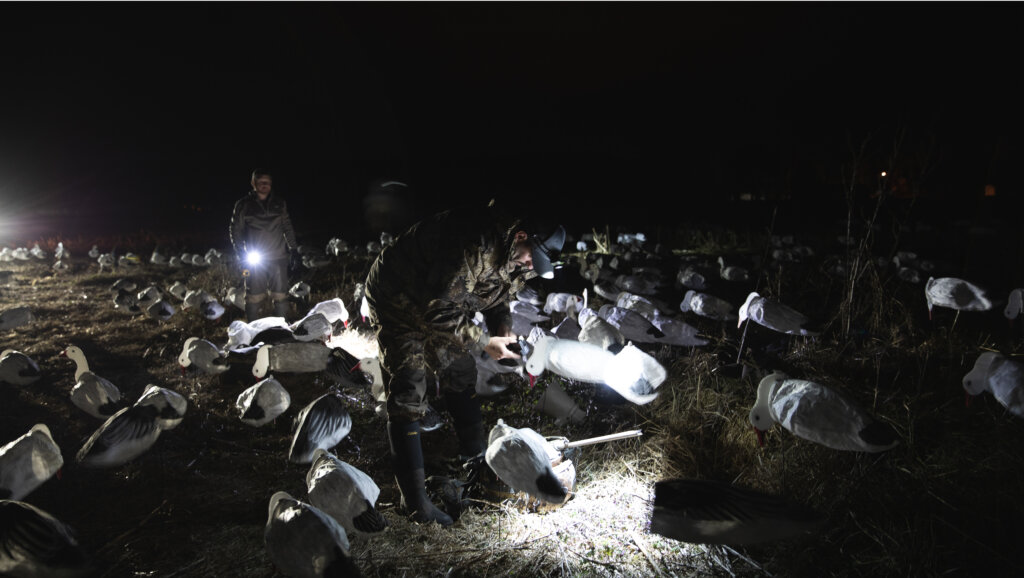
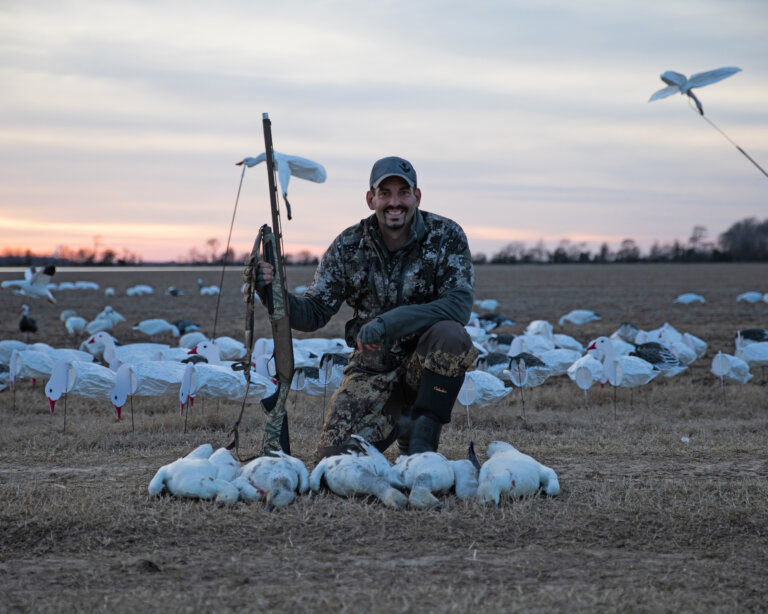
Early the next morning, we set up on a cut rice field. Colton and Joel put about one thousand full-body and sock decoys out. They had motion sets, spinners, and about three dozen Speck decoys off to the side for use as confidence decoys. “Shoot anything that’s white,” our guides told me just before shooting light—which meant Snow, Ross, and Blue Geese. Conservation hunts typically consist of a number of hunters in order to maximize the numbers of birds taken. When there are multiple hunters shooting at large groups of birds, it is often hard to tell who shot what. For the Waterfowl Slam, I needed one hundred percent certainty that I had taken each of the forty-three species. If I wasn’t absolutely certain that I shot the bird, I couldn’t count it toward my slam total. As the only shooter here, I’d have that certainty. On most of our other hunts, when additional shooters were hunting with us, they’d generally let me shoot any target species that flew in before they’d start shooting.
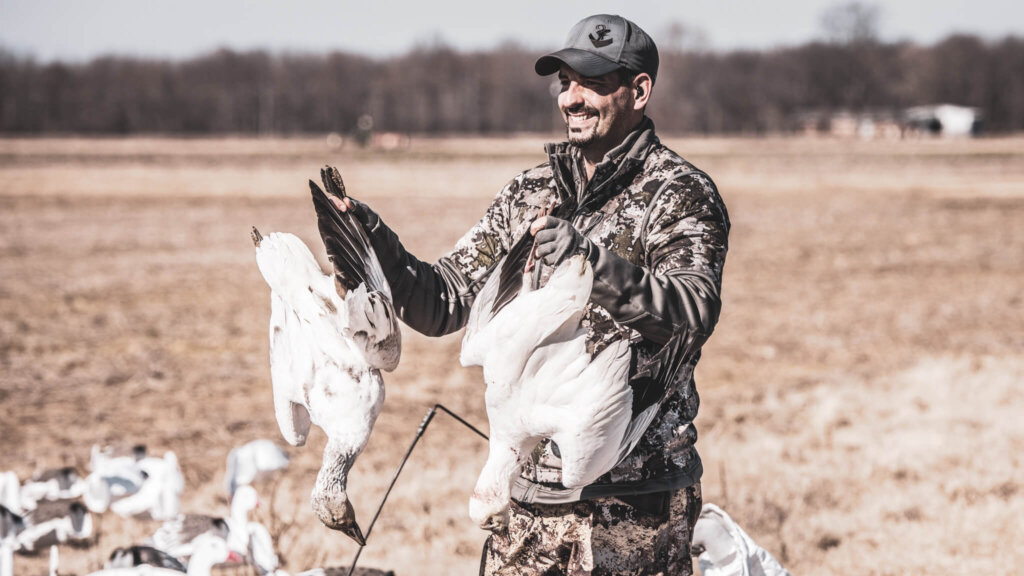
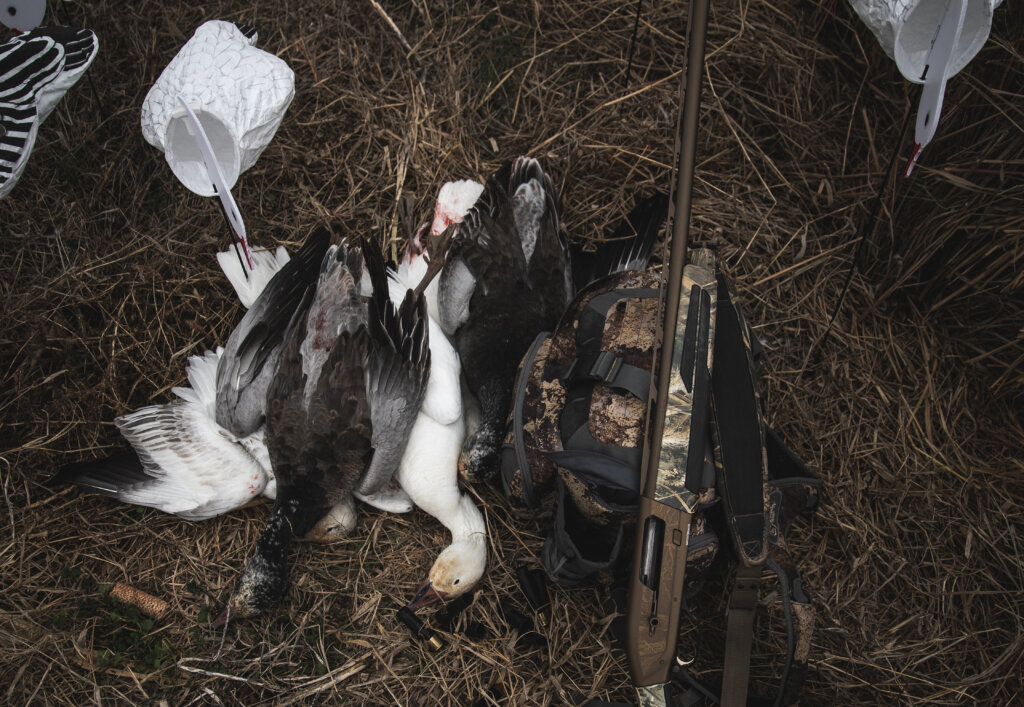
Although there were literally thousands of Light Geese in the air, they were attracted to a field about a mile away from where we had set up. It ended up being a slow morning of hunting, as no Snow Geese flew within range for me to take a shot. The Specks, on the other hand, loved our decoy spread and wouldn’t stay away. It would have been a great Speck hunt had the season not ended a couple days before. We decided to stick with this spot and see what might happen, and I was glad we did, because between noon and one in the afternoon, we finally had some singles and small groups come in to our spread. I shot three Snows and two Ross Geese. I had already checked the Ross Goose off my list during our hunt in Oklahoma, but the first Snow Goose was number thirty-nine on my Waterfowl Slam list!
The afternoon weather was sunny with very little breeze—less than ideal conditions for a waterfowl hunt. Although we did not see any up close, there were good numbers of Blue Geese flying with the large groups of Snows that were landing in the field about a mile away. I was optimistic for the next morning. We packed up our gear and headed back to the lodge for the night.
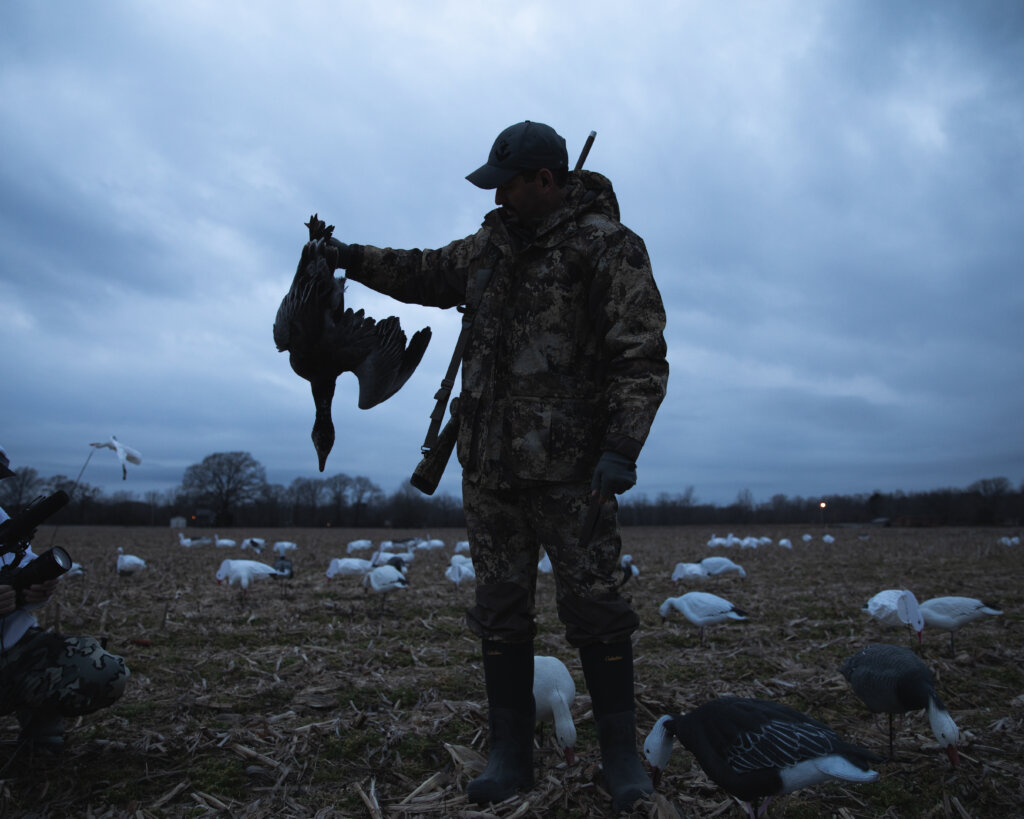
Early the next morning, we set up in a cut corn field. I was glad to see better hunting weather: overcast skies, a cool temperature around forty degrees, and a stiff fifteen- to twenty-mile-per-hour wind. We laid out the same decoy mix and everything was looking good for the morning’s hunt. I was confident in the goal we’d set to have my Blue Goose in hand and be out of the field by noon, when heavy rain storms were forecast to begin. We hoped to be done and out of there before the storms hit. The fields were irrigated using flood irrigation methods, so a heavy rain would turn them into a muddy mess.
Just after shooting light, I spotted the first group of geese coming in—a group of three Blues. As soon as they were within range, I dropped one—and just like that, my second Arkansas target was on the ground. I had officially reached the forty mark! I could not have planned a more perfect way to start the day’s hunt—Colton and Joel had everything set up perfectly, and the geese came right in. I continued hunting, and by late morning I had taken a total of two Blues and four Snows. I didn’t want to press our luck and risk getting caught in the expected downpour, so we decided to pack up and get out before the storms hit.
Back at the lodge, we listened to the storm while we celebrated with another excellent meal and drinks. If you’d like to try your luck in “The Duck Hunting Capital of the World”, call or email Worldwide Trophy Adventures! They’ll hook you up with a conservation hunt, flooded timber hunt, or any other type of hunt that Arkansas has to offer.