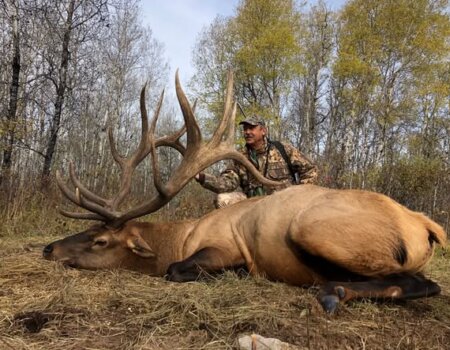
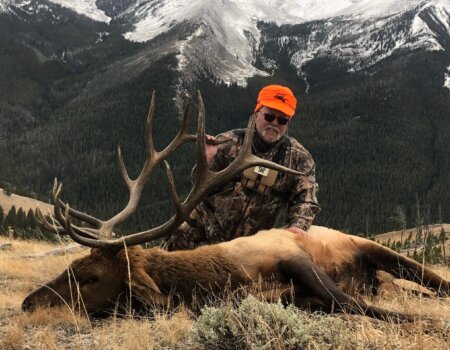
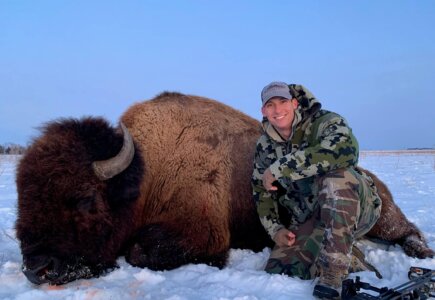
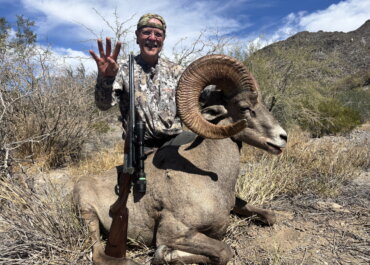
When I completed the North American Super Slam, a lot of people assumed that was the finish line. It was an incredible journey—29 species in 30 years. But somewhere during that journey, while I was still closing in on the original 29, I’d already started going back through the list with my muzzleloader. It wasn’t a decision I made after the fact. It grew out of something I fell in love with along the way.
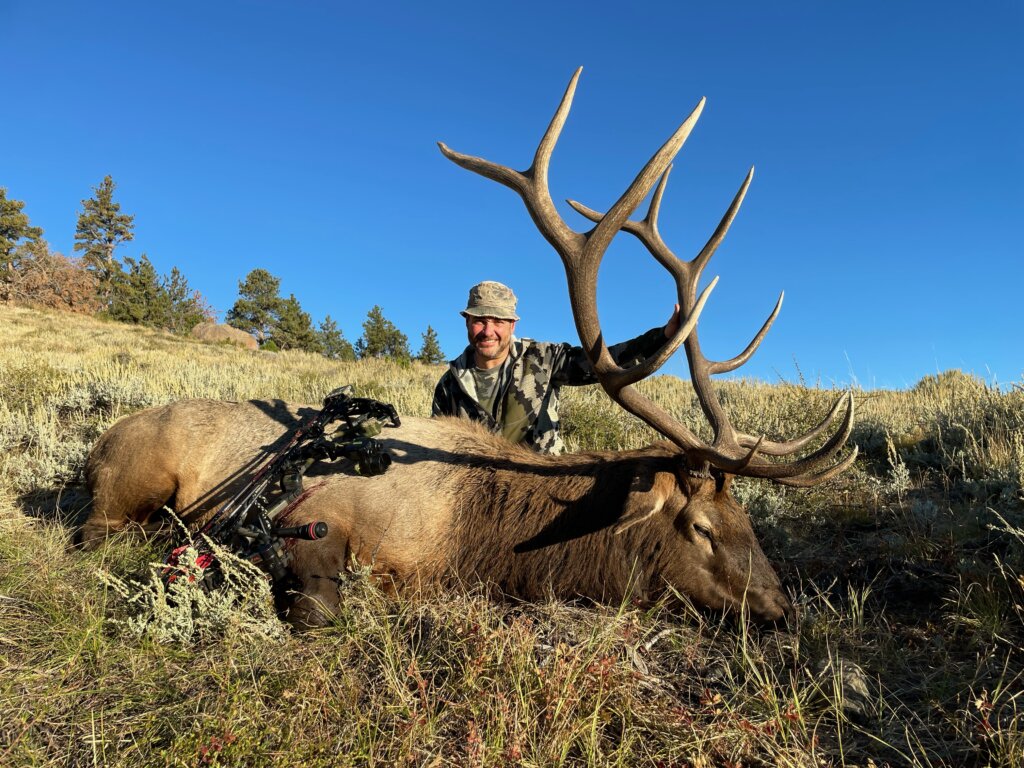
I started using the Gunwerks muzzleloader around the same time I started using their rifle, probably close to 10 years ago now. I went on a mule deer hunt and an elk hunt with it, and clicked with the challenge. With a rifle, if you make a bad shot, you can generally get a follow-up, especially at distance, because the animal doesn’t always know what happened. With a muzzleloader, you get one shot. You have to get closer. You have to make sure the wind is right. You have to keep your powder dry, literally. Everything has to fall into place. That added difficulty resonated with me, and it felt like the natural next step.
From what I understand, only a handful of people have ever completed the Super Slam with a muzzleloader. I think more people have actually done it with a bow than a muzzleloader. Most people chasing the 29 want to use whatever gives them the highest chance of success, and I get that. But for me, this was the challenge that made sense.
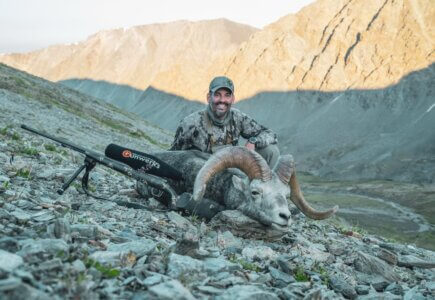
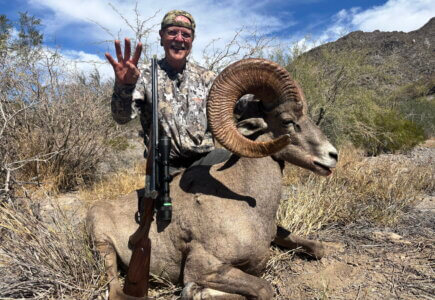
I’m at 14 of 29 right now, and two of those are sheep: a stone sheep and a desert bighorn. The stone sheep took two trips. On the first one, we were in the tent 8 out of 10 days because of less-than-ideal weather. On the second trip, we were in rams, but I rushed a shot early on. We had some rams bedded, and when one stood up, I ranged it and shot. I missed right underneath him. When we ranged the shot again, we realized the ram was 50 yards farther than what I’d originally read. The difference between 300 and 350 yards with a muzzleloader is the difference between hitting that sheep and missing by about three feet. I consider myself to be pretty good in the field, but I definitely rushed it. I should have ranged the ram when he stood, but I didn’t. That’s a lesson you only need to learn once.
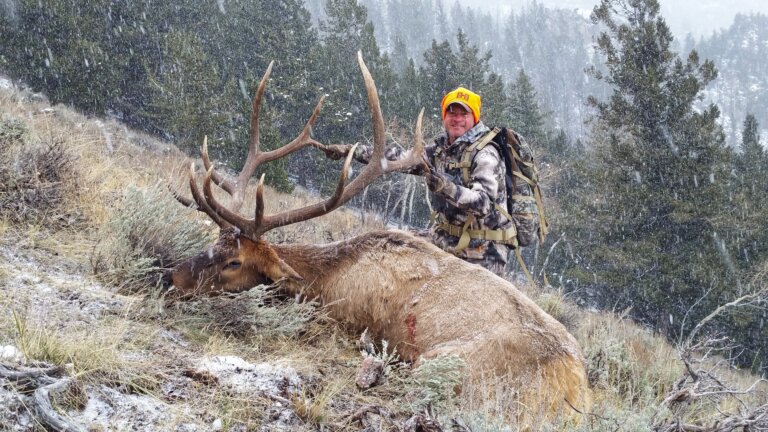
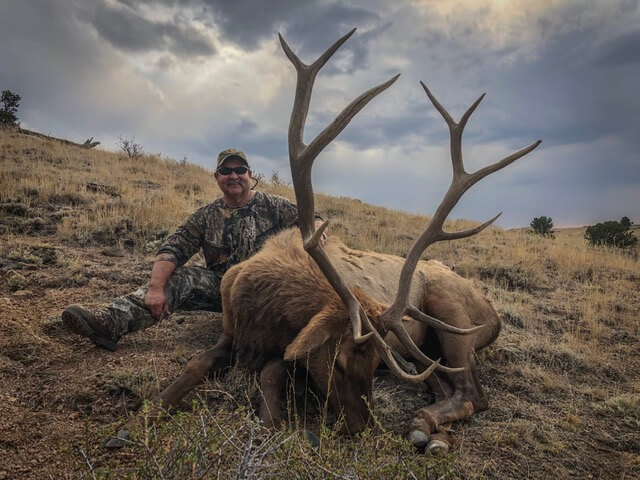
Revisiting species I’ve already taken with a rifle gives me a different perspective. I go in with more knowledge because I’ve been there and done that before. Sometimes I go back to the same outfitter. When I went to Newfoundland for caribou, I went with who I consider the best outfitter there. That’s where I got my rifle caribou and my archery caribou, and I knew going back with the muzzleloader, that was exactly where I wanted to be. Same for my Roosevelt elk. I knew from my previous experience and the number of bulls in that area that it was where I wanted to go.
But sometimes the muzzleloader changes where I go entirely. With Coues deer, for example, a lot of those Sonoran ranch hunts produce shots at 400–600 yards. That’s not realistic with a muzzleloader. So this time, I’m planning for a ranch that has a ton of water so I can hunt water sources and keep that shot at 80 or 100 yards. It’s the same logic as archery hunting. You don’t go to a ranch where you’re glassing from a knob at 500 yards. You go where the setup increases your odds of getting close. A lot of this journey comes down to logistics and planning around the weapon’s limitations.
The mountains are the real test. Any time you’re up high, you’re dealing with weather. With a muzzleloader, that means worrying about keeping your powder dry on top of everything else. If I load up my muzzleloader, I can keep it ready for a day or two, then I need to shoot it out, clean it, and start fresh. With a rifle, you pull the shell out, put it away, and you’re ready to roll the next morning. It’s a completely different game. Dall sheep is going to be tough. I know that going in. Any of the mountain species will add that extra layer of difficulty.
Traveling with the muzzleloader presents its own challenges. Arranging powder is harder now than it used to be. For hunts in the States, it takes planning and shipping before the hunt. For Canada, I usually have the guys up there source the powder I need. It’s manageable, but it’s one more item on the list that a rifle hunter doesn’t have to think about.
This year I’ve got a bison hunt in California and a bighorn hunt in Colorado. I’m realistic about what the muzzleloader demands. The bighorn I took in Alberta with my rifle was at 720 yards. That was as close as we were going to get. That kind of shot just isn’t happening with a muzzleloader.
Next year, I’m headed to British Columbia for Canadian moose and mountain goat on the same trip. That’ll be a cool one. Two extremes on the same hunt: sitting and calling for moose, which doesn’t involve a lot of movement, and then shifting to mountain goat, where we’ll put in serious elevation. I love that contrast.
What keeps me motivated is simple. I’ve always been competitive. I loved sports growing up, and hunting scratches that itch. It’s a way to physically and mentally test myself in the field, and the muzzleloader raises the bar on both. There’s no coasting through a hunt when you get one shot at half the effective range.
For hunters looking to start their own long-term pursuit, the Super Slam doesn’t have to be the first goal. Grand Slam Club’s Super 10 is very achievable. Break it down: a black bear, a deer, an elk, an antelope, etc. Look at what you can apply for and draw in the U.S., and it becomes real with some planning. Don’t let the years go by without applying. Start earning points even if you’re not hunting yet.
The first time I completed the Super Slam, I learned that the journey and process matter more than the finish line. This time around, I know that going in. Every hunt is a little different now. The muzzleloader forces me to slow down, plan harder, and get closer. It puts me back in that mindset I had on my first Dall sheep hunt, where nothing was guaranteed and every detail mattered. Fifteen species to go, and I’m in no rush. The wild places are still out there, the animals are still worth chasing, and I still have a reason to be in the field every Fall. That’s more than enough.