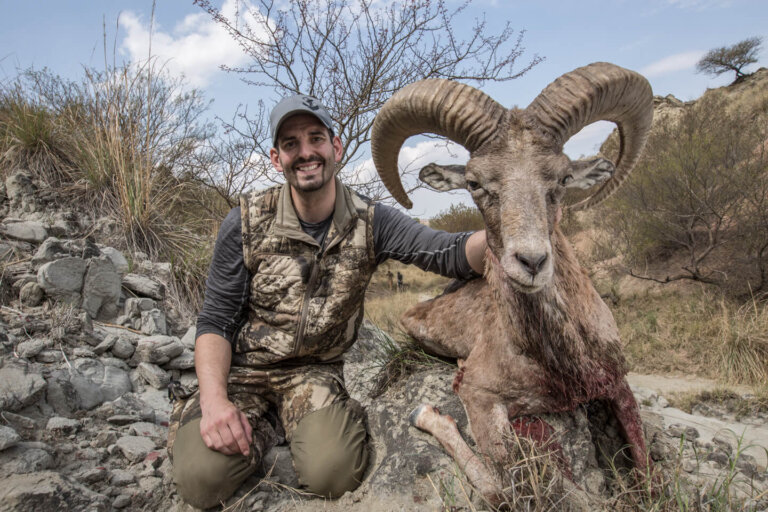
This four part blog series features the adventures of WTA Client Earl Peterson, who recently traveled to Mongolia in search of Gobi Argali, Hangai Argali and Gobi Ibex.
PART 2 – HAGAI ARGALI
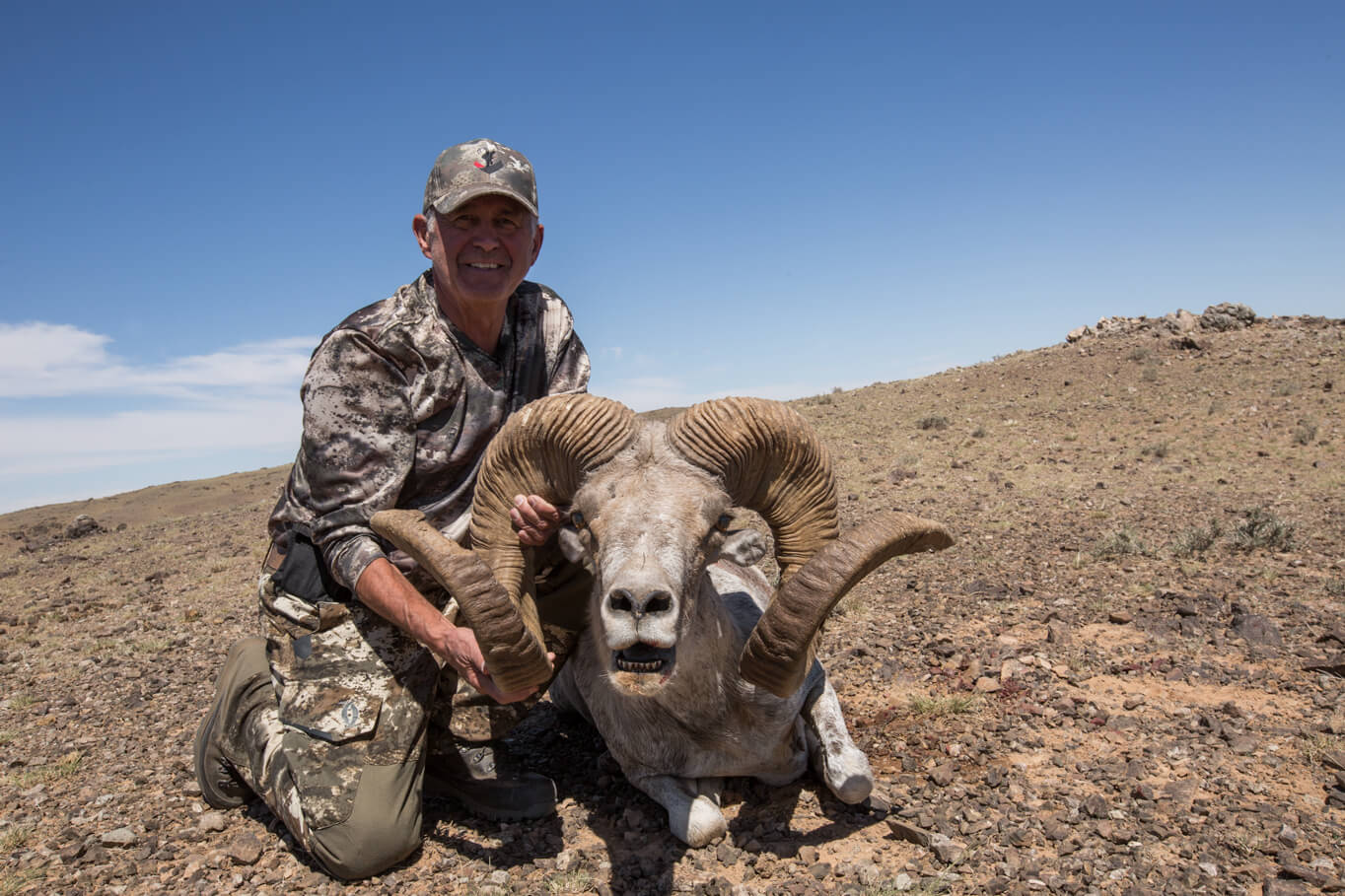
This past July, I had the opportunity to hunt argali and ibex in Mongolia. In our first camp, I was able to take a magnificent, old Gobi Argali. Things were going good for this soon to be 70 year old. Mongolia has challenges for the older hunter but is very doable.
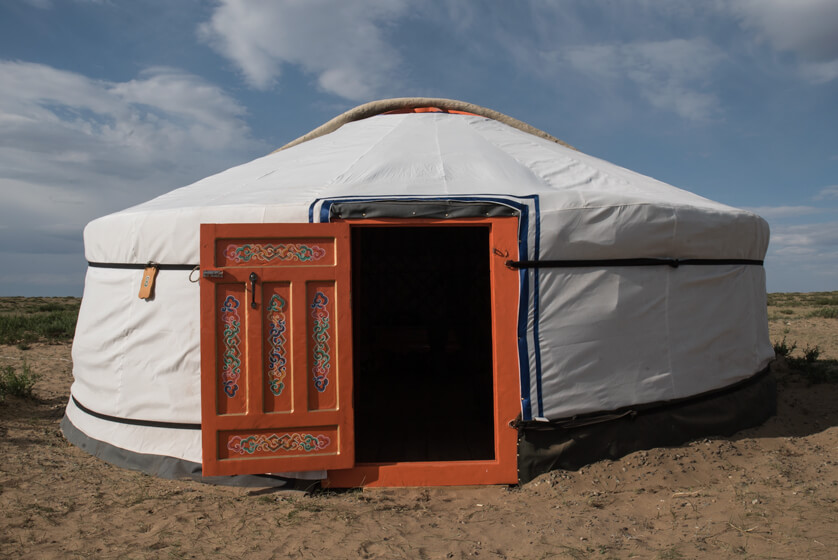
After camp #1, we headed back out in our Lexus 4×4 for an 8 hour ride to camp #2. Mongolia is unique in that the country has one of the lowest population densities on earth with an average of only three people per square mile. There are more horses in Mongolia than people. Almost everyone knows of Genghis Khan, the great Mongol leader who conquered neighboring lands and ruled, 800 years ago, over the largest empire on earth. His people were fierce warriors on horseback and his armies were often referred to as the “Mongol Hordes”. The people today in Mongolia are extremely proud of their Mongol history. In fact, about 1/3 of Mongolia’s three million people still live a nomadic horse based culture on the steppes. They move their herds, primarily of sheep, goats, horses and, sometimes camels, to new grass areas every couple of months. They live in gers (called yurts in Russia), which are sturdy felt lined round tent-like structures. The gers are always round but can vary in diameter. The nomads live in the gers during the extremely hot summers and brutally cold winters. The gers, erected with only a single nail, can be taken down, or erected again, in only about an hour. There is a carpet on the floor, a stove for heating and cooking in the middle and beds around the outside. While hunting in Mongolia, we lived in gers and were quite comfortable. A single ger could hold a family of 10, or in our case, they gave us one for ourselves. The meals served were meat from the animals we shot, or meat from the nomad’s herds, coupled with fruit and vegetables.
After a full day’s drive, we arrived at camp #2. This ger camp was located near some Gobi Desert sand dunes. We could see camels wandering in the distance. That night, after a great meal, we were told that our wake-up call was 3:20 AM.
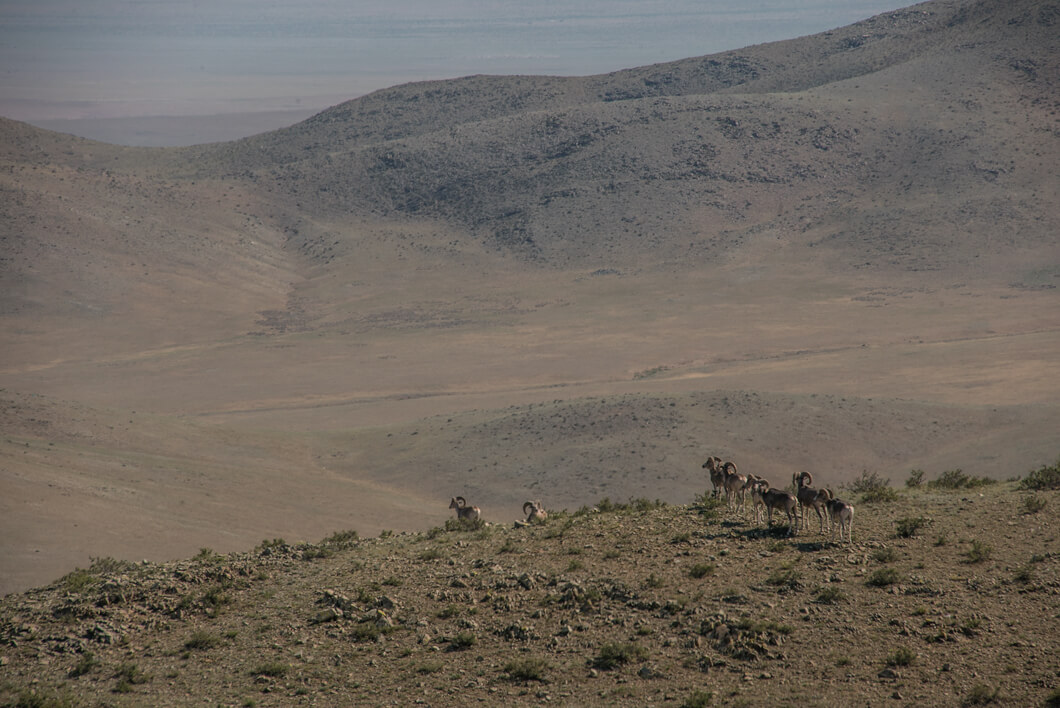
We again had two local guides who accompanied us. I had the only Hangai Argali permit, for the area, for the year. After about a 45 minute drive, we arrived at an area of low mountains. Like our previous hunting area, this area of low mountains was surrounded by flat, desert area. The argali would not like to leave the safety of the mountains and cross the wide open desert. The plan was much like the plan from our previous area; drive the edges of the mountains, glass from vantage points until argali are located, and then try to cut them off to get a shot. On our first hunting day, we saw numerous argali but none of the size we were looking for. So, it was back to our ger for the night.
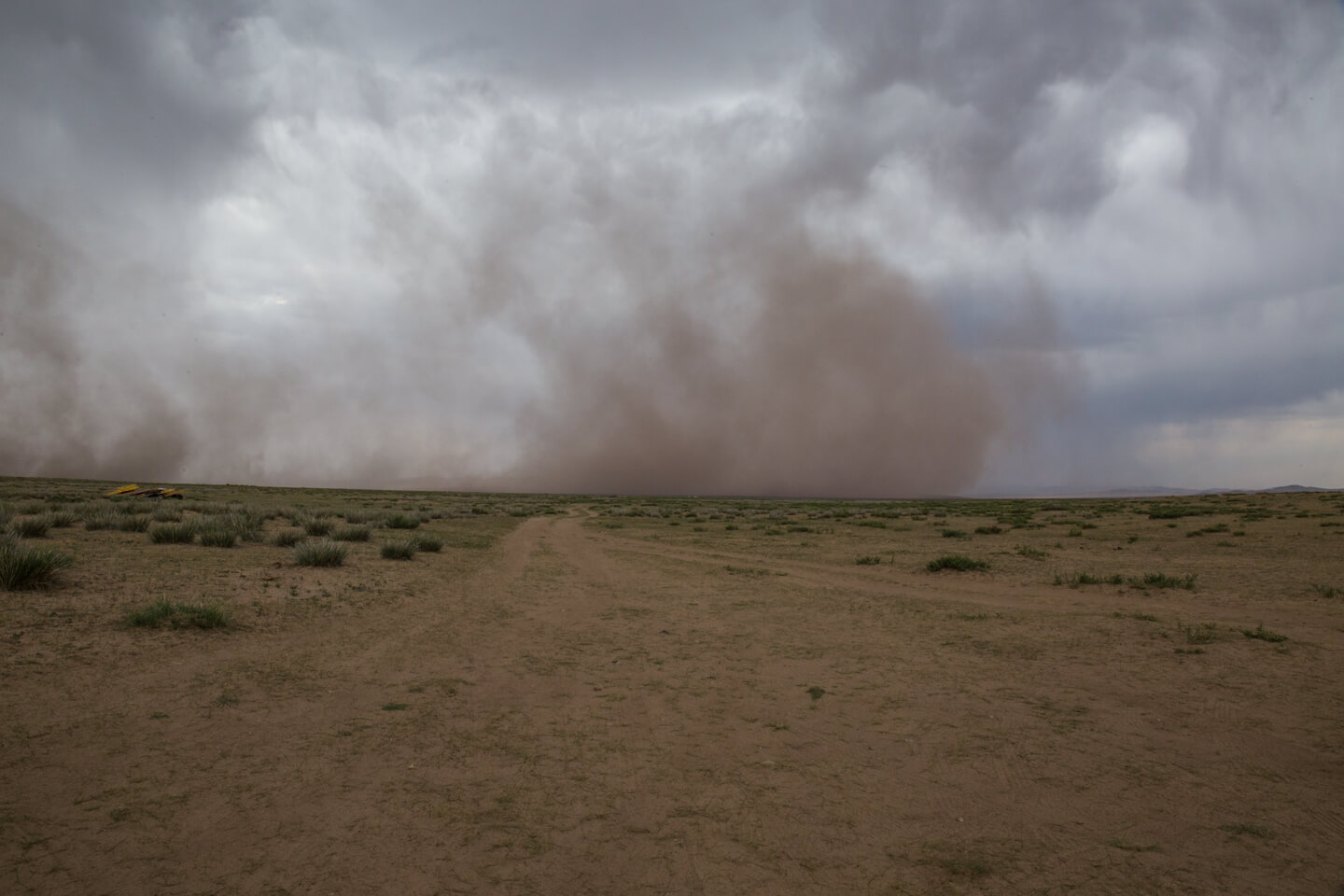
As we approached the camp, the sky darkened and it looked like rain. Only, it wasn’t. We were caught in a massive dust storm that darkened the sky like night and rocked our Lexus 4×4 back and forth. Thank goodness we were in a vehicle and not out walking. The storm is one of the most severe I have ever experienced.
While hunting, particularly in new areas around the world, you never know what to expect. My son, Mark Peterson, WTA owner and consultant, had signed me up for Ripcord Rescue Travel Insurance. As I hunt into my 70’s, I want to make sure that if I am hurt in the field, someone will come to evacuate me and get me to an appropriate hospital. Mark and I had a bad experience a year ago in extreme Alaska where our airboat, moving at about 25-30 mph, was stopped dead in the water after hitting a submerged rock. Mark broke the windshield with his head and suffered from extreme neck and upper back pain. We were afraid of a fractured neck and potential paralysis if we did not handle the situation correctly. Luckily for us, our outfitter had several army tours as a medic in Iraq and Afghanistan. He strapped Mark to a board, with tape, so as not to cause any further damage. Since it was over 8 hours by boat and 4×4 to the nearest town, we decided the best and safest solution was to bring in a helicopter. I used our sat phone, and within a couple of minutes I spoke to a Ripcord representative. He agreed that we needed a copter and one was sent to us. As an extremely anxious father, all sorts of bad things were going through my mind, but Ripcord called me back every hour with updates. The copter came in and airlifted Mark to Prudhoe Bay and then he was transferred to a fixed wing medical aircraft for a flight to Anchorage. The hospital ran a battery of tests and, thank God, Mark would eventually be ok. I know that part of Mark’s “luck” was that he is in extremely good physical shape and able to withstand the blow. Only 15 minutes earlier, I had been sitting in that same front seat of the airboat; the same thing would have happened to me but at my age the consequences would have more severe. That is why I also have Ripcord.
At WTA, the consultants can help you with Ripcord insurance when you travel. There are three different programs available, including trip cancellation/interruption. I did not have trip cancellation one year ago, and had to miss the trip due to the death of a close family member. I lost my money. If you are taking a hunting trip, in particular an expensive once in a lifetime trip, you need to purchase the cancellation insurance. During the recent floods in Houston, two WTA clients did not take the cancellation insurance and lost most of their money on their fully paid for sheep hunts.
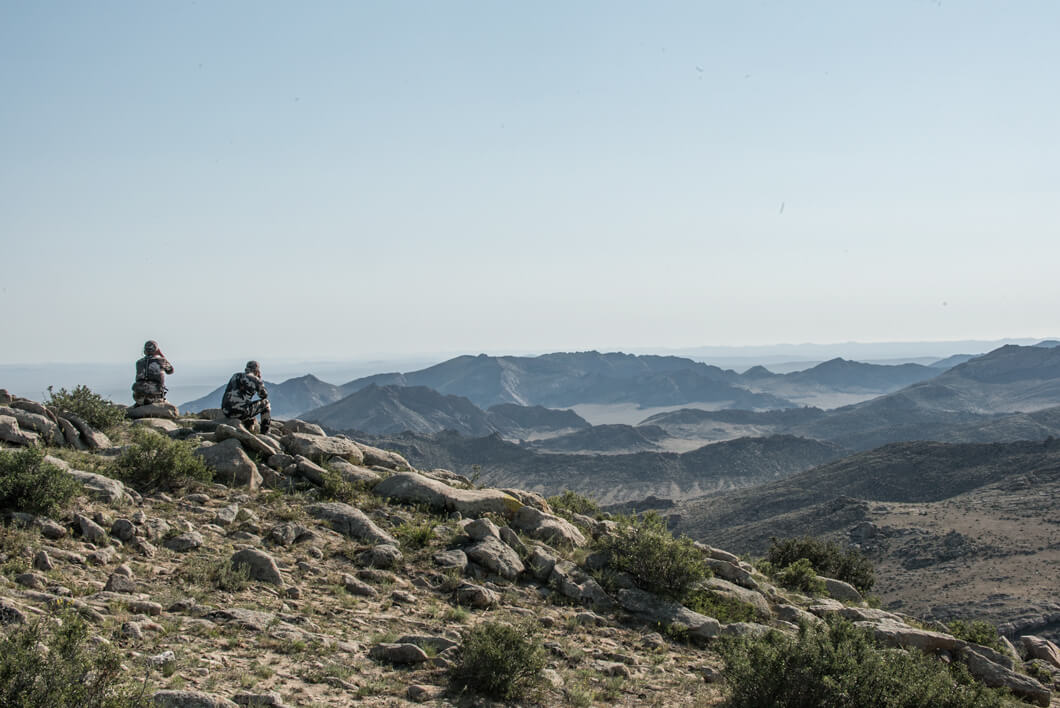
On our next day of hunting Hangai Argali, we eventually saw a group of rams with three shooters in the group. As the rams moved along the mountain side and tops, the size of the group would change from 6-10 as they picked up or lost members. This time, there were no color differences in the group and we saw the group from long distances, several times. It was hard to judge, in the few seconds we saw them, which was the “true” shooter. We kept trying to get ahead of them, but they would change direction and surprise us by popping up where they were not expected. It was a frustrating day but what a great day trying to outwit these rams. One time, Grant (my friend and cameraman) and I were set up, without our guides, watching a mountain slope. Of course they did not come down that slope, but instead came down behind us. We turned and they were only about 100 yards away through the rocks and bushes. We could see pieces of them but never took the shot as we couldn’t be sure which ram was which.
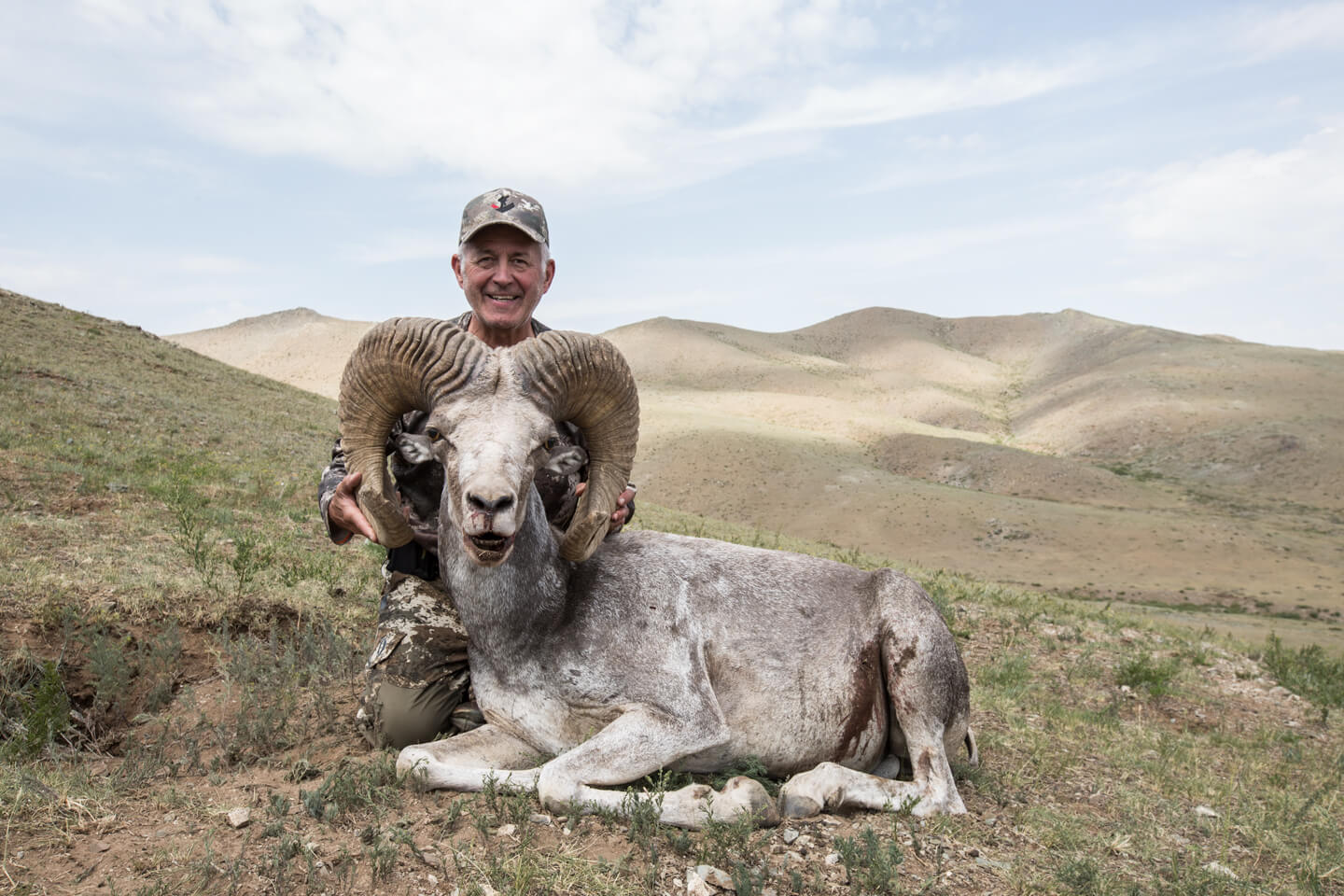
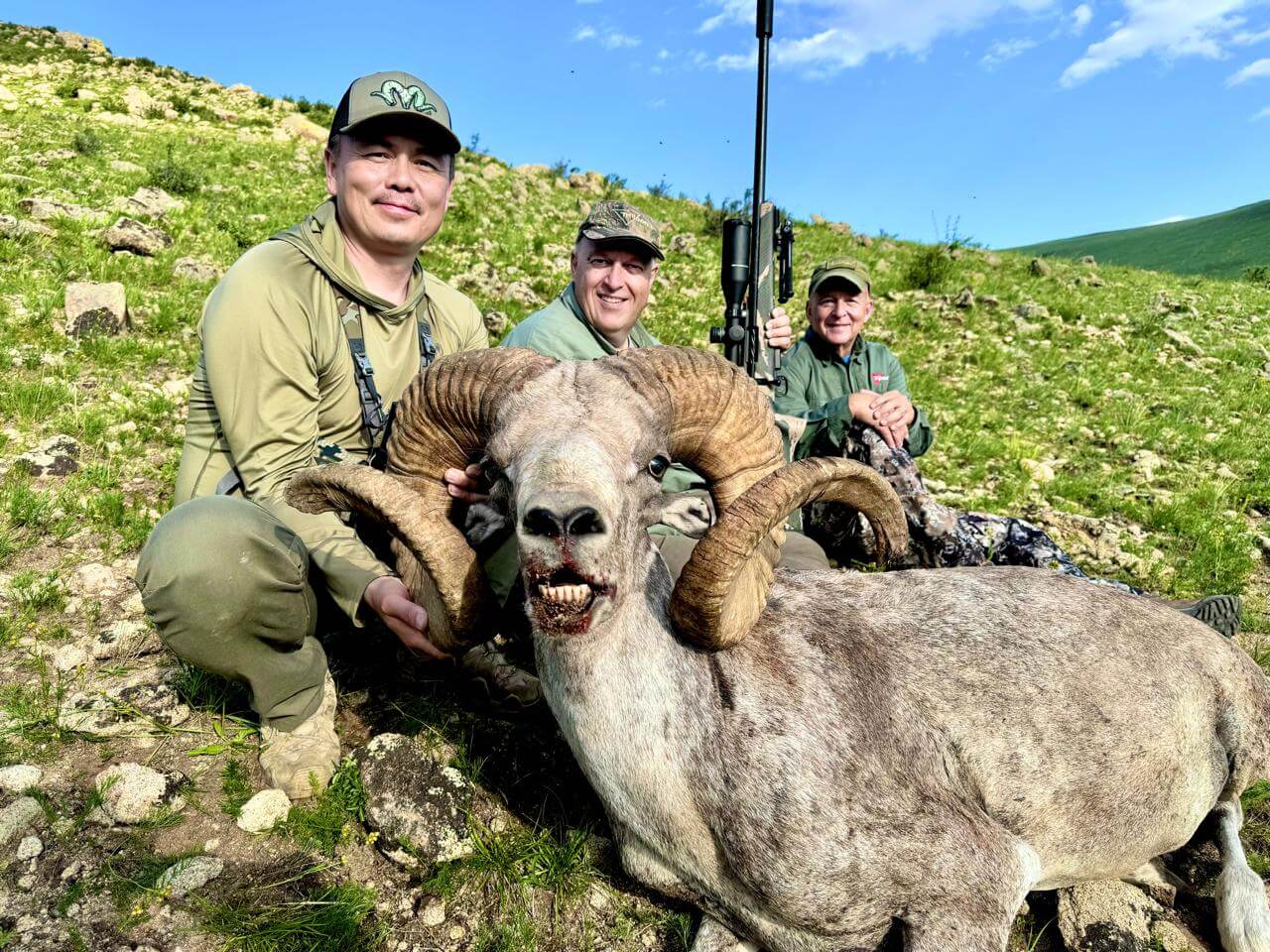
As the day started coming to a close, it looked like we were going to have to come back and try again the next day. Our outfitter decided upon one more stalk about a mile ahead of where we last saw the rams. We hiked up a slope and got down, and comfortable, behind some rocks. Then the group came, at about 250 yards out to our left, crossing a series of low rises. They were all bunched together so it looked like we would not get the shot. Then the group turned away from us and all we could see were the rear ends as they trotted away. Suddenly, a single ram broke from the group and gave me a quartering away shot. TugSo said to take the one on the right. I did and my Hangai Argali was down. Back at camp, we measured and admired my trophy. We had a great meal, and a couple of beers, before we went back to our ger for the night.
Hunting argali in Mongolia was definitely an experience of a lifetime. It is a hunt that “senior” hunters can take part in and feel comfortable. The Mongolian people make you feel welcome and they do everything they can to ensure that you have a good and safe time.
Next time, I will write about seeing white-tail gazelle, Maral Stag, a gray wolf, and taking a great Gobi Ibex.