Like everyone planning their first hunt for doves in Mexico, I asked how many doves I should expect to see and how many shotshells I should plan to shoot.
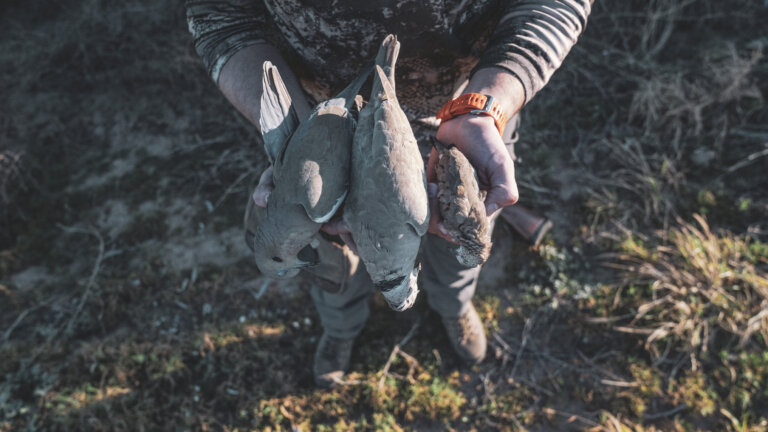
That was years ago, and memories of the hunt are still clear as day. Doves winging overhead, coming in hot from the left, from the right. Heads up! They’re coming from behind. My thumb was sore from stuffing shells in my 20-gauge Benelli Ethos but I didn’t let up until the flight thinned to an occasional passing bird and we gathered to tally our morning’s take.
Apparently, little has changed. Doves still flock the grain fields in countless numbers and hunters still ask how much shooting they should expect. This came up when I was talking to Matt Gindorff, senior consultant at Worldwide Trophy Adventures, about an outfitter he’s hunted with and recommends just outside Hermosillo in the northern Mexican state of Sonora.
Matt hesitated to give a number, but said, “Anytime during the season from October to March, you’re going to shoot as many shells as you care to even think of shooting.”
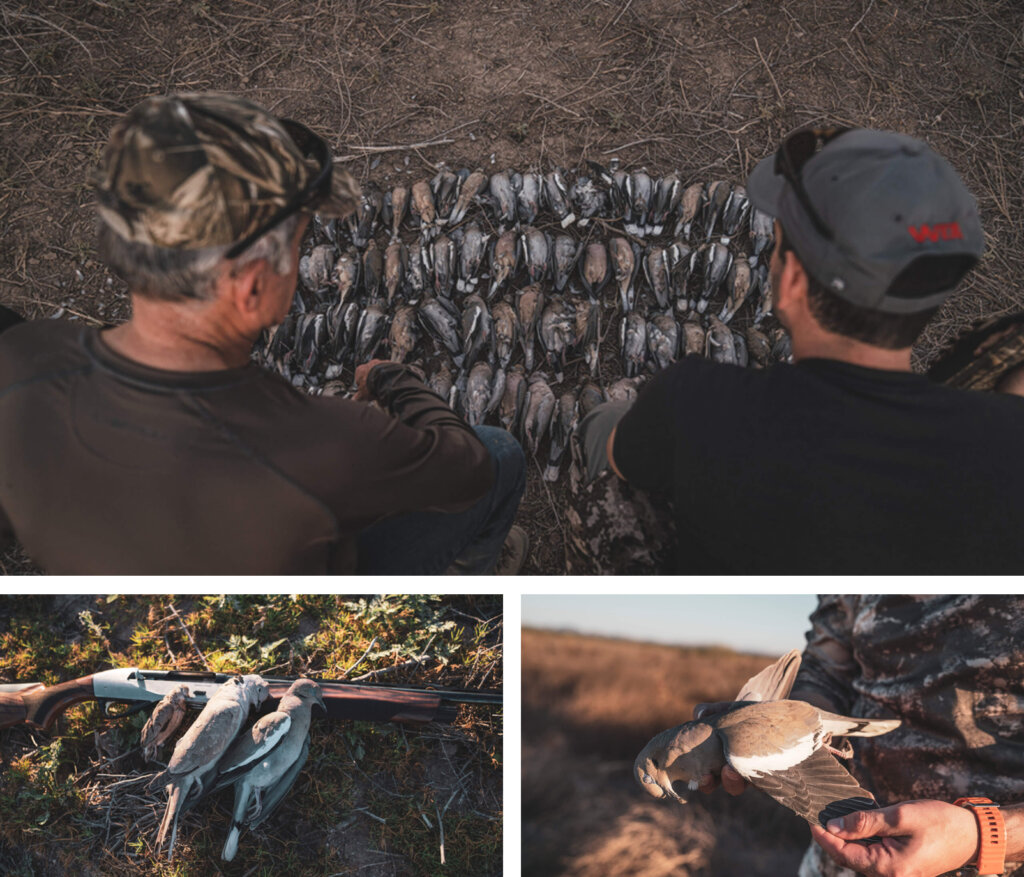
But why Mexico for dove hunting, when you hear so much about Argentina and Bolivia? Because it’s quick and easy to get there, Matt said. The flight from Phoenix to Hermosillo is just over an hour, maybe an hour twenty, compared to an 8-hour flight to Argentina or any other hotbed dove destination.
And it’s relatively easy to bring your own shotgun to Mexico. Most hunters traveling to Argentina or other dove-rich countries don’t want to deal with the red tape of getting a firearm into the country, so they rent or borrow from the outfitter.
“But Hermosillo is easy,” Matt said. “We help you with all that.” WTA will help with the paperwork, which is done well in advance of the hunt, and the outfitter will be there to help on the other end.
“It’s an easy destination to get to,” he said. “It’s a quick in and out.”
And the hunting? You can set your own pace, he said, and he’s seen it all. “The shooting is as fast-paced as anybody desires,” he said. “It’s pass shooting, in the morning intercepting the doves between their roost and crop fields. In the evening, it’s reversed, catching them leaving the fields to go to roost. Figure a three-hour morning shoot, then a break for lunch and siesta, then back for another three hours or so in the evening. I don’t like to mention numbers, that’s why I just say you can literally shoot to your heart’s content.”
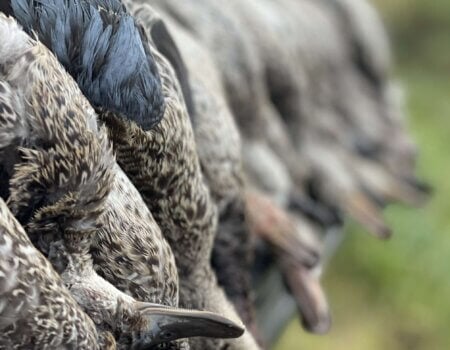
The doves, a combination of mourning and white-wing doves, usually fly fairly low. The average shot is about 20 yards, so you don’t need to be over-gunned. “It’s a fun game, built for a 20-gauge. There’s no need to beat yourself up with a 12 gauge, unless that’s the gun you want to shoot and practice with. And it’ll be a lot of practice.”
Dove hunting is relaxing, or can be if you let it, and Matt has seen the full spectrum. He’ll often divide his shooting in “corridors,” Let’s say he takes 10 boxes of shells. (Did he just give us a number?) He’ll decide to shoot only incoming overhead doves until that box is gone. Then with the next box, he’ll shoot only left-to-right doves. The next box right-to-left. The next box overhead and going away. He’ll run through that cycle twice, so that leaves him two boxes, 50 shells, to just have fun with, pick whatever shot he wants.
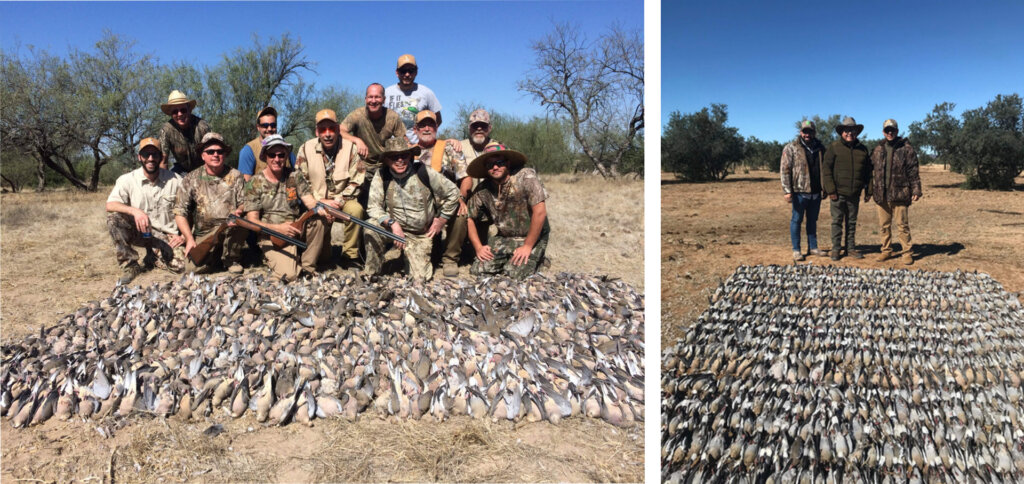
“The shooting is extremely enjoyable,” Matt said. “It’s very relaxing wingshooting. You don’t ever have to worry whether the birds are there. They’re there.”
On the other hand, he’s seen hunters work themselves into a frenzy trying to shoot every bird that flies over. There’s usually someone who thinks we “hit the holy grail” who keeps two bird boys busy loading extended-tube Benelli 20-gauges as fast as they can and he’s screwing himself into the ground, swinging left, right, up, and around. “That’s what I mean by you can shoot at whatever pace you want,” he said.
By Matt’s gauge, I fell somewhere in between, but leaning toward the screwing-yourself-into-the-ground side of the spectrum. So when he says “dove hunting is very, very relaxing,” that indeed depends on the shooter.
It’s a crop-depredation hunt, so limits are liberal, Matt said. Grain producers lose who-knows-what percentage of crops to the massive flights of doves that descend on the wheat, sunflower, and sorghum fields. They thrive in the desert, in that climate, and will eat them out of house and home. Farmland, irrigation, and crops are costly, so hunters can help protect that resource. So as not to drive doves from one area to another, they don’t hunt the roosts and won’t hunt over the fields—right on the dinner table—unless the field is large enough to negate any adverse effects.
Usually you set up in the scrub country, in the flight path between fields and roosts, carving a hide in the mesquite and brush where you can place a comfortable chair and a cooler of water or pop, with one or two bird boys to retrieve your downed birds. “You just sit there and shoot and have fun,” Matt said. The birds are gathered and the meat donated to local food shelters, schools ,or other entities.
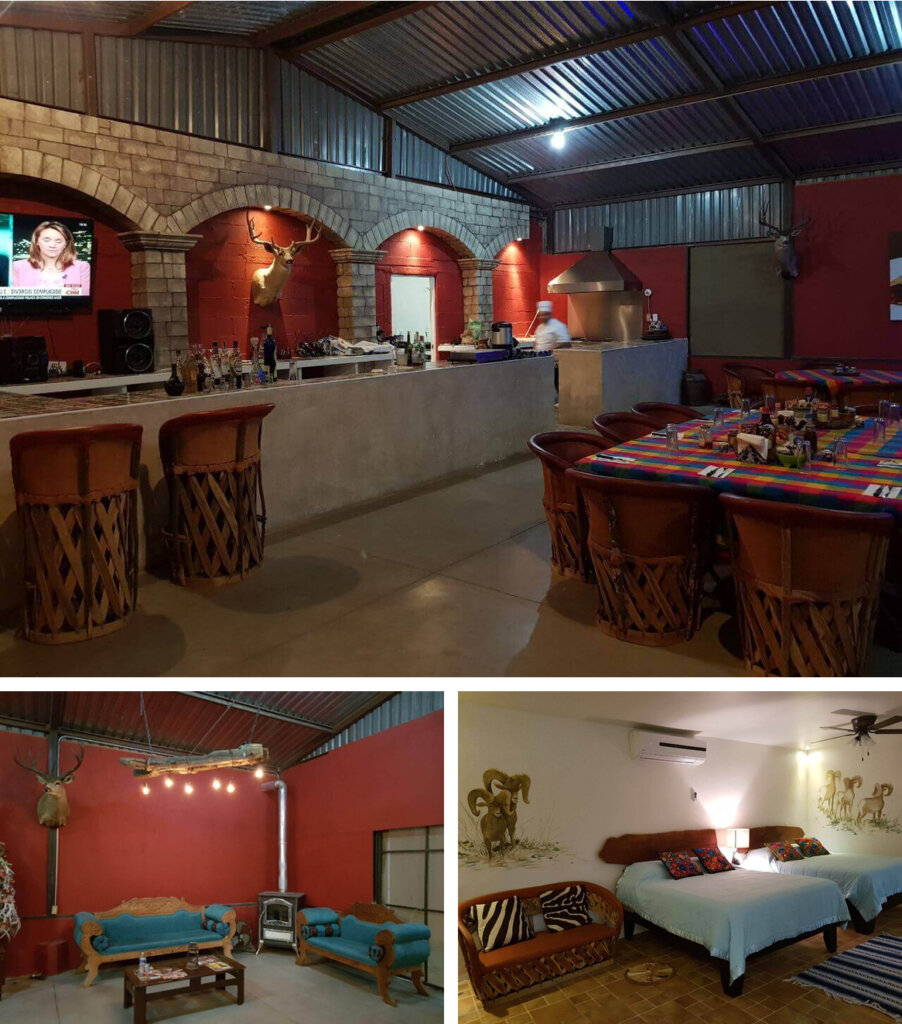
What adds to the allure is the Mexican hospitality, which is second to none. The outfitter’s staff is well organized, everything is orchestrated to run smoothly. The traditional Mexican cuisine, even the presentation of the food, is awesome, Matt said. “The evenings are fantastic. There will often be a mariachi band or live music. It’s just a great place to go and hang out with a bunch of friends, a bunch of business partners, new business partners, or to make new friends.”
“The ability to relax in comfortable accommodations, eat great Mexican food, enjoy mild weather (when the weather in northern U.S. states isn’t that awesome), and shoot as many doves as you care to shoot makes for a memorable trip.”