Book Your Adventure 1-800-346-8747

Hunting Moose with Yukon Peak Outfitters – The Benefit of a Gunwerks Rifle

WTA Team
|  

A lot of preparation goes into operating sheep and moose camps.  Preparation never really ends in the Yukon.  Winter and Spring months are spent caring for horses, repairing/replacing gear, clearing trails, constructing cabins and trail corduroys while planning for the next season.

Those who have been to the north country have some idea about what it takes to make everything go as “smooth as possible.”  Although, “Smooth” and the Yukon don’t exactly belong in the same sentence.  Uncontrollable things such as travel delays, weather, remoteness and unforgiving country can have severe consequences during a trip.  We urge our clients to come to the Yukon prepared.  If a client comes prepared with three basic things, odds are he/she will be able to overcome the “uncontrollable” to have a successful hunt:

  1. Be in the best physical condition of your life.
  2. Mentally prepare to overcome adversity.
  3. Bring good gear and know how to use it.

In early 2019, we ordered two Gunwerks rifles for use as “camp guns.”  The purpose was two-fold.  We knew about the quality and performance of Gunwerks products and as operating one of the best outfits, we wanted the best gear.   The second purpose was for the benefit of our clients.  For instance, if a client’s personal rifle was delayed due to an airline connection, we would have a reliable “loaner” for their use so as not to reduce their hunting days or put them in a position of lacking confidence in the equipment.   

 Since Dall sheep and Alaska-Yukon moose have drastic variances in their size and habitat, we selected two different rifle systems.  For our sheep hunters we chose the light weight CLYMR chambered in 6.5 Creedmoor and for our moose hunters we chose the MAGNUS platform chambered in the stand-by of .300 Win Mag.  These rounds are common and easy to find in local stores in the event we came upon a situation of dire need.  Under normal circumstances, we operate with either Gunwerks Custom or Hornady ELD ammunition.

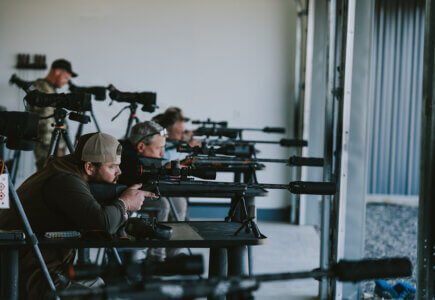
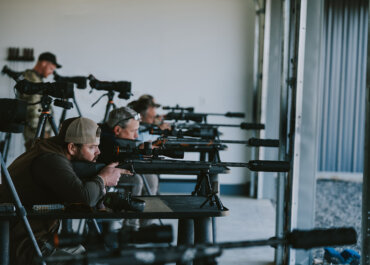
We received the new rifles and tested capabilities on the shooting range prior to departing in June for the backcountry. The guides and I are experienced shooters and have practiced long range before. Needless-to-say, we were impressed with the performance.   We tested the capabilities out to 900 yards which was the furthest our range distance would allow.  The rifles performed flawlessly and gave us confidence that if a client needed/wanted to use one of the guns, we would have no worries.

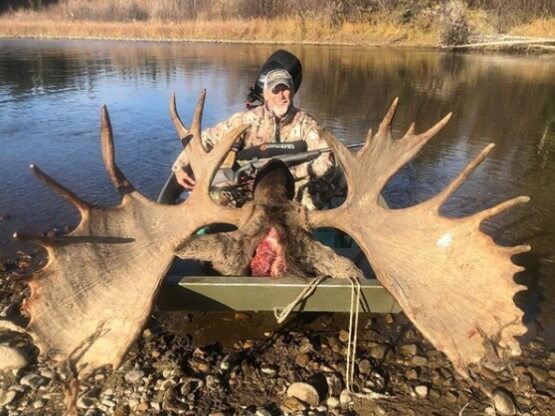
Thankfully we did not have any client experience baggage or firearms delays.  However, we did have one client, Kevin, who asked to use the Magnus .300 Win Mag to take his beautiful 62” moose.  His hunting story doesn’t come with drama of harsh weather or an incredible 500-yard shot in high wind.  The weather was kind to us on this hunt and Kevin delivered an accurate 150-yard shot.  This speaks to the fact that he trusted us to guide and he trusted Gunwerks to deliver a shot.  Congratulations to Kevin on his moose and all our clients that successfully took sheep, moose and grizzly!

We are again preparing for another fall season and hope you are doing the same.  Wherever you are planning to hunt this year, we recommend taking part in a Gunwerks Training Experience class to add skill sets and knowledge to your advantage.
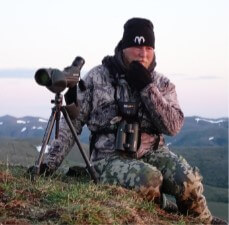
Rob Aasen, Manager and Guide– Yukon Peak Outfitters

Native to Dawson Creek, B.C., Rob has spent the last 10 years guiding in Saskatchewan, Northwest Territories and Alaska. During this span he’s guided countless successful sheep, moose and bear hunters.

Related Articles

Apply for Alaska’s Most Coveted Tags

Apply for Alaska’s Most Coveted Tags

Most sportsmen don’t think of the draw when contemplating a hunt in Alaska. That’s because, for most of the big…
Limited-Entry Alaska Dall Sheep: North America’s Pinnacle Hunt

Limited-Entry Alaska Dall Sheep: North America’s Pinnacle Hunt

As the December 15 deadline to apply for Alaska’s most coveted big-game tags approaches, one opportunity stands above all others: limited-entry Dall sheep. If you’ve ever dreamed of pursuing this iconic high-country species, now is the time to apply.

Why this Hunt Matters More than Ever

In the not-too-distant past, Alaska suffered back-to-back-to-back severe weather events that dramatically impacted Dall sheep populations across much of the state, resulting in fewer over-the-counter opportunities and even closures. Hunters have been forced to look to Canada, where hunts are now largely sold out through 2027 and prices have surged beyond $60,000. Even at such outrageous prices, availability is scarce.

This shift has made Alaska’s limited-entry draw areas for Dall sheep one of the most valuable options left for serious hunters. With hunts priced between $28,000 and $35,000, applicants can still access very high-quality white sheep at nearly half the cost of Canadian alternatives.

Exceptional Success Rates

Despite the challenges statewide, the limited-entry regions—managed by very conservative tag allocations—continue to produce outstanding results for the lucky applicants of WTA TAGS:

  • 100% shot opportunity during the past three seasons,
  • 90%+ harvest rates on mature rams,
  • Some of the largest Dall rams in North America.

For those willing to embrace the physical challenge, this hunt represents the ultimate North American mountain adventure.

Why…
Against the Odds: Drawing Back-to-Back Sheep and Goat Tags 

Against the Odds: Drawing Back-to-Back Sheep and Goat Tags 

Drawing a sheep tag with 1-in-5,300 odds is amazing. Drawing a mountain goat tag the next year? That’s lottery luck. That’s why it didn’t seem real when my WTA consultant, Jordan Roche, called me two years in a row with that news!

I’d been working with Jordan at WTA TAGS for about five years, letting him manage my hunting applications in multiple states while I focused on staying in shape for whatever hunts might come through. When he called about the Tok Range Dall sheep tag (the only non-resident permit out of 10 total), I knew it was special.

After the excitement of drawing my tag settled in, it was time to find the right outfitter to make my hunt a success. WTA recommended one of their top partners for that area and handled every detail. My outfitter made it clear: this would be a backpack hunt in some of Alaska’s toughest sheep country. At 64, with two hip replacements, I can’t run anymore. But I can hike. So that’s how I prepared—I hiked mile after mile with a weighted pack, knowing the Tok doesn’t care about age or medical history.

We went in a day and a half before the season opened and spotted a band of 14 rams, including one heavy-horned giant that immediately caught our attention. Then Alaska did what Alaska does best. Weather rolled in, the rams vanished, and we spent the three days scouring valleys and ridges to find them again.

When we finally relocated them, we had to break camp and make a major move. After a full day’s work, we spotted six rams bedding down as evening fell. The next morning, we made our play.

The wind that day was unlike anything I’d ever experienced. It sounded like a freight train roaring up the mountain; gusting, dying, gusting again. At 320 yards, I had to time my shot during the lulls. My first shot went wide in the wind. The second shot dropped him—a beautiful 39″ ram. Honestly, I didn’t care about the number. That’s not why I hunt. I’m in it for the experience and a good animal. This ram was both.

The pack-out was its own adventure. We crossed the glacier-fed Tok River multiple times before Matt showed up with a Korean War-era military vehicle that could go just about anywhere. After nine days in the mountains, that slow, bumpy ride was a step up from travelling another 10 miles on foot. This was a trip I’ll never forget.

When Jordan called me in February 2025 to tell me I’d drawn a mountain goat tag, I actually laughed. “Figure out something for next year,” I told him, knowing the odds of a three-peat were one in a million. But first, it was time to prepare for my goat hunt.

I flew into Homer at the end of August, expecting to start hunting on Tuesday. By Monday evening, my outfitter, Paul, was warning me about the incoming weather. “We might not get you in until Friday,” he said. He wasn’t kidding. We sat through three days of howling wind, driving rain, and zero visibility before finally getting our chance.

Paul operates from a landing craft that serves as a mobile base camp. But getting from sea level to where the goats live? That was the hardest climb I’ve ever done, and I’ve completed five sheep hunts.

It was only 1,500 vertical feet, but every step came wrapped in devil’s club thorns, soaking brush, deadfall, and rain-slicked cliff bands. We hiked for what seemed like an eternity before stopping for the night to set up camp.

The next morning changed everything. Once above that coastal jungle, the alpine opened up to reveal why we’d suffered through that brutal climb. There were mountain goats everywhere. Good billies. The kind that makes you forget about devil’s club and exhaustion.

I took my billy on August 30, the first day of actual hunting after being sidelined due to weather. While packing him out, we witnessed something I’d never seen: ravens harassing a billy goat. They would swoop within inches of his head, and he’d swing his horns, trying to knock them away. Paul had told me about this strange relationship between ravens and goats, but seeing it firsthand was incredible.

The trip down gave us one more show. A black bear, fat from gorging on berries, army-crawled through the blueberry patches, entertained us from 400 yards away. I had a bear tag, but watching him was worth more than any trophy. Crossing salmon-choked streams on the way out completed the full Alaskan experience.

Both hunts worked because of solid preparation and connections with the right team. Jordan, my WTA consultant, had been helping me strategically build points and select units for years. When the draw results came through, WTA’s network meant proven outfitters were ready and handled every detail. They provided thorough gear lists, arranged logistics, and coordinated air charters. Everything was dialed in.

Some guys chase record books. Others chase hunting milestones. I finished my slam in 2019 with a desert ram, but what excites me most these days is the experience—the hunts that test you, humble you, and stay with you long after the pack is unloaded. When you work with the right people and put in the preparation, amazing things can happen. Jordan’s already working on my applications for 2026, so we’ll see what adventure comes through next.

Contact WTA TAGS to learn more about drawing the tags of your dreams: 1-800-755-8247

Get Started with WTA TAGS

Get Trip Specials & Cancellations,
Right Where You Want It.

No spam. Just the good stuff. Opt-out anytime.