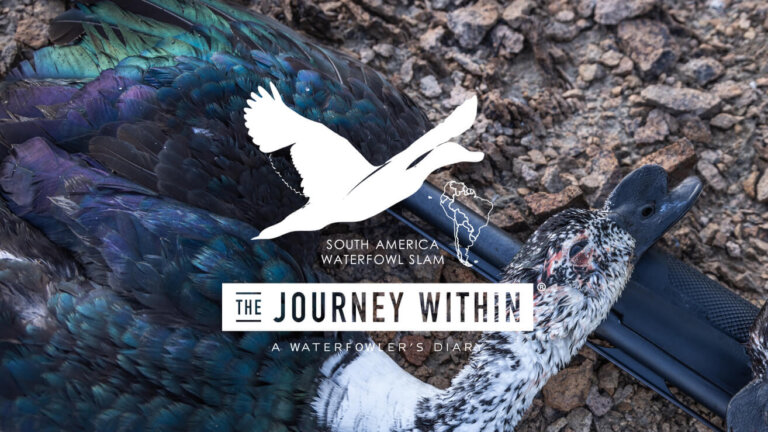
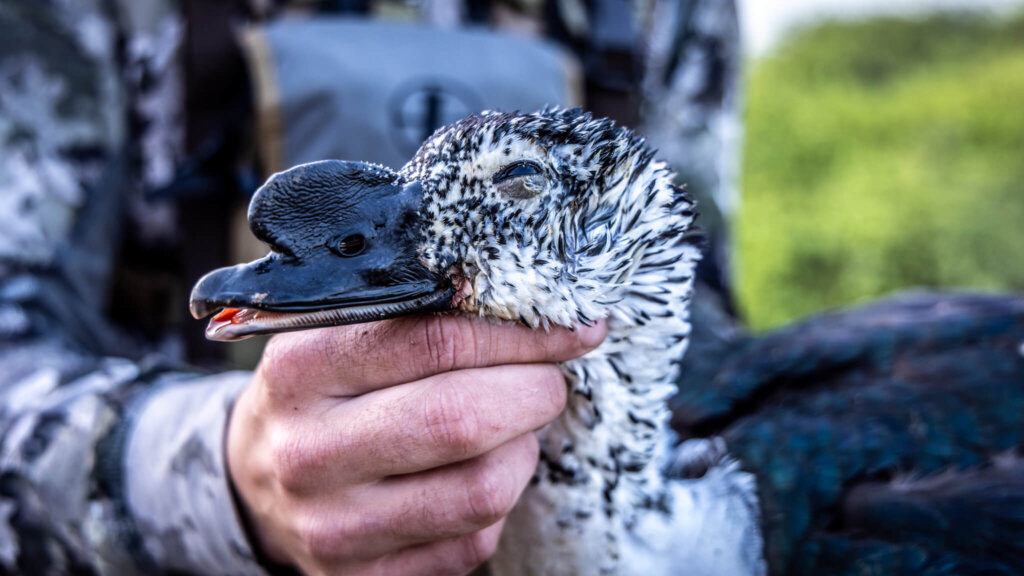
A variety of events had occurred to prevent me from getting my Knob-Billed Duck. I had initially planned on heading to the Andes Mountains by this time, but I felt I needed to get the Knob-Bill checked off my list before going after the other species in the high elevations. My only goal for the day was to shoot a Knob-Billed Duck. We knew this would be a challenge. Our outfitter only knew of one nearby lake where they could be found. We had hunted that lake the previous evening, and although Dad was able to take a hen, and I hit a drake twice, he kept on flying. These are tough ducks! The pressure was on.
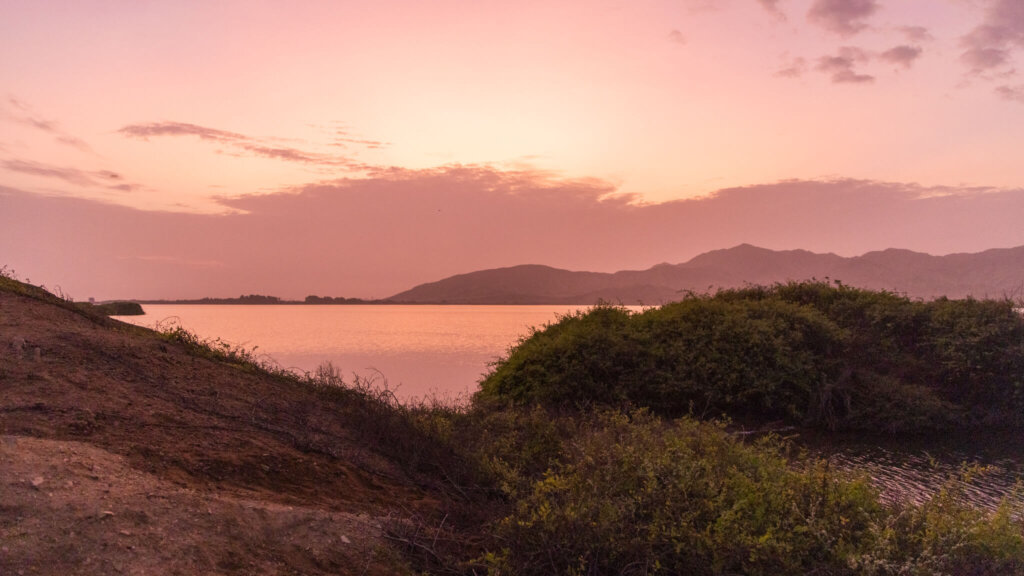
The next morning, we were up at 3 a.m. and back on the road by 3:30. There was not going to be a repeat of the previous morning’s late arrival when we were locked in the hotel’s parking garage and didn’t make it to the Knob-Bill lake until well after sunup. We tried hunting but the birds were too wary of any movement and flew before we got close. While we were hunting the day before, our outfitter saw a brushy finger on the far side of the lake that would probably be close to where Knob-Bills would fly in. I decided that’s where I’d have the best opportunity. We set up on that finger in the pitch dark prior to daybreak.
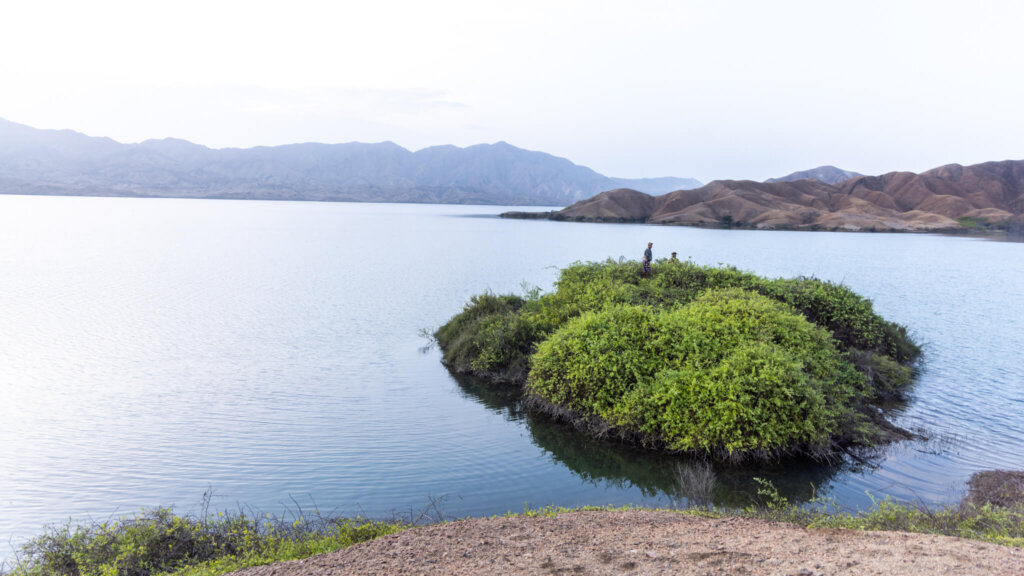
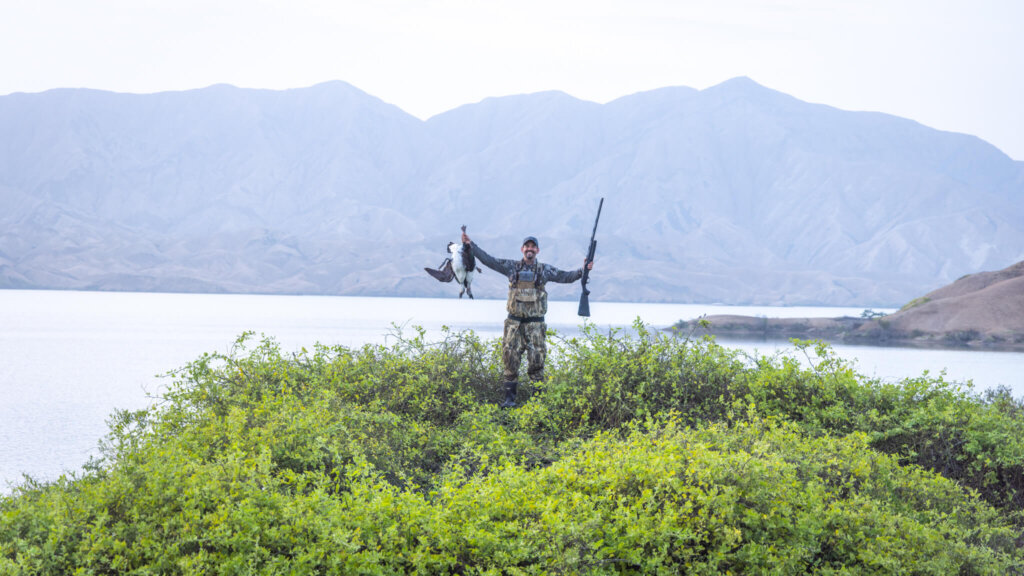
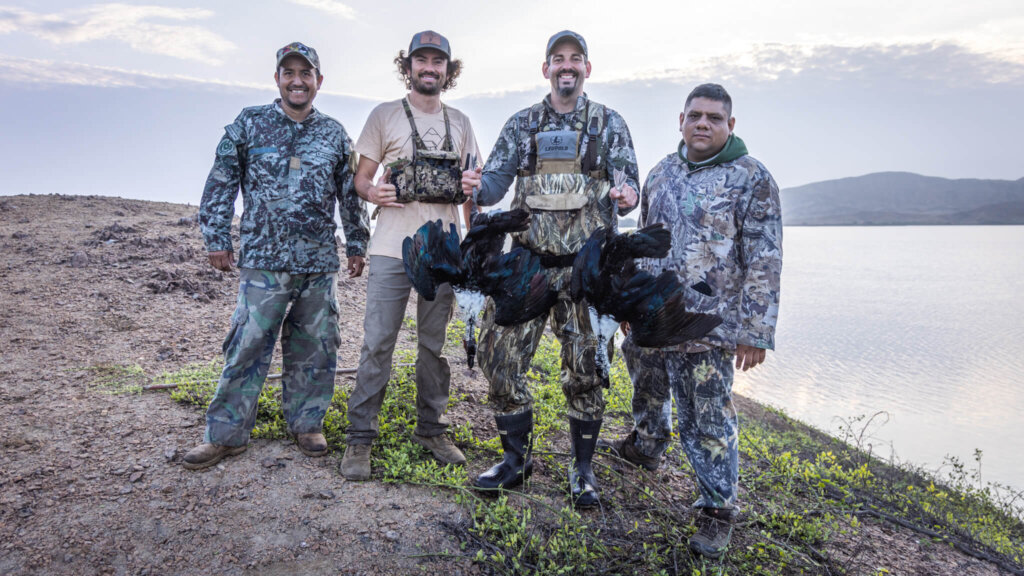
As the sunrise cast first light across the water, in came a group of Knob-Bills. I dropped a drake, and had accomplished my goal within minutes of shooting light. Soon after, another group was over me and I dropped my second drake of the morning. Then a third group approached farther out. I shot and hit a hen, but it kept going. One of my young bird boys stripped down to his shorts, swam out into the lake, and brought back my two drakes. I must admit, securing my Knob-Billed Ducks was a relief. If that morning’s hunt didn’t produce a Knob-Bill, I’d made a decision to continue hunting morning and night until I was able to take one. I was thankful to check it off my South America Waterfowl Slam list. It was time to head for the Andes!
We drove back to our hotel, showered and packed up. We headed south along the coast towards Lima. After about three hours, we stopped at a rice shop along the paved road. Our outfitter purchased a 40-pound bag of rice, and with that purchase, the shopkeeper granted us permission to hunt the ponds by the rice fields near the Pacific. The hunt was an action-packed hour and I dropped about 20 ducks, mostly Cinnamon Teal and a couple of Bahama Pintails. Three of the gorgeous Cinnamon drakes came back to Michigan for mounting. Dad’s bag was all Cinnamon Teal.
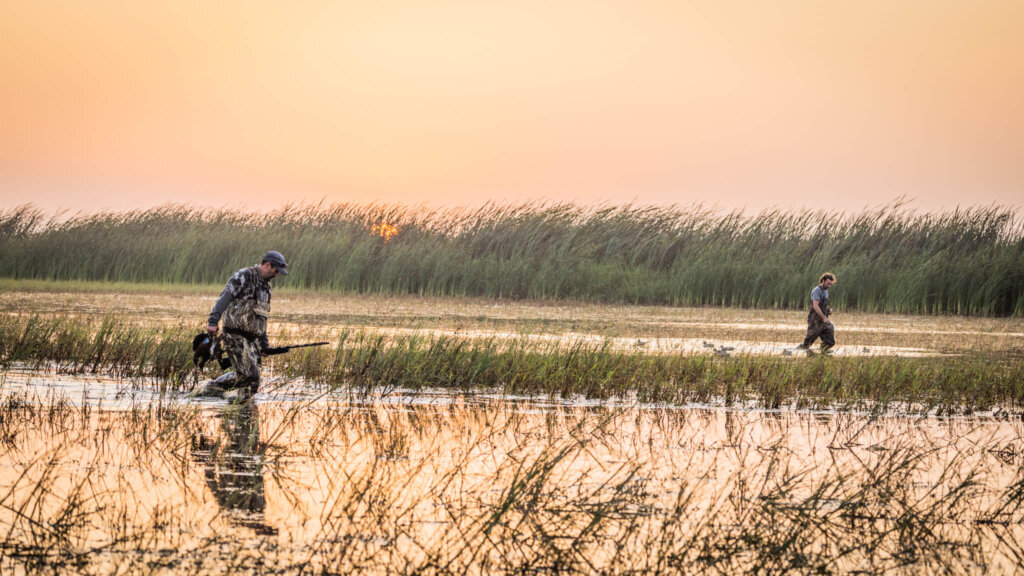
That was our final hunt with our bird boys. We thanked them and said goodbye. They would not be going up to the high altitudes in the Andes with us. They were most appreciative of the cash tips. I had brought a bag of WTA logo apparel to pass out as well. The brand-new clothes were an unexpected bonus for the bird boys. Most of the clothes they wore were hand-me-downs from hunters they’d previously worked with. We shook hands, and as we were driving away, the bird boys were putting on their new clothes before their drive back home.
We continued driving south for another hour and stopped at a local hotel that our outfitter often uses. It was after 9 p.m. and all the restaurants were closed for the day. We found a place to order some rotisserie chicken, and enjoyed dinner and wine at a picnic table. We took quick showers and set our alarms for 4:30 the next morning. We had done a lot of driving during our couple days in Peru. I figured we had driven 25–30 hours so far searching for coastal duck-hunting locations. Our outfitter told us that we had many more hours of driving to go. The anticipation was building to continue my adventure into the Andes.