Book Your Adventure 1-800-346-8747

A Guide to Bison Hunting // WTA TAGS

Erik Schell
|  
Species: Bison
Location: Wyoming

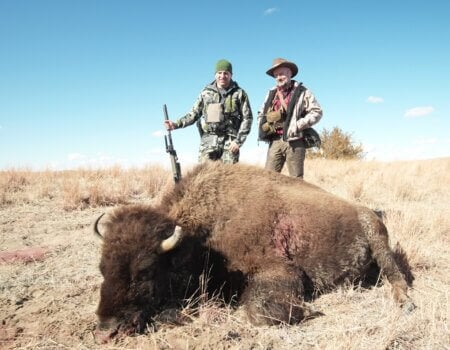
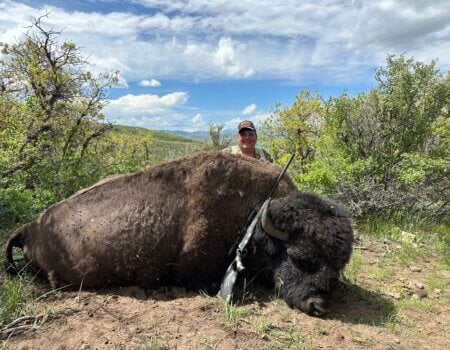
To hunt a free-ranging bull bison in the West is a true privilege, one that was gifted to modern sportsmen by forward thinking hunter/conservationists of the past. The U.S. currently supports approximately 17 bison herds on its public lands (not all herds are huntable). One herd quickly stands out from a hunter’s perspective, the Greater Yellowstone Herd. The Greater Yellowstone ecosystem is the only area bison have roamed continually since prehistoric times with little to no genetic disturbance. Currently the Yellowstone Herd numbers over 4,500, making it the single largest huntable population.

Bull Bison Facts

Height: Up to six feet tall.

Weight: 1500-2000 LBS.

Top Speed: 35 MPH

Life Expectancy: Bison are known to live up to 20 years in controlled environments.

Interesting Fact: Bull bison are the largest land mammal in the North America.
The Hunt

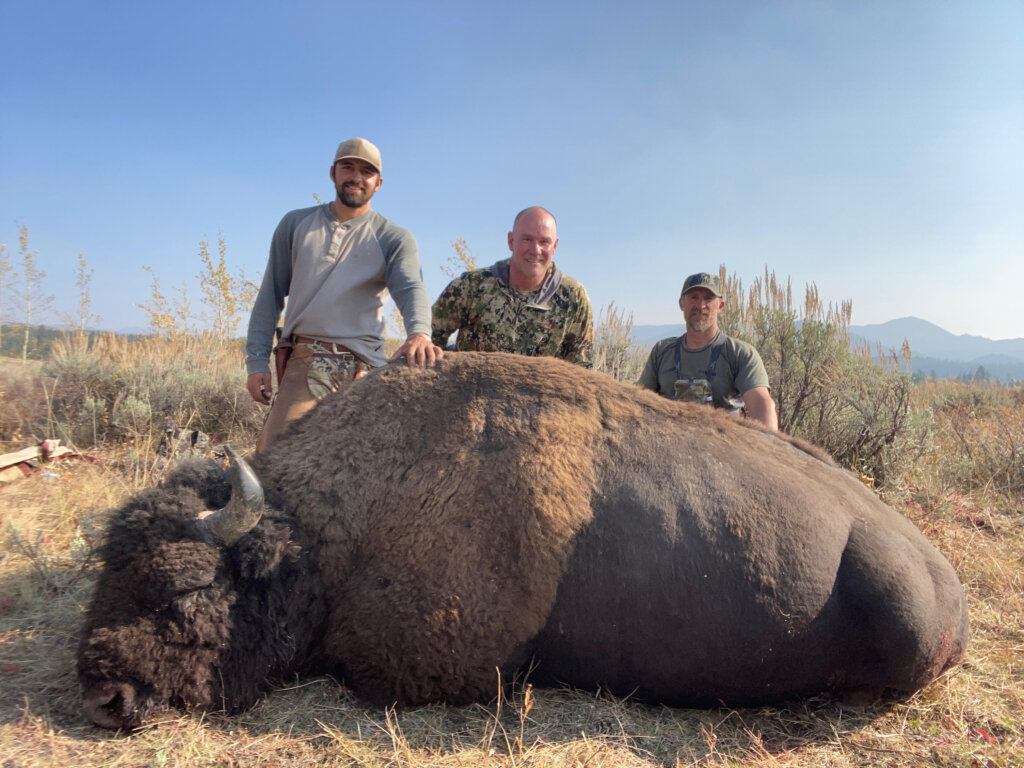
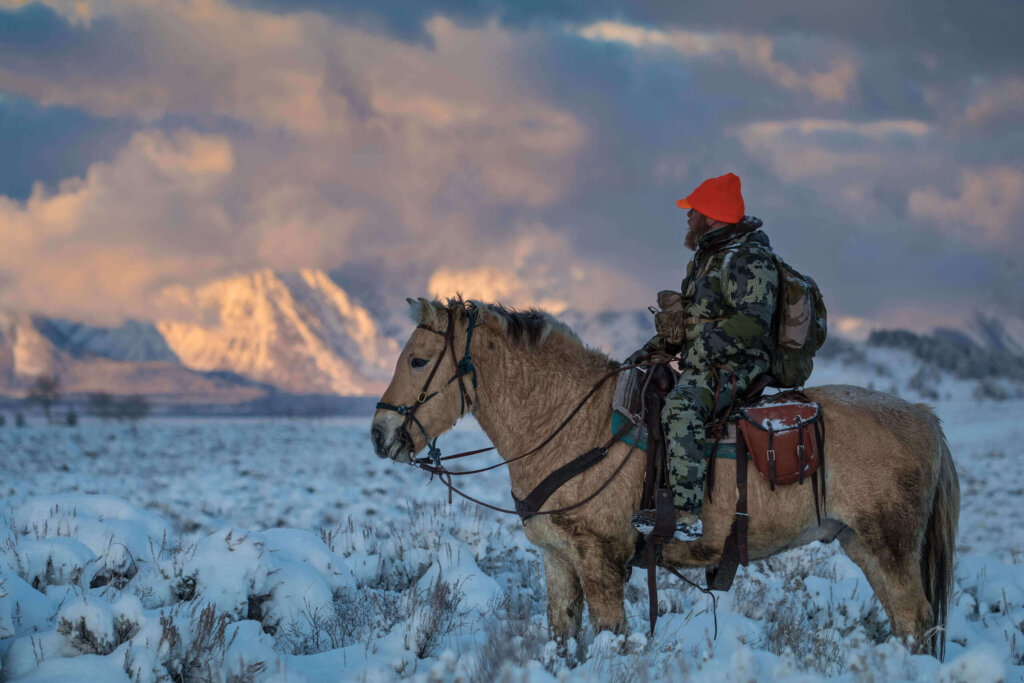
As hunters, we inherently thirst for adventure and you can be assured a Wyoming bison hunt will quench such a thirst. Hunts here are conducted from atop trusty, sure footed, mountain horses. These animals allow one to explore the vast fringes surrounding Yellowstone Park in search of bison bulls which are often found in solitude or small bachelor groups. These horses are also a blessing once a bull is down as they are able to carry out the valuable meat, head and cape in a single trip. While afield you can expect to also spot elk, mule deer, moose and grizzly bears amongst a back drop of beautiful mountains that offer a “million dollar view” from every angle. The overall hunting experience and memories made on such a trip often over shadow the harvest itself which is a rare find without traveling to faraway lands.
2020 Season Recap

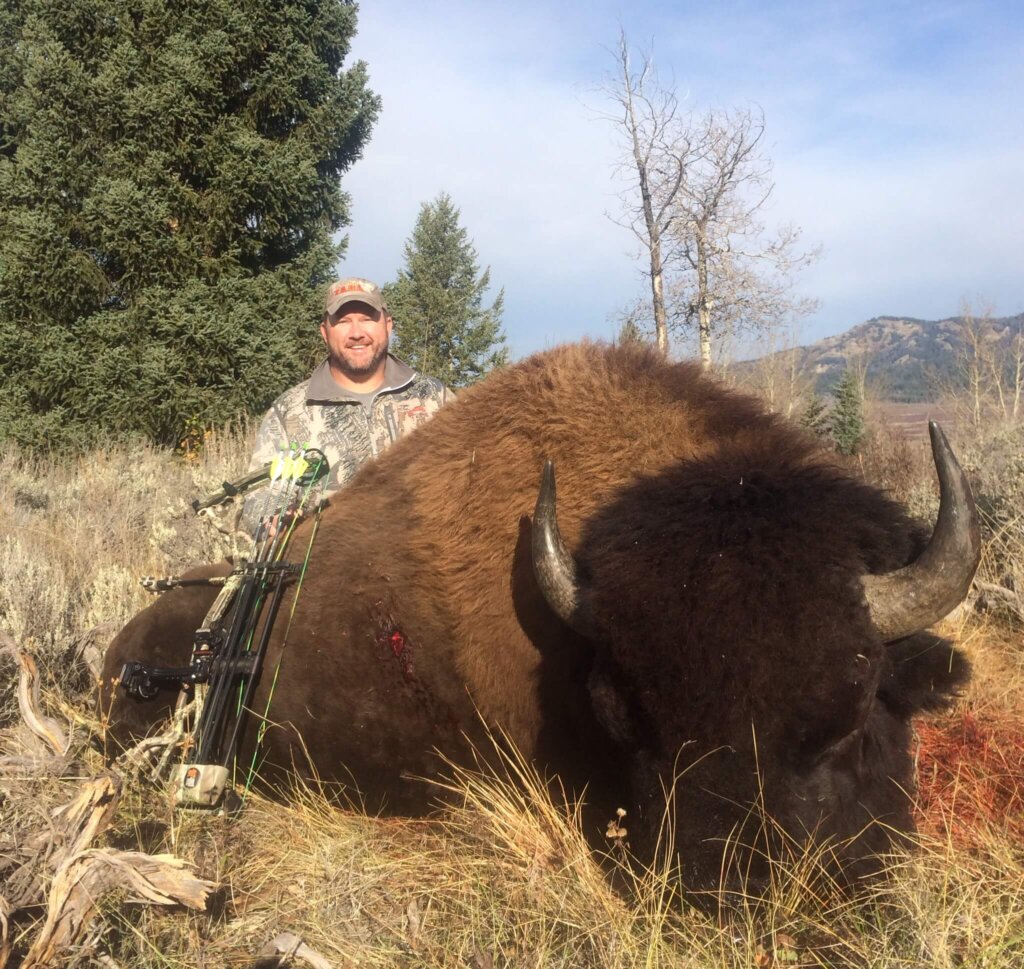
Harvest success data is not yet available through the Wyoming Game & Fish Department. The previous three seasons have seen overall success drop to around 60%. However, WTA TAGS clients, who booked with our preferred outfitter, were 100% successful in taking mature bulls. Outfitter selection for this hunt is pivotal to ensure such a desirable tag is not squandered. WTA TAGS has worked with this particular outfitter for over a decade and can assure you that there is no one you would rather utilize for your once-in-a-lifetime tag.

Draw Trends

The Wyoming bison draw, statistically and historically, offers non-residents the best odds of drawing a tag. In 2019, non-resident draw odds were approximately 1 in 20 for the bull tag. The 2020 draw odds improved to 1 in 12. It appears nonresidents will be guaranteed 25 tags for the 2021 draw. This is a critical fact because Wyoming does not offer a points system for bison. It is 100% random each year. In comparison, draw odds for Utah and Arizona bull bison tags will often exceed 1 in 1,000 or more. These improved draw odds are largely due to the fact Wyoming requires applicants to front the $4,402 tag fee which greatly restricts application numbers. WTA TAGS will float the $4,402 tag fee on your behalf as well as ensure your application is submitted correctly and prior to the deadline of March 31st 2021.
Do not wait another year to cross bison off your “bucket list”. WTA TAGS is ready to assist you with the application process associated with winning these coveted tags and organizing a hunt once successfully drawn. If you would like to apply, or have additional questions, please contact a WTA TAGS Consultant by phone 1-800-755-TAGS(8247)

Bison Hunting Video

Recent Articles

Popular Bison Hunts

Outfitter Special
Bison   ·
Nebraska
From 
$4,000
$3,450
Outfitter #990
Freezer Filler Special: October-Mid January Dates Available- Save $550
Estate Hunt
Bison   ·
Utah
From 
$15,000
Outfitter #043

Top Wyoming Hunting Trips

Draw Required
Rocky Mountain Elk   ·
Wyoming
From 
$8,000
Outfitter #895
Outfitter Special
Draw Required
Rocky Mountain Elk   ·
Wyoming
From 
$8,250
$7,250
Outfitter #859

Related Articles

In the Jungle for Ocellated Turkeys: A Hunt Like No Other

In the Jungle for Ocellated Turkeys: A Hunt Like No Other

Everything about the ocellated turkey is different from what hunters expect when they think about turkeys—from where they live, to what they look like, to where you hunt them. Even if they may not look or act like a conventional turkey, they are still a coveted species for anyone wanting to complete their World Turkey Slam. Often, they are the last turkey that hunters tackle when shooting for a slam, but there’s no reason to wait. Go now and experience a turkey-hunting adventure like no other!

Adventure is the keyword here. A hunt for ocellated turkeys takes you into the wild jungles of Mexico’s Yucatan Peninsula, amid the ruins of the Mayan civilization and a world where jaguars still roam. Even though the camp is remote, getting there isn’t particularly difficult, dangerous, or challenging. It does take some time, but a flight from your nearest airport will have you in Merida, Mexico in just a few hours. Your representative will meet you there and transport you to Campeche, a beautiful, safe, and historic city set on the shores of the Gulf of Mexico. After a comfortable night’s rest at one of the hotels hand-selected by WTA’s professional staff of consultants, you’ll be picked up the next morning for a journey into the jungle via a modern, air-conditioned van, followed by an open-air Jeep ride for the final few miles.

Nearly hidden under the jungle’s canopy, the camp is a curious mix of modern and traditional. The heavy-duty, screened wall tents are lifted off the jungle floor on wooden platforms. A generator provides ample energy to power electronics, including overhead lighting and the welcome relief of air conditioning. And yes, there is Starlink, although I suggest unplugging completely to fully experience life off-grid and away from the hustle of modern life. Camp is set along a meandering stream, complete with a swimming hole where you can spend the hot, humid midday hours cooling in the creek.

Camp and country aside, the real reason to travel deep into the Yucatan is to experience a turkey hunt like no other. In addition to checking off the species to complete a Slam, the ocellated sports some of the most beautiful plumage in the bird world. Looking more like a peacock than a traditional turkey, the male ocellated is plumed in a gorgeous array of purple and blue feathers that seem to change colors at different angles in the sun’s rays. In strut, the tips of the fan show what look like a series of eyes, lending the bird its name, which is derived from the Latin word for “little eye.” Its head is also like no other bird, with a sky blue color punctuated by orange warts and, in large toms, crowned by a pronounced crest. The ocellated turkey makes a striking mount, and the camp staff works to ensure the best care and transport of your turkey.

While the ocellated turkey does have a distinct call, it’s not like the deep gobble turkey hunters are most familiar with. Instead, the male ocellated, known locally as the macho, sends out a rolling chorus of notes that increase in both speed and volume, not unlike the sound of a two-stroke motorcycle struggling to start somewhere deep in the jungle.

Hunters used to calling turkeys into shotgun range will also be surprised to know that’s not common practice here. It can happen, but most ocellated turkeys are taken from the roost, after following a local guide on a hike through the pitch-black just before sunrise. No matter how far into the thick cover you go, your guide will walk you to the exact tree where the macho resides, and, before the turkey flushes, instruct you about when and where to shoot. If the hunter does his or her job, the ocellated tag is notched and a bucket-list bird hunt is achieved before the sun even rises for the day.

Once the World Slam celebration wears off, many other activities keep hunters busy in the jungle. First and foremost, there are several exotic bird species available to hunt on a trophy-fee basis. Great currasow and crested guan are the top two birds that hunters target after taking their ocellated turkey. Like the ocellated, both birds are sought after for their beautiful and unique plumage, making distinctive additions to your trophy room. Other hunting opportunities include the coatimundi, lowland paca, and collard peccary.

While Mexico may not be on the minds of all hunters, for that certain adventurous kind of person, a hunt in the jungle is a must-do trip. The brightly plumed ocellated turkey is much more than just a checked box on the way to a World Slam. It provides a unique reason to get with the professionals at WTA and plan a hunt at their exclusive camp deep in the Yucatan. They manage the details and make traveling to Mexico a safe, easy, and memorable event.

Ocellated Turkey Hunt Info
Spring Thunder on the Plains: Kansas Turkey Hunting Made Simple

Spring Thunder on the Plains: Kansas Turkey Hunting Made Simple

Few Spring experiences rival the sound of a hard-gobbling tom echoing across the Kansas prairie. As winter gives way to warming mornings and longer days, Kansas comes alive with opportunity for turkey hunters who are willing to plan ahead. With strong Rio Grande turkey populations, abundant private land, and a well-managed season structure, Kansas remains one of the most reliable Spring turkey destinations in the country.

Kansas offers a straightforward, yet thoughtfully designed Spring turkey season. For 2026, Youth/Disabled Season runs from April 1–14, followed by Archery-Only Season from April 6–14, which is an exciting window for close-range encounters when gobblers are aggressive and responsive. The Regular Season, which allows both firearms and archery, opens April 15 and runs through May 31.

While the hunting itself is accessible, the permitting process requires attention, especially for nonresidents. Kansas turkey draw applications for nonresidents must be submitted by February 13, 2026.

Missing the February deadline is the most common reason hunters lose the opportunity to hunt Kansas in the Spring. Between busy schedules and multiple state regulations, it’s easy to overlook the application. This is where WTA TAGS plays a critical role.

WTA TAGS simplifies the application process and removes the guesswork. We handle the Kansas turkey application on your behalf—tracking deadlines, submitting applications correctly, and communicating results clearly. Instead of navigating state systems and regulations, you can focus on planning your hunt and enjoying the season ahead, confident that the logistics are handled professionally.

For hunters looking to elevate the experience, WTA TAGS also offers excellent outfitted turkey hunts on private land. These opportunities feature thousands of acres of exclusive ground, true Rio Grande turkeys, and flexible hunting styles ranging from ground-blind ambushes to classic run-and-gun tactics. Lodging is often first class, with comfortable rooms, hot showers, and hearty meals waiting at the end of the day. Group sizes are kept small, creating a more personal and high-quality hunt.

Because nonresident tags must be drawn, these hunts require planning. WTA TAGS can assist with both the application process and connect you with the right outfitter once a tag is secured. It’s a seamless path from paperwork to the field.

Kansas turkey hunting rewards preparation. With clearly defined seasons and a firm February 13 application deadline, the hunters who plan early are the ones listening to gobbles come April. WTA TAGS is here to make sure you’re one of them—applied, prepared, and ready when Spring thunder rolls across the Plains. If you would like to book a well-vetted Rio turkey hunt in Kansas for this Spring, call us ASAP at 1-800-755-8247.

TAGS Turkey Hunts in Kansas
From Sweepstakes Win to First Mountain Lion: Our Utah Adventure

From Sweepstakes Win to First Mountain Lion: Our Utah Adventure

We never win anything. So, when we bought 10 sweepstakes tickets from WTA on a whim (ironically, after Joe had…

Get Trip Specials & Cancellations,
Right Where You Want It.

No spam. Just the good stuff. Opt-out anytime.