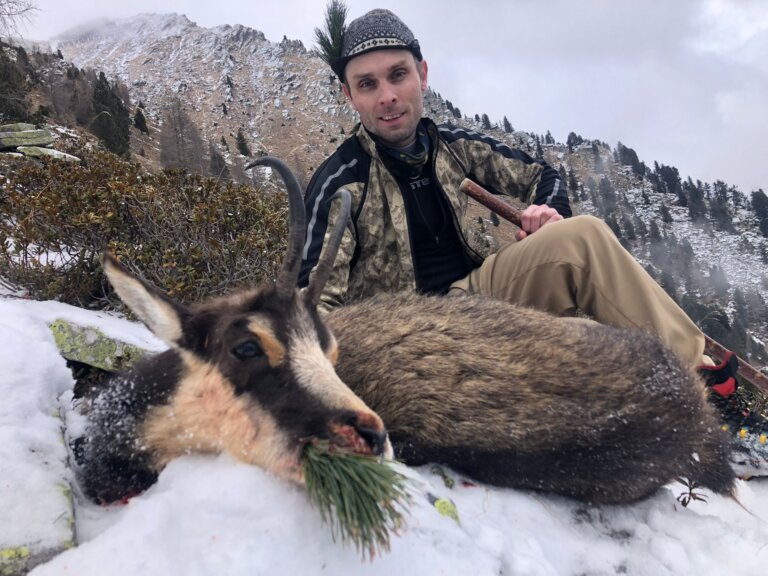
Our WTA consultant specializing in European hunts, Roger William Jørgensen, booked this chamois hunt in Austria for client, Kit Hunter. Kit sent the following account of his adventure:
My flight from Charlotte to Munich was easier than I thought it would be. Navigating the Munich airport, exchanging money, and picking up the car went smoothly. My international phone plan automatically kicked in and in a minute I had directions to Austria. The drive from Munich to Sachsenburg was quite beautiful near the Alps. The scenery was idyllic and there were numerous hunting blinds visible from the Autobahn, which stoked my fire to get hunting!
Roger, the local WTA genius, met me and we went out just down the road to Alie’s guesthouse for the best ribs, beers, and cultural exchange that I’d had in years. Such a good time! I managed to survive the first round of Austrian hospitality none too worse for the wear, but I was worried when the homebrewed Serbian fire water made an appearance.
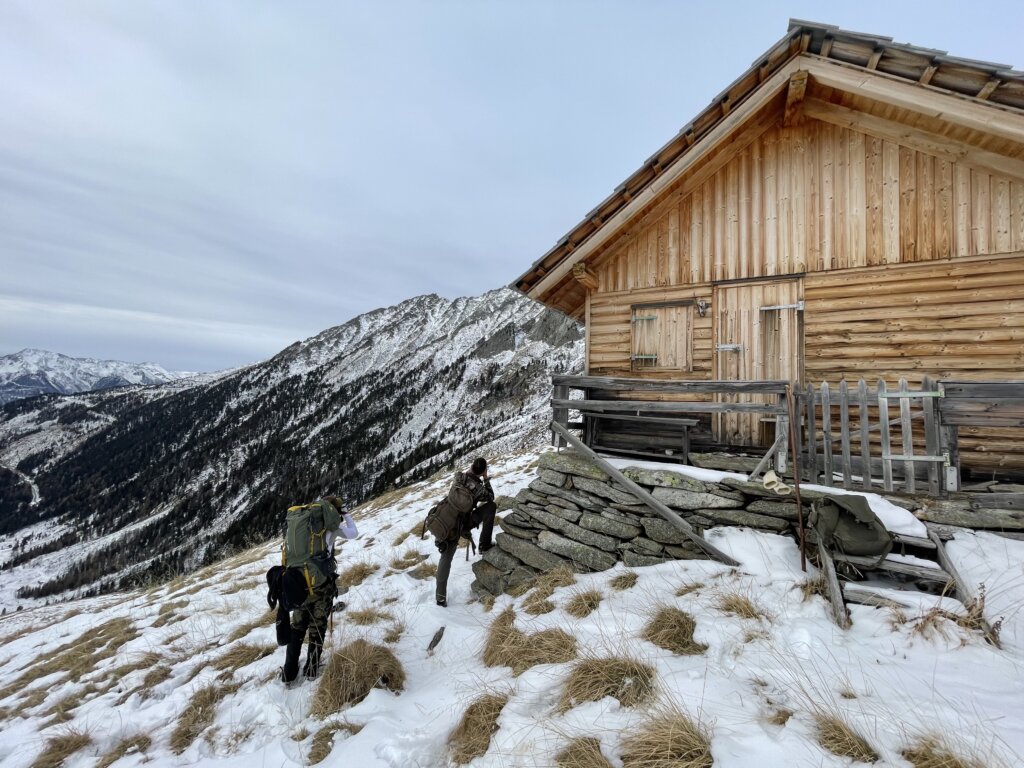
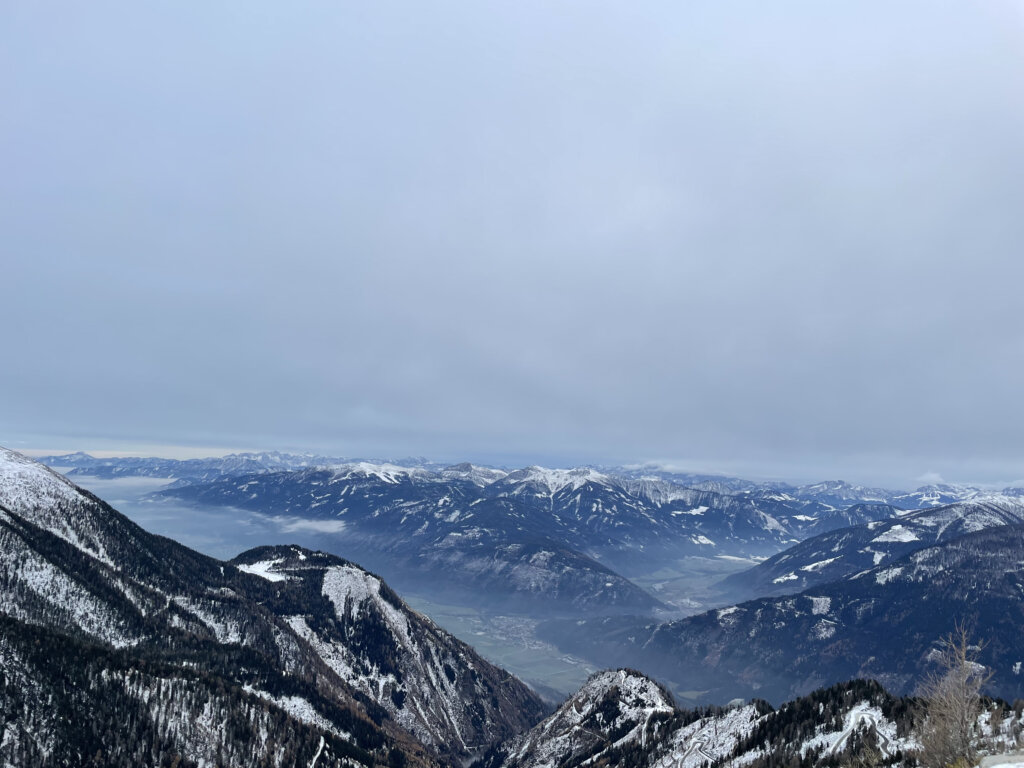
Thankfully and surprisingly, I felt refreshed the next morning. Roger took me to meet up with the guide, Uwe. Introductions ended with me drooling over Uwe’s stunningly beautiful and authentically Austrian Blaser .300 WSM rig. We took a quick shot to check zero and headed to the hunting grounds. The first morning was clear, and we elected to start off at Uwe’s cabin and hunt up the mountain along some stunning chutes where Uwe had shot a nice chamois the week before. We worked through the low forest and up a snowy trail glassing as we went. Uwe and Roger were seeing animals immediately, and it took me most of the first day to get the chamois pattern in my brain. Uwe gave me a masterclass on field judging animals. We continued to gain elevation, and by early afternoon we’d gained a few thousand feet. We saw plenty of chamois, but none that met the standard. To finish off the afternoon, we used the most ridiculously convenient road system in the free world to access a few other areas, and we had an opportunity at a broken horn chamois, but I was looking for a more traditional trophy. We went home without a chamois, but the day couldn’t have been more fun.
The next day we elected to hunt some really tricky terrain after Uwe showed me how to properly use a climbing stick. My advice is to use them and leave the ski poles at home. Uwe is an accomplished mountaineer and part chamois, so I was grateful to have him set the trail on the unique and exciting terrain. There was initial access through incredible tunnels to gain elevation so I was fresh to tackle a bit of scrambling. We saw plenty of animals, but sorting through the females with kids and juvenile adults for a trophy animal in a retrievable situation was the name of the game.
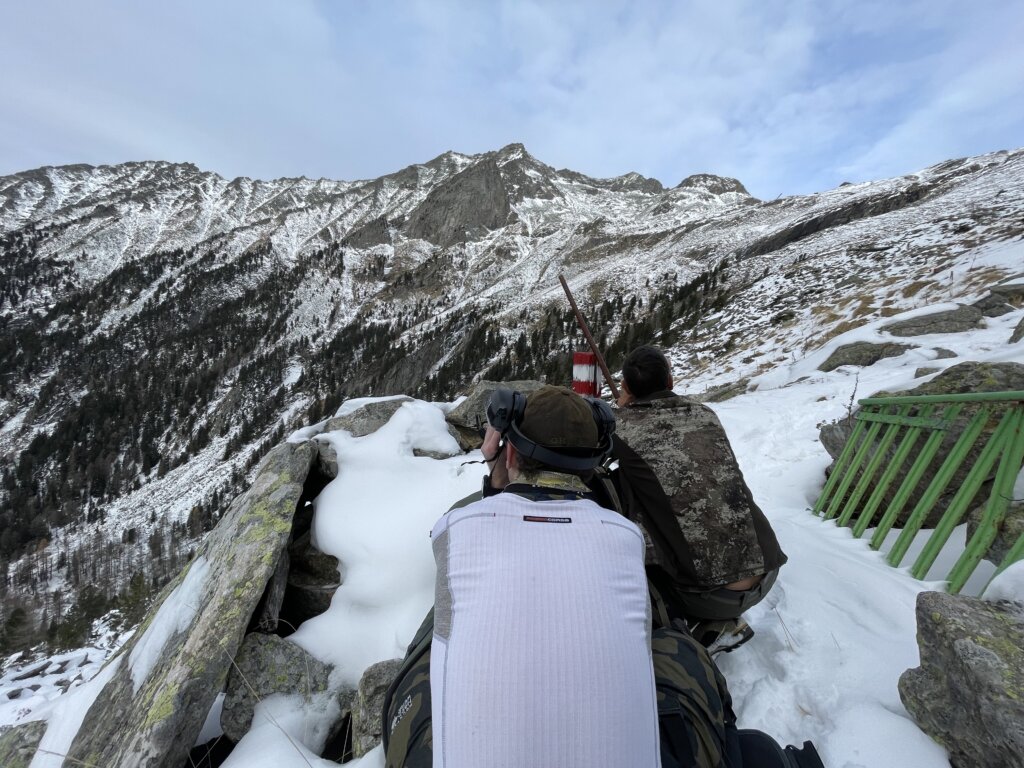
By around noon we’d found a shooter, but there were a few mamas and kids we had to sneak past to shoot. After a fair amount of belly crawling and praying we managed to set up a solid rest with our packs and got into a position to wait. In the meantime, the animal had settled into a position behind a tree and bedded down while we waited and waited. I was getting colder and colder laying on the snow, and trying to reposition, I managed to roll the end of barrel into the snow. I tried to clear the barrel quickly, but the animal was stirring. Then it stood and walked into a broadside position. We’d already dialed for about 230 meters, so I quickly got set, confirmed the sight picture and alignment, and held on the front shoulder. Uwe had been ready to call the shot and reported that I’d shot low. The chamois immediately ran to the nearest ridge and held broadside at 280–300 meters for just a moment, skylighted with the expanse of valley behind it. My hopes for a safe follow-up shot vanished as it and several of his chamois friends hopped over the edge, whistling haughtily as they gave us the middle horn.
We climbed back up the mountain to check out a couple tricky spots. We found another shooter, but it was a long, very high angle shot above some sketchy bluffs with no chance to build a stable position. We elected to check one last high-elevation position where we’d seen a few animals from afar, and we saw two monster animals about 240 meters away. The shot was tantalizingly straightforward, but their position was essentially inaccessible and was directly above some of the sheerest cliffs in the valley. Uwe made a few calls to gauge interest for mounting a potential retrieval party, but the resounding answer was, “There? Ha! No.” So, we worked back to the truck and road hunted on the way down. We saw one final animal as the dark fell and the fog rolled in, but it was already too dark to properly judge the animal and then it was very quickly impossible to tell which end was which through the scope.
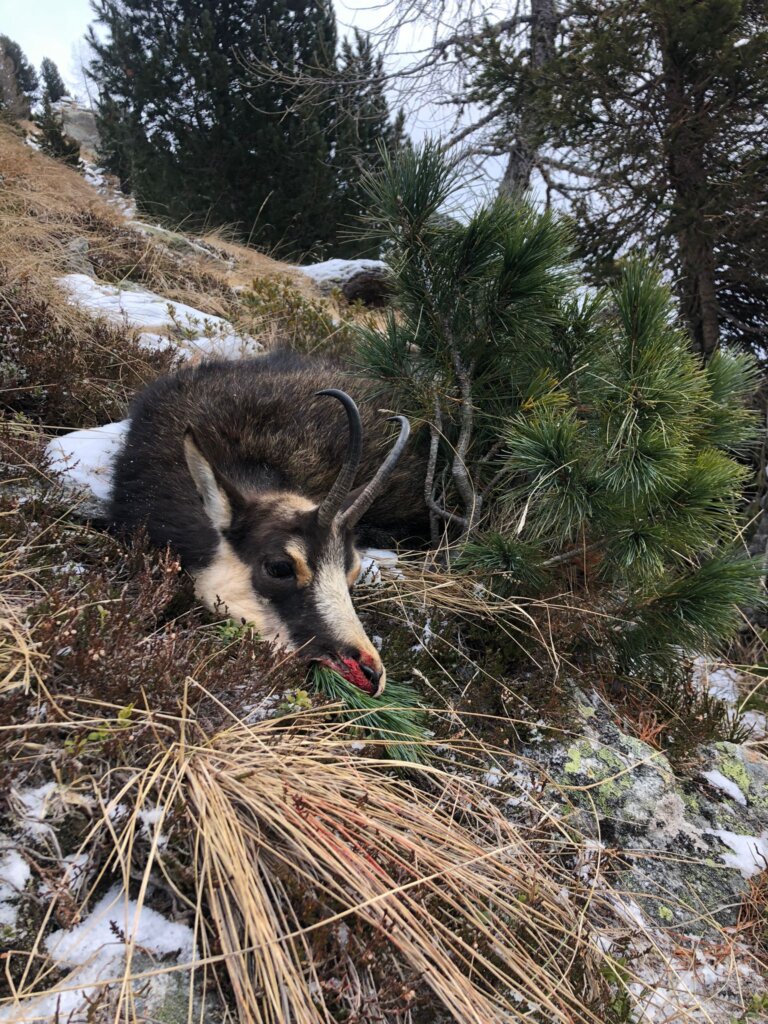
The third day began as the previous two and we accessed the higher elevation with the truck and then slowly picked our way across the rugged terrain above treeline looking for the right animals. We were in luck and our first spot overlooked enough open terrain to hold several animals including two shooter males. We set up a position and waited for the animals to stand up from their beds. The morning was cold and the wind was blowing in our faces. Laying on the icy rocks, I was starting to get cold enough to shiver, but fortunately, another animal moved out of the trees 150 meters away from us and stopped perfectly broadside at 180–190 meters. I quickly redialed the turret and held for about 0.2mil of wind to put the reticle just behind the shoulder. Uwe was ready to call the shot, but it was a solid high shoulder hit and the chamois dropped immediately. Uwe went to retrieve the animal and I shuttled the rest of the gear back to the truck and drove it to the next switchback down. I met Uwe on his way back and finally got my chance to see the chamois up close. It was a beautiful animal, taken after a hard hunt that tested my skills and fitness.
Uwe, the Austrian equivalent to the Dos Equis guy, taught me an incredible amount about Austria, chamois, and how to operate quickly and safely in the mountains. It was exactly what I was hoping for, and I can’t wait to go back there and do it again.
To learn more about options for European hunts from Worldwide Trophy Adventures, contact Roger William Jørgensen at 800-346-8747.