Book Your Adventure 1-800-346-8747

Consultant’s Corner with Jordan Christensen: Late Season Rifle Elk Hunts

WTA Team
|  

Why should you hunt elk late in the rifle season? WTA Consultant Jordan Christensen has some reasons why and how you should tackle the late season rifle elk hunts.

1. Why these are great

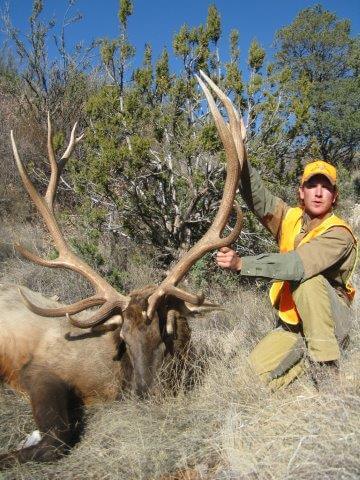
 Late season rifle elk hunts often get overlooked, and whether you are building points in the western states or you are planning to purchase a late season hunt with an outfitter, these are simply great options. The drawing odds in many of the western states for these November elk hunts can be twice as good as the same hunt that happens in September and October. What this means is you can be in a unit that consistently produces 350+ B&C bulls, with a rifle, in half or less years than it would take to hunt the same unit earlier in the year.  It seems everyone wants to chase these bulls when the rut is full tilt. Believe me, I get it, there is nothing more exciting than a giant bull bugling in the timber. These late rifle hunts on the other hand are well past the rut and the style of hunting is completely different. If you are a hunter who loves to glass, then these hunts are for you. The biggest difference from chasing bugling bulls in September is often just that you are just chasing a bugle through the trees and at the last second you have to choose whether it’s the right bull or not. These late rifle hunts give you the time and the conditions to pick and choose the bull you are after and when you leave your glassing spot it’s because you have located a bull you are interested in taking.

2. Use your optics

The conditions for glassing will not get any better for the year than these late season hunts. As the leaves begin to fall off of the aspen and oak trees, the wall of vegetation seems to disappear and quality optics will allow you to glass much more country than any other time of year. The elk don’t need to be standing in an open flat anymore and are easily seen in these pockets of timber. Often times these hunts have some level of snow involved and once again this plays right into your plan.  A good friend once told me, “It’s supposed to snow tonight, those bulls are going to look like flies in a bowl of milk.” He was right, pretty tough for something so bright and yellow to not stand out on a snow covered ridge.

3. Get off of the roads

One thing about these late rifle elk hunts that should be mentioned is often the states issue more permits on these hunts; this means you are going to have some company. Because of the conditions, often times with a little effort and planning it won’t take much to distance yourself from the crowds and get into some of the more remote areas of the unit. The mature bulls often gravitate to these areas as well as tend to like the deeper darker canyons to ride out the winter.

4. Be Patient

Because the bulls are no longer making any noise, these hunts often can start out frustrating, sometimes its because all you are seeing is large herds of cow elk and younger bulls and it seems that there are no mature bulls in the area. Touching back to the third tip, these bigger bulls tend to move off by themselves this time of year and more often than not you won’t be finding them where the majority of the elk are located. Stay patient and keep searching, once you locate the right canyon or drainage that the bigger bulls have drifted into you can almost bet that there will be multiple bulls and they are not going to be leaving unless the pressure pushes them out. Plan accordingly and when you make your final movement to get into position for a shot make it count and if the conditions are not perfect then wait for another day to get into a better position. 

5. Cover Ground

On the same notes as tip 3 and 4, cover as much ground as possible. These hunts can feel a little like looking for a needle in a haystack, so this could mean lots of miles in the truck as well as lots of miles on your boots and definitely plenty of time behind your glass. If you are in a unit that consistently produces the caliber of bulls you are looking for they are still there, you just have to search them out. Use resources like google earth and scout look to plan all the different canyons and drainages you are going to hunt and then move from location to location even if it’s across the unit to check each of these areas off of your list. Eventually you will end up in the right locations and you will find where the big bulls have concentrated.
 

Related Articles

Wyoming’s Preference Point Deadline Is Approaching: October 31

Wyoming’s Preference Point Deadline Is Approaching: October 31

Preference Point Deadline: October 31, 2025

The deadline to purchase Wyoming preference points is October 31. If WTA is already managing your TAGS applications, you’re all set. If not, don’t miss the chance to secure points this year. It’s the perfect time to talk with a TAGS consultant to start a new portfolio or grow your existing one.

Wyoming’s system is unique. Unlike other states, you don’t automatically receive a preference point if you’re unsuccessful in the draw. Instead, you must log in after July 1 and purchase your points separately. Building points is critical if you want a shot at drawing a Wyoming tag. Over-the-counter opportunities are a thing of the past. Today, only 25% of non-resident tags are issued randomly. The other 75% go to applicants with the highest point totals.

If you want to hunt big game in Wyoming, building preference points isn’t optional…it’s essential.

Watch Wyoming Video

While preference points are an investment in the future, don’t let that keep you from starting now. While Wyoming has units that require 18+ points, there are also good opportunities to hunt sooner. There are elk, deer, and antelope hunts that can be drawn with 0–3 points. Think about it this way—the more points you have, the more options you have.

View Wyoming TAGS Hunts

Serious hunters know that Montana is home to some of North America’s most coveted species: Rocky Mountain elk, mule deer, bighorn sheep, Shiras moose, mountain goat, and antelope. The key to unlocking these dream hunts is building points, and the deadline to secure your bonus point for this year is September 30.

Montana squares bonus points in its draw system, and hunters with more points gain a significant advantage in the draw. If you’ve ever dreamed of chasing a record bull, a giant ram, or a heavy-horned buck in Montana, strategically building points will put you in the best position to find success in upcoming seasons.

Watch Montana Video Rocky Mountain Elk

Montana consistently produces exceptional trophy bulls, making elk the most sought-after species in the state. Archery permits are especially appealing, often requiring only 4–7 years to draw—a remarkably short time period compared to other western states. Rifle permits can often be drawn with a similar point investment, though trophy quality is slightly lower on average. Many of these hunts take place on expansive private ranches, providing hunters with excellent opportunities and high success rates.

View All…
Dialed In: A 360-Inch Bull Elk and the Luck that Made It Happen

Dialed In: A 360-Inch Bull Elk and the Luck that Made It Happen

Winning one hunt sweepstakes through Worldwide Trophy Adventures feels like a long shot, but winning two? That’s the kind of luck I still can’t fully wrap my head around. I started entering WTA sweepstakes a few years ago, taking full advantage of their Bonus Bucks program and hoping to win someday. I’ve hunted whitetails in Minnesota’s flat woods, mule deer out West, and Sitka blacktails in Alaska’s rugged country, but this was different. When Worldwide Trophy Adventures called to tell me I’d won their 2024 Nevada bull elk hunt, just a year after winning a Utah mule deer hunt from them, I was stunned. Two sweepstakes wins in two years? Unreal. And the icing on the cake? I’d be hunting with a crew that truly knows their elk. As Erik Schell put it: “John, when it comes to elk, these guys are paid killers.” He wasn’t wrong.

I opted to drive from Minnesota to keep costs down and bring back as much meat as possible. I loaded my truck with Yeti coolers and hit the road for the long drive, stopping in Denver for a steak dinner with a hunting buddy before tackling the last 10 hours to Baker, Nevada. That stretch through Loveland Pass was sketchy with snow and ice, and on the way back I detoured through Gillette, Wyoming to avoid a 30″ Denver snow dump. Long haul, but worth it to have my truck for the meat.

Baker is a speck of a town, population 16, just shy of the Utah line. The outfitter set us up in an Airbnb called The Corner Place. It was homey, with enough beds for me, another hunter, and the guide crew. The kitchen had stacks of premade meals like casseroles and snacks, whipped up by the outfitter’s wife. We heated them up after long days, but if we got back late, we’d hit the Border Crossing, a bar and greasy spoon split between Nevada and Utah. One side had slot machines, the other a gas station. We’d grab burgers and a bucket of Budweiser, the guide Richie’s favorite, and swap stories. It was simple, but it hit the spot.

The outfitter’s team was world-class. They’d been scouting for a week, pinpointing a bachelor group of bulls in a canyon 20 miles north. That first night, we sat around the Airbnb’s kitchen table sipping beers and scrolling through their scouting videos. Three bulls stood out: a beat-up 6×6 they called Bondo, a heavy 5×5, and a narrower 7×7. We decided to hit the canyon at dawn.

Day one was no joke. Richie, my guide, led me up the mountain before light, climbing a couple thousand feet. The air was a bit thinner than in Minnesota, but Richie kept a steady pace. Two spotters, Cameron and Ryan, worked the opposite canyon rim. It felt like I had the dream team for this once-in-a-lifetime elk hunt. We eased onto a rock ledge about 400 yards above a bench where five bulls were feeding: Bondo, the 5×5, a thin 6×6, a young 5×5, and a spike. No 7×7. This was the first time I was faced with taking a bull elk, but Richie talked me through it. “The 5×5’s got 30 inches of mass per side, swords in the 20s, probably 9 or 10 years old. Scores at least 330. Solid first bull.”

I went prone on the ledge, dialing my Gunwerks Nexus in 7 PRC to 387 yards. Richie double-checked: “386 yards.” Right as I lined up, the bull bedded down. Great. I’d waited out a mule deer for five hours once, so I knew the drill. Lying on snow with a 20° northwest wind kicking up, I started shivering after an hour. Richie saw it. “You good? We can back off, build a fire, or shoot him bedded. There’s a branch over some of his vitals. Can you slip a round under it?”

I’d put in time at Gunwerks’ Long-Range University: a hands-on, no-BS school that focuses on real-world shooting conditions, not just benchrest skills. They train you to read wind, manage stress, and make clean, ethical shots in exactly the situations that hunters face in the field. I knew my rifle, my dope, and my limits. “I got it,” I said. I checked the yardage, my level, controlled my breathing, and squeezed. The bull collapsed. “You smoked him!” Richie said. When he tried to get up, a second round finished it.

Reaching the bull was an experience I won’t forget. I’ve taken plenty of deer over the years, but this 360″ elk was in a league of its own—sheer mass, thick beams, and antlers that looked heavy even from a distance. Standing over him, the scale of the hunt hit me. We built a small fire, took photos, and soaked in the moment. Then came the hard part. The canyon was steep and treacherous, slick with snow and loose shale. I took a spill on the descent, and every step down was a test of footing and balance with meat on our backs. It took over three hours to reach the canyon floor and get the bull out, but it was worth every bit of effort. Back at camp, we celebrated the way hunters do—cold beers and a good story to tell.

We caped the bull that night and packed the meat in coolers, though it was cold enough outside to keep everything fresh. I hung around a few days, spotting for the other hunter’s bull, glassing canyons, and enjoying the Nevada backcountry. No pressure, just good times behind the glass. When I left, I strapped the antlers to my truck, crammed the coolers in, and drove 24 hours straight home, still buzzing. Back in Minnesota, I vacuum-sealed the meat, enough for months of meals, and dropped the rack with a taxidermist for a shoulder mount.

This hunt was as good as it gets. The outfitter knew every inch of that country, had bulls dialed in, and gave me options. For a guy who’s now won two WTA sweepstakes, I’ll tell you straight: these hunts are real and the sweepstakes are worth it. Nevada’s elk country and that crew of “paid killers” gave me a bull and a story I’ll be telling for years.

Don’t miss your chance to enter to win this world-class elk hunt in Nevada. The entries are limited…only 1,750 total entries, giving you very good odds of winning this elk valued at $72,000!

Enter the Nevada Elk Sweepstakes

Get Trip Specials & Cancellations,
Right Where You Want It.

No spam. Just the good stuff. Opt-out anytime.