“We don’t know what we don’t know.” That tried-and-true bit of wisdom can apply to anything in life, but it definitely applies to long-range shooting.
My buddies and I are hunters, not long-range shooters. We want to extend our effective range to consistently shoot and humanely harvest animals out where we wouldn’t have taken the shot before. I can’t count the number of times I’ve passed on a shot that was just outside my comfort zone. I want to extend that zone by attending Gunwerks Long Range University.
Here’s where I stand. Like many others, my buddies and I have purchased a “long-range” gun of applicable caliber and mounted a scope with ballistic turrets cut with the guesstimates for the bullets’ ballistic coefficient, sectional densities, velocity, approximate temperature, approximate elevation, approximate everything. Plus the unknowns of incline and decline, spin drift, Coriolis Effect. Yes, there’s a lot to know. Long-range shooting can be quite complicated for a hunter.
We want to shoot and know how to compensate for wind, and make a clean shot. So after going through the appropriate motions, readings, calculations, estimates, etc., we go to the range and targets at 200, 300, 400 yards are no problem. We’re hitting metal all the time, but from 500 and farther we have a lot of misses and have no idea why.
Why and how do all of these variables, guesstimates, estimates, and conditions affect the shot at 500+ yards? I don’t know.
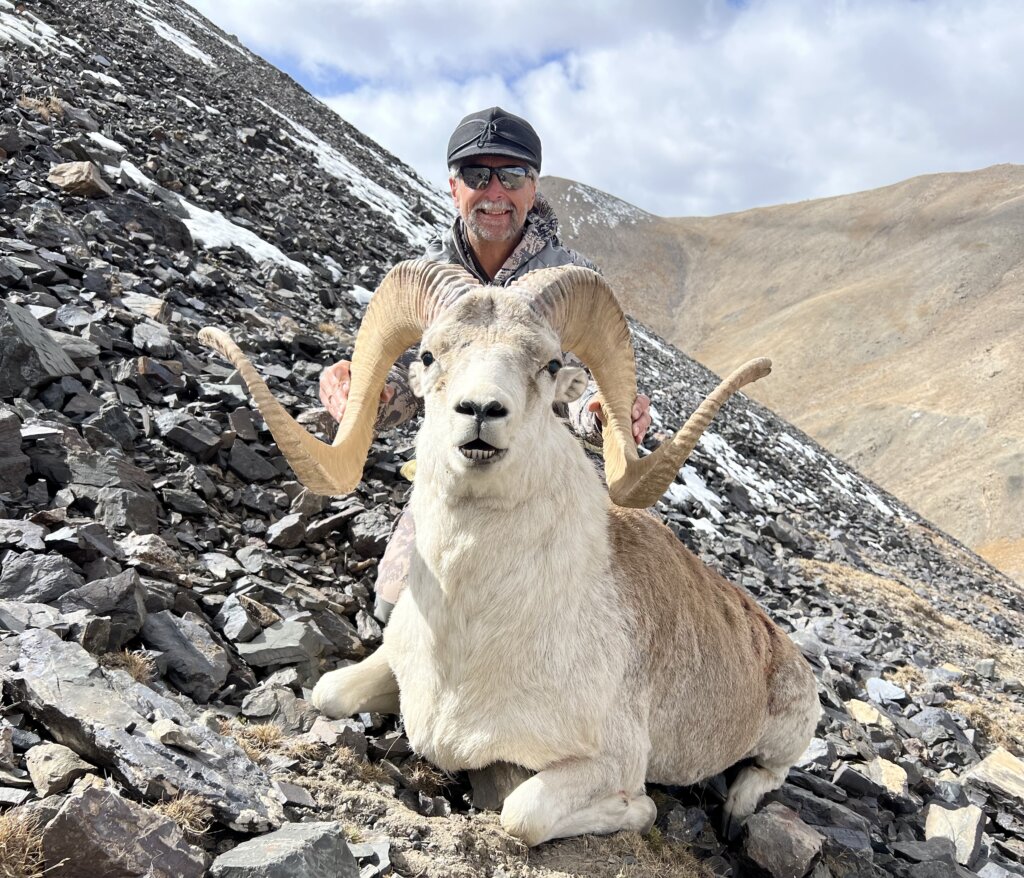
Case in point, I hunted in Kyrgyzstan a few months ago and was sighted in with my 300 PRC, the scope turret burned at 5,000 feet elevation, temperature estimated at 60°, sighted in at 100 yards. All set. I get to Kyrg, take some shots at a range, and I’m shooting 10 inches high at 100 yards. What the heck? Did my gun get bumped in transit? Is it the 30° temperature at the elevation of 14,000 feet throwing my turret off that far? Now what do I do? Old-school it and keep my shots to about 300 yards? OK, but what if I get a chance at a 65″+ Marco Polo at 400 or 500 yards? Where should I hold at that elevation, that temperature, at a 30-degree downward angle shot? What about the wind? I didn’t know what I didn’t know!
So some buddies, and clients who are now buddies, and I are going back to school…Gunwerks Long Range University to be exact. We want to learn long-range shooting from an ethical hunting standpoint. And with professional instruction and practice we should be able to do that. We’re not going to be shooting at animals at extreme distances, but we are open to learning all we can.
Essentially, we are hoping to learn what we need to know about taking a long distance shot at all varieties of big game animals.
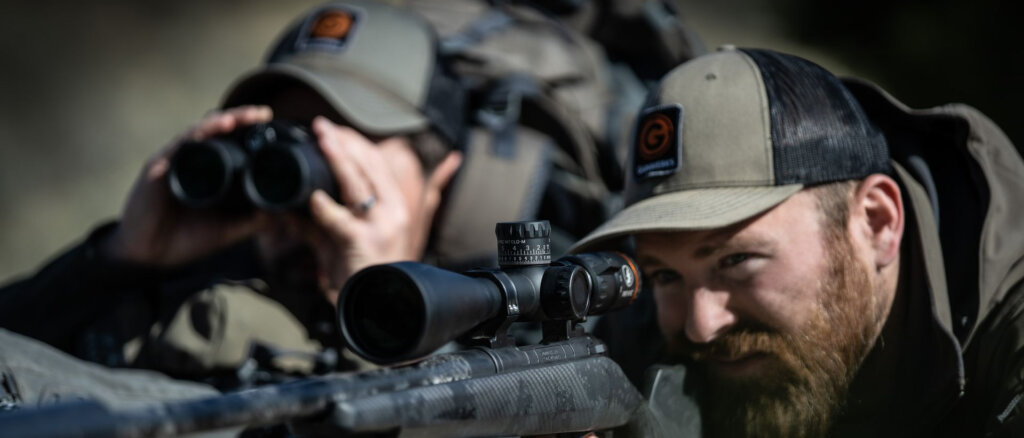
We also want to learn how to incorporate Gunwerks’ Revic Acura BLR10b ballistic rangefinding binocular into our hunting. The binocular combines a ballistics solver, weather station and laser rangefinder, which allows a straightforward shoot-to-range solution with a simple BDC (bullet drop compensation) turret. All we do is enter our ballistic information, and after reading the atmospheric conditions and distance, it compiles that with the ballistic information to give us the real-time info to make an ethical shot. To me these rangefinding binos are the completion of the Gunwerks accuracy-based system. They had a separate rangefinding unit, but now that’s built in to the Revic Acura, eliminating the need to carry separate binos and a rangefinder. Plus the ballistic calculator is icing on the cake.
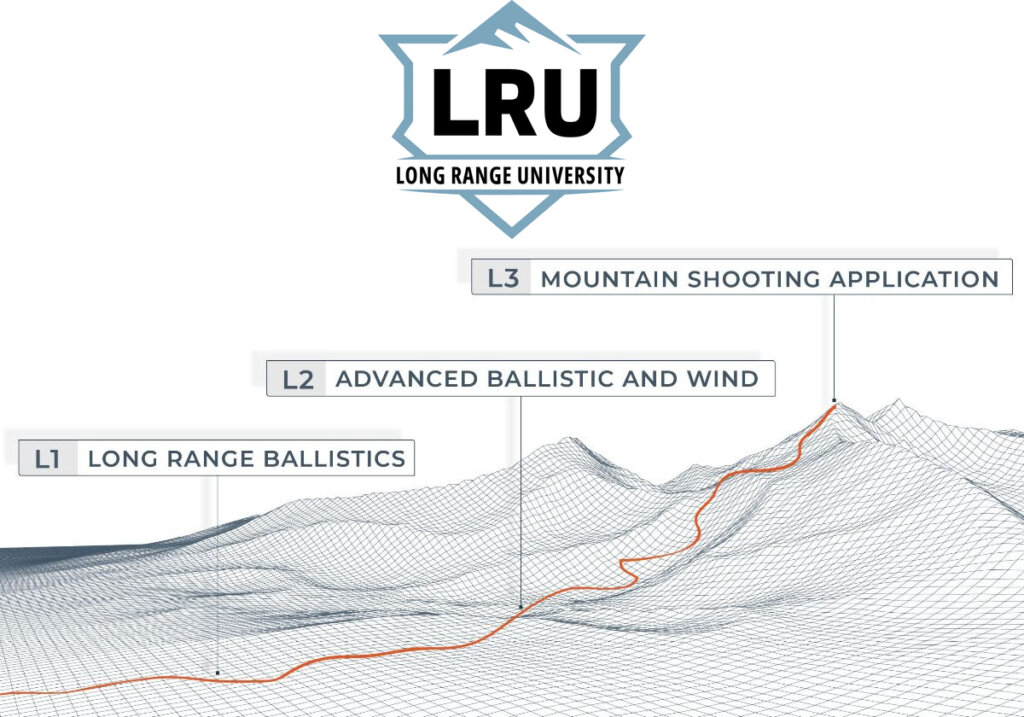
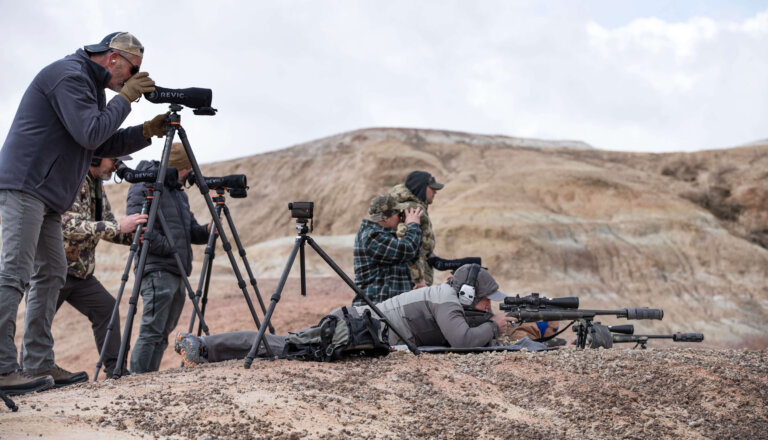
We’re going to take the L1 Long-Range Ballistics and L2 Advanced Ballistics and Wind classes back to back. I’m expecting four intense days of learning in a classroom environment and then putting it into practice on a world-class range with Gunwerks’ top-end instructors. Plus we’ll get to see, feel, and learn about Gunwerks long-range rifles and how all this can make us better, more ethical long-range hunters. Gunwerks’ claim to fame is producing rifles accurate to 1,000 yards out of the box and we’ll tour the factory to see how they do it. And we’ll learn more about custom ordering a rifle system from their line, and picking caliber, stock configuration, color, scope, all the components. As I understand it, there are thousands of combinations to choose from to build your customized rifle system.
Currently I have a Gunwerks rifle from their Skunkwerks Trak project in a 6.5 PRC, which I think is a little light for elk and some of the other types of hunting I do. I’m looking forward to going through their factory and learning more about ordering. But as Gunwerks founder Aaron Davidson says, “Shoot the smallest caliber your ego will let you.” Each of us in our group have a different need and will want to know how to order a rifle system tailored to our type of hunting. I’ll probably go with either a 7mm PRC or 300 PRC and design it for western hunting for elk, bigger black bears, and so on. I have the opportunity to hunt across the globe with WTA, and I want a rifle system that will fit the majority of my hunts.
The class is coming up soon and when I return I’ll share what I learned about what I didn’t know. Oh, and yes, I got my Marco Polo sheep in Kyrgyzstan. I’ll share more about that later, too.