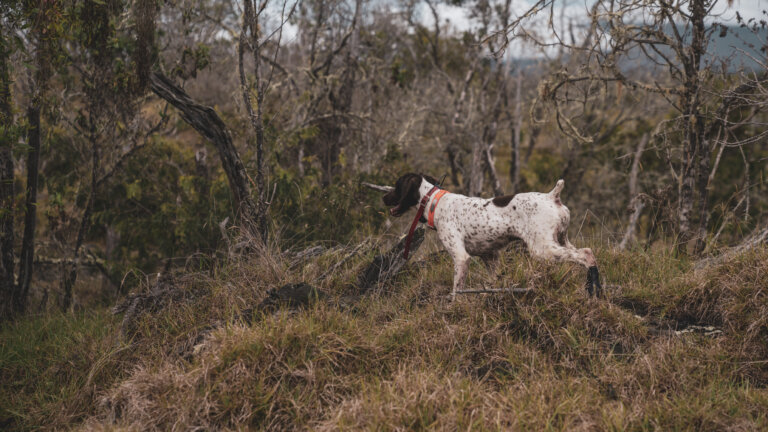
In a previous blog I mentioned that if you, as an upland hunter, wanted to bring your bird dogs to Hawaii, that I would give you some pointers of what we learned from our experience. There are 4 keys:
1. Your local vet can assist in steering you through the regulations.
2. The Hawaii Department of Agriculture has the AQS-279 (Dog & Cat Import Form) available online, along with a checklist that helps you navigate through what you need to do prior to departure and what you need to complete form AQS-279.
3. How to arrange for Direct Airport Release (DAR) upon arrival at one of Hawaii’s airports.
4. Lastly, and most important…check and re-check every step. One thing wrong, or incomplete, will keep your dog in quarantine upon arrival into Hawaii.
Hawaii is free of rabies and the Hawaii Department of Agriculture has set up a program so that the islands remain so. If a person arrives in Hawaii without completing all of the proper steps, your dog or cat will either go into quarantine, at the owner’s expense, for up to 120 days until requirements are met for release or be transported out-of-state at the owner’s expense. There are no exceptions.
Based upon what we learned, you should start the process no less than 4 months prior to entering Hawaii. Here is a summary of our step by step process. You MUST, however, work very closely with your vet as he or she has the current requirements that can be verified online. My information is only a summary of what we did to be successful; I did not cover every detail of every form and process. There are a lot of steps and every detail must be timely followed by you and your vet if you want to successfully bring your upland dog to Hawaii.
MICROCHIP. Your dog needs one that your vet can scan and verify. Your dog will be scanned upon arrival in Hawaii and the scan # must be the same as listed on 100% of your other documentation and tests or the dog will not be allowed entry.
RABIES SHOTS. Your dog has to have a minimum of 2 rabies shots with the original signed certificates dated and verified with your dog’s scan number. The shots must be a minimum of more than 30 days apart. The most recent vaccination must not be more than the booster interval from the previous one and not less than 30 days before the pet’s arrival into Hawaii.
FAVN RABIES ANTIBODY TEST. The blood is drawn by your vet and sent direct to one of three approved US labs. We used Kansas State University (KSU). The blood sample test cannot be more that 36 months prior to your trip or less than 30 days before your arrival in Hawaii. KSU sends the results directly to the Hawaii Department of Agriculture. The sample results must be greater or equal to 0.5 IU/ml. Ideally this process is completed 60 or more days prior to your arrival.
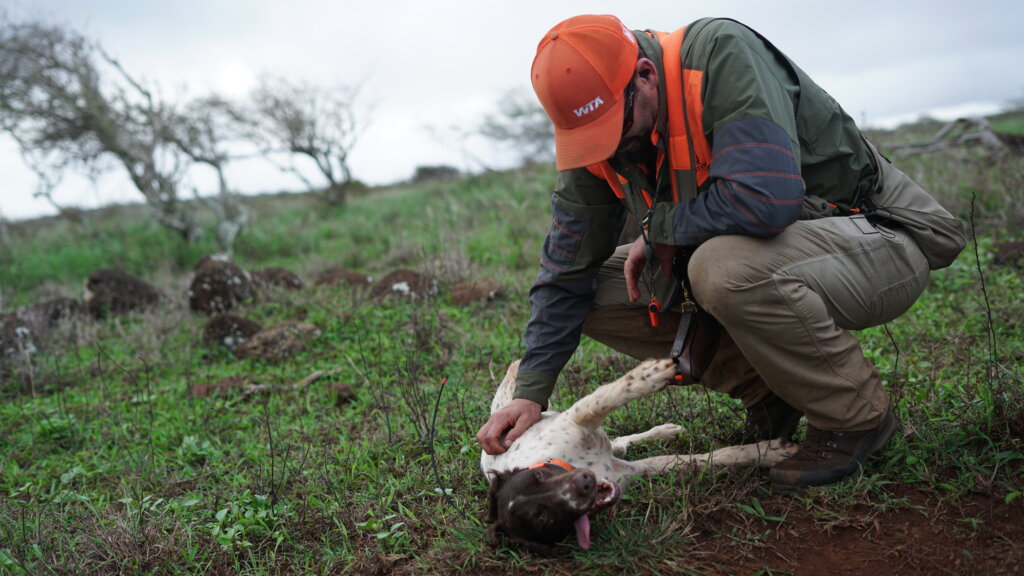
AQS-279. This is a three-page document, from the Hawaii Department of Agriculture, that you complete online and then make a copy. One form per dog is required. You fill in details about your dog and yourself. You fill in the address of where you are staying in Hawaii and the airport you are arriving into. You complete the fee section, enclose a check, your last 2 signed rabies certificates and send by overnight carrier with a return receipt requested. In your envelope you also need a prepaid return envelope so return documentation can be sent back to you. Make sure your information arrives in plenty of time prior to your arrival in Hawaii. You will have your email and phone number on the AQS-279 if there are questions due to your application not being correctly completed. Upon approval of your AQS-279, you will receive documentation for your arrival in Hawaii.
STATE CERTIFICATE OF VERTERINARY INSPECTION. Within 7 days of flying, your regular veterinarian must perform a health certificate exam where they will administer an approved flea and tick medicine. This signed state certificate will also have, among other things, your address, your address in Hawaii, your dog’s health history and the date you are flying.
YOUR AIRLINE. You need to verify ahead of time that you can fly with your dog. Tickets must be secured early as the flight information is necessary for much of the paperwork involved. Your dog must fly in an airline approved kennel.
LANDING IN HONOLULU HAWAII. Hawaii only has regular inbound dog inspection service, administered by the Department of Agriculture, at Honolulu airport. If you plan to land there first, learn the details of how to do that and the times the inspection services are open. You must make an appointment prior to arrival. We landed on the Big Island of Hawaii at Kona-KOA, so I will detail below what you do to land on one of the other islands.
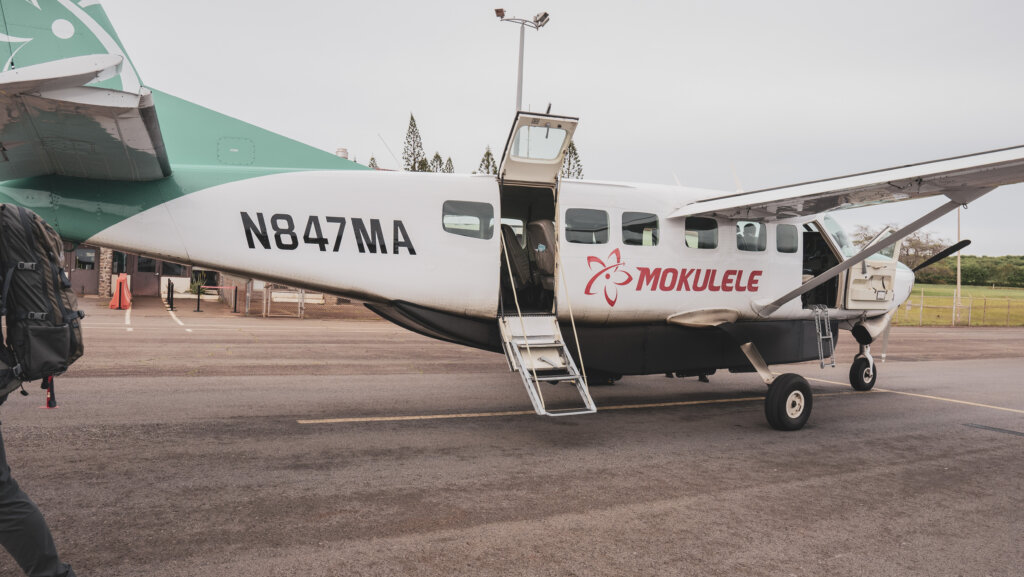
LANDING IN HAWAII AT AN AIRPORT OTHER THAN HONOLULU. If you land at one of the other islands, you must fill out an application and make an appointment with an approved vet to meet you at the airport. Approved vets are listed in the Department of Agriculture information. Our vet at Kona was most helpful and gave us the details of what we would need when she met us at the airport. We returned all of the information requested and paid the fee online. When we had sent our ASQ-279 to the Hawaii Department of Agriculture, we had requested inspection in Kona. As a result, we received a Kona Airport Dog Inspection Permit back from them prior to leaving Michigan. With this permit and our State Certificate of Veterinary Inspection, we met our Kona vet at the airport. She approved the paperwork and took it from us, verified the dog’s ID by scan and completed the inspection of the dog. The vet then sent our paperwork and her inspection report to Department of Agriculture, Animal Quarantine Branch. Our dogs were released and were able to hunt on the Big Island and also transport our dogs between islands.
Bringing your bird dog to Hawaii requires advanced planning and following the rules exactly. Was it worth it? Positively, YES! On the Big Island and Molokai we experienced some of the best upland hunting of our lives. Working with our Brittany’s made the hunts even more special.
Call our experts at WTA for details on upland hunting, fishing and big game hunting in Hawaii. There are numerous options available from short trips of 1-2 days to longer excursions of a week or two. Hawaii is a hunter’s paradise that every upland hunter should experience at least once in his lifetime.