Book Your Adventure 1-800-346-8747

Your Guide to Whitetail Hunting in Kansas

Erik Schell
|  
Location: Kansas

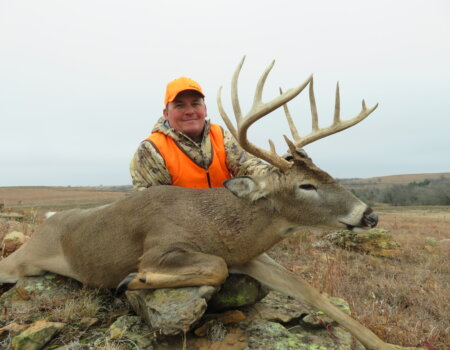
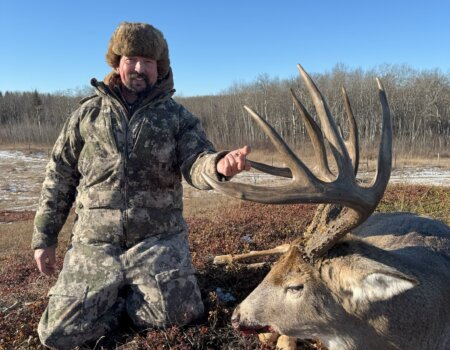
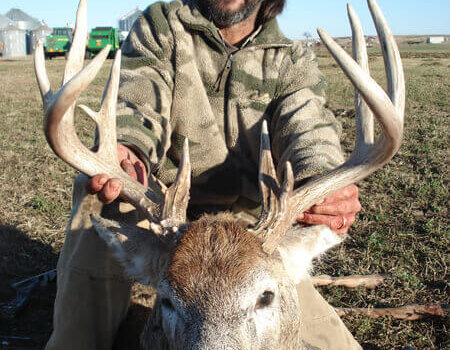
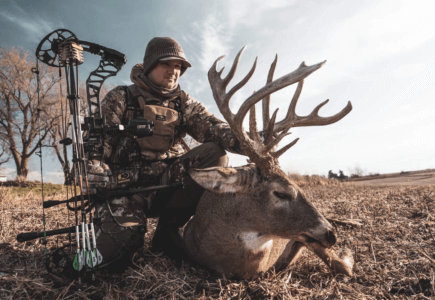
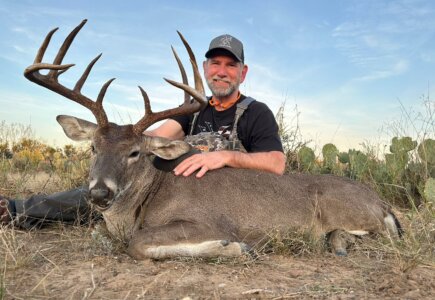
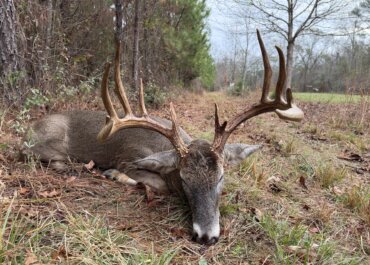
Whitetail deer hunting humbles even the most seasoned and discerning hunters. Bagging a trophy buck exceeding 150 inches marks a milestone achievement for many. Tales of bucks surpassing this threshold abound, but in reality, very few live up to the hype when deer are properly scored. Securing such a prized catch demands a convergence of factors, plus a stroke of luck. The paramount requirement is simple: you must hunt where the big deer live.

Kansas stands as a beacon for avid hunters. The state consistently contributes top entries to prestigious organizations like Pope & Young and Boone & Crockett, and it has become the quintessential destination for WTA clients seeking these milestone trophies. The state’s allure is no surprise, given its allocation of limited non-resident tags, exclusion of gun hunts during the rut, and stringent access restrictions due to the vast swaths of private lands.

Meticulously structured deer seasons range from mid-September muzzleloader hunts (with legal scopes) to October and November archery hunts (where crossbows are permitted) and the culmination in December rifle hunts. There’s an option tailored to your preferences.

For over 25 years, WTA has continually evolved to offer premier outfitter services in the Sunflower State, each equipped to deliver that elusive once-in-a-lifetime trophy. With limited availability and the impending April 26th application deadline for Kansas, procrastination is ill-advised. If you don’t intend to hunt Kansas in 2024, it is imperative to purchase a point to ensure a successful draw in the future.

Reach out to WTA TAGS today to align your hunting aspirations and maximize your time in the stand this Fall.
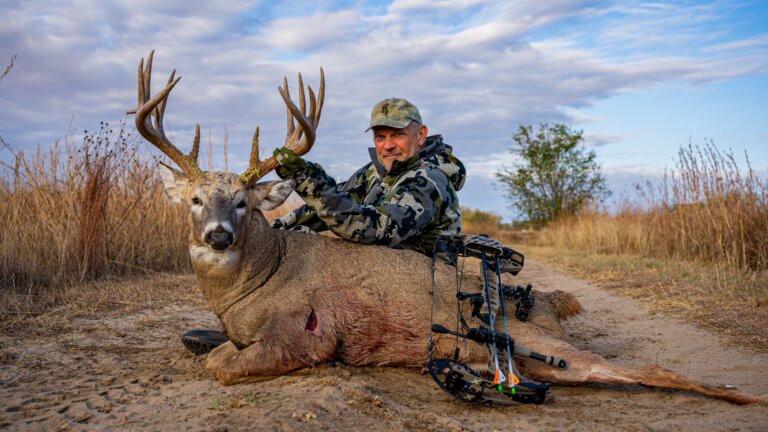
The Ultimate in Kansas Whitetail Hunting

Muzzleloader: September 16–20, 2024 (1 Spot)
Archery/Muzzleloader: October 21–25, 2024 (2 Spots)

Located in the heart of big whitetail country, this outfitter has over 15,000 acres of strictly managed property. Some of this outfitter’s highlighted properties include primo ground bordering the Cheyenne Bottoms and Quivira National Wildlife Refuges, which provide critical sanctuary to sustain quality deer hunting year after year.
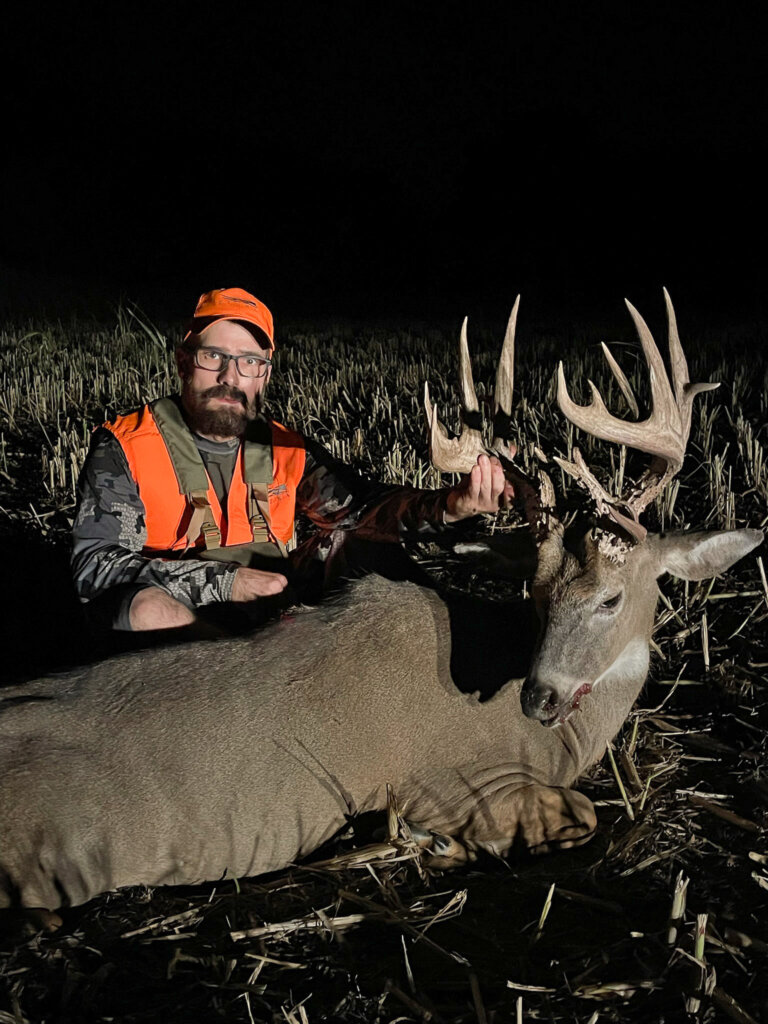
Trophy Whitetails in Central Kansas

Archery/Crossbow: November 11–17, 2024 (4 Spots)

Located in the heart of central Kansas’ big buck country, this outfitter offers some of the best whitetail hunting in the state. The high-quality genetics, friendly atmosphere, professional  guides, and newly renovated hunting lodge will make for a very memorable and positive experience.

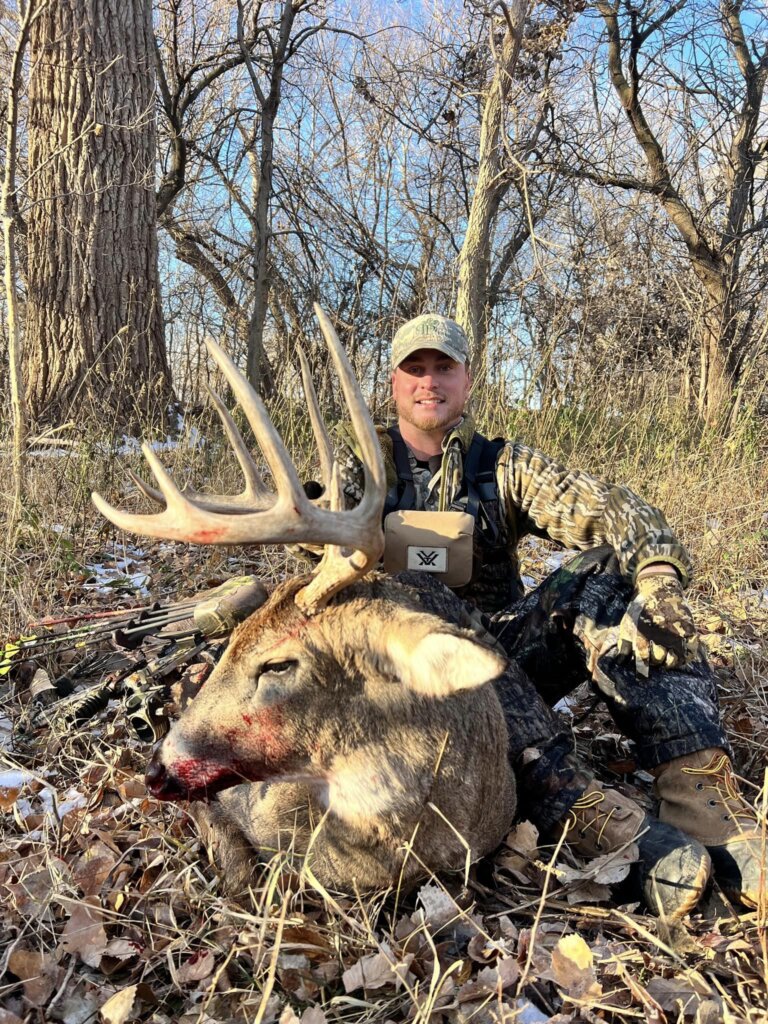
Unit 1 – Western Kansas Whitetails

Muzzleloader: September 16–20, 2024 (3 spots)
Archery/Crossbow: November 18–22, 2024 (3 spots)

This veteran outfitter offers rifle, muzzleloader, and archery whitetail hunts from his newly constructed lodge in western Kansas. WTA TAGS manager Eric Pawlak considers this outfitter’s archery hunt to be one of the best values in North America for whitetail. The outfitter controls over 20 miles of Long Branch Creek, Sapa Creek, and Rock Branch Creek, to name a few, in Unit 1 Kansas. These areas provide some of the best habitat for trophy-class whitetail deer. And with his preferred 135″ minimum, it’s an opportunity to harvest the whitetail of a lifetime.
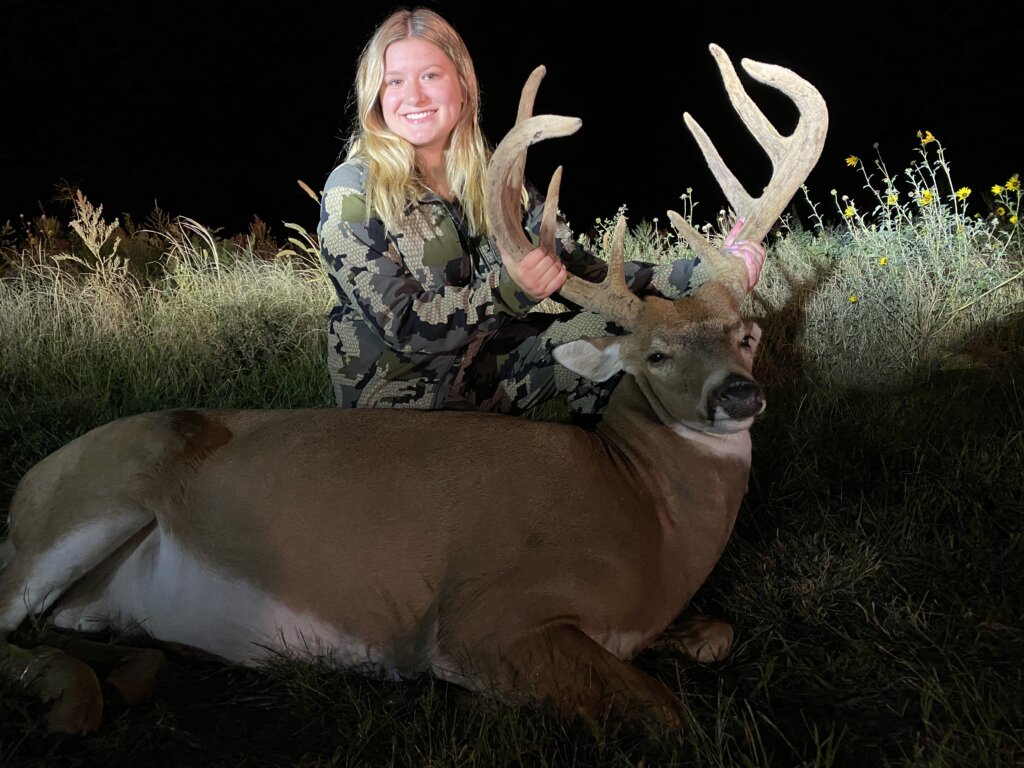
Unit 5 – Kansas Trophy Whitetail Hunting

Muzzleloader: September 23–27, 2024 (2 Spots)
Archery/Crossbow : November 4–8, 2024 (1 Spot) or November 11–15, 2024 (1 Spot)

Central Kansas is known for producing big whitetail deer and has produced some of our clients’ best trophies. Along with great genetics, the crops in this part of the state provide the perfect feeding ground to grow these big Midwestern whitetails. Most importantly, this outfitter controls thousands of acres of private property, some of which borders the local wildlife refuges. These refuges provide sanctuary for deer to grow old and are home to some of the largest bucks in the state.
Recent Articles

Popular Whitetail Deer Hunts

Draw Required
Whitetail Deer   ·
Kansas
From 
$6,500
Outfitter #1099
Deer, Whitetail Deer   ·
Alberta
From 
$9,750
Outfitter #1082

Top Kansas Hunting Trips

Draw Required
Whitetail Deer   ·
Kansas
From 
$6,500
Outfitter #1099
Draw Required
Whitetail Deer   ·
Kansas
From 
$11,000
Outfitter #164

Related Articles

Discover a Sportsman’s Paradise in New Mexico

Discover a Sportsman’s Paradise in New Mexico

New Mexico has long been celebrated as a sportsman’s paradise, boasting an unrivaled variety of big-game species. With six native…
Estate Hunting: A Closer Look at a Misunderstood Hunting Option

Estate Hunting: A Closer Look at a Misunderstood Hunting Option

Estate hunting, often referred to as high fence hunting, is one of the most misunderstood segments of the modern hunting landscape. The term can carry strong assumptions, but those assumptions rarely reflect the reality of what these hunts actually involve.

At its core, estate hunting offers hunters access to large, privately managed properties where wildlife is carefully stewarded, and hunting opportunities are predictable, efficient, and highly successful. These hunts are not intended to replace traditional public-land or limited-entry experiences. They are meant to provide an alternative option for hunters with specific goals, time constraints, or physical considerations.

Understanding estate hunting begins with recognizing how the properties operate and what the experience looks like on the ground.

What Defines an Estate Hunt?​

Estate hunts take place on privately owned ranches or preserves enclosed by a perimeter fence. These properties can range from several thousand acres to well over 100,000 acres, depending on location, species, and management model.

Within these boundaries, wildlife populations are actively managed year-round. Landowners and outfitters focus on habitat improvement, water development, herd health, genetics, and balanced harvest rates. The result is a stable wildlife population with a strong age structure and consistent hunting opportunity.

Because animals remain on the property, outfitters can offer hunts with a very high harvest probability. In many cases, hunters can pursue specific age classes, horn characteristics, or species that would otherwise require years of applying or limited-entry permits.

What the Experience Is Actually Like

One of the most common misconceptions about estate hunting is that animals are easily located and harvested quickly in a confined space. In reality, many estate properties are vast, and hunters may never see the perimeter fence during their hunt.

These ranches often feature diverse terrain of rolling hills, timber, brush country, open plains, canyons, and river bottoms, allowing animals to behave naturally. Hunters glass, stalk, track, and pass animals just as they would on large private ranches or expansive Western properties.

Once on the ground, the hunt feels far more like a traditional spot-and-stalk or guided private land experience than what many imagine when they hear the term “high fence.”

Wyoming’s Preference Point Deadline Is Approaching: October 31

Wyoming’s Preference Point Deadline Is Approaching: October 31

Preference Point Deadline: October 31, 2025

The deadline to purchase Wyoming preference points is October 31. If WTA is already managing your TAGS applications, you’re all set. If not, don’t miss the chance to secure points this year. It’s the perfect time to talk with a TAGS consultant to start a new portfolio or grow your existing one.

Wyoming’s system is unique. Unlike other states, you don’t automatically receive a preference point if you’re unsuccessful in the draw. Instead, you must log in after July 1 and purchase your points separately. Building points is critical if you want a shot at drawing a Wyoming tag. Over-the-counter opportunities are a thing of the past. Today, only 25% of non-resident tags are issued randomly. The other 75% go to applicants with the highest point totals.

If you want to hunt big game in Wyoming, building preference points isn’t optional…it’s essential.

Watch Wyoming Video

While preference points are an investment in the future, don’t let that keep you from starting now. While Wyoming has units that require 18+ points, there are also good opportunities to hunt sooner. There are elk, deer, and antelope hunts that can be drawn with 0–3 points. Think about it this way—the more points you have, the more options you have.

View Wyoming TAGS Hunts

Get Trip Specials & Cancellations,
Right Where You Want It.

No spam. Just the good stuff. Opt-out anytime.