After buying Wyoming moose preference points for years, throwing money at a dream that would probably never happen, Jeremy Ivie at WTA gave me advice that changed everything. “If you really want a chance at a Shiras moose, let’s put you in for Idaho.” The second year I applied, I drew the tag. Sometimes the best hunting advice isn’t about what unit to hunt, it’s about where to apply in the first place.
From Argentina to Idaho
My wife and I had just returned from an incredible trip to Argentina with WTA last April, and I wasn’t planning another hunt so soon. But when that Idaho draw result came through, everything changed. Now I’m planning two hunts a year, and my whole outlook has shifted. WTA doesn’t just book hunts; they help you build a hunting life.
October 1 found us in Idaho. The setup was perfect for us: a smaller, family-run operation with two cabins out back, a bathhouse between them, and the whole family was involved in the operation. Mike guided me, his father-in-law took the other hunter, and Mike’s wife and daughter helped run camp. After hunting at a bigger operation in Wyoming where I took a nice mule deer (another great recommendation from Jeremy), this intimate setting felt just right for a moose hunt.
Mountain Moose
Going in, I had no idea we’d be hunting at 5,000 feet above sea level. In my mind, moose meant swamps and willows, not mountain clear-cuts and steep terrain. But that’s where Idaho’s Shiras moose live, and Mike knew exactly how to hunt them.
Day one brought rain, cold, and long hours of glassing. We saw five moose total, including one bull that Mike immediately identified as “maybe a last-day bull, definitely not a first-day bull.” We also spotted a grizzly and some black bears. Idaho’s wild country was showing off! The terrain was brutal but beautiful, though after a full day of hiking those mountains, the word beautiful becomes relative!
Day two, Mike had a specific plan: a four-mile hike to a four-year-old clearcut he’d been watching. The timber gets so thick in Idaho that these clearcuts become magnets for moose. “We’re not going to do as much glassing today,” Mike said. “We’re going to do a lot of calling and listening.”
The Moment
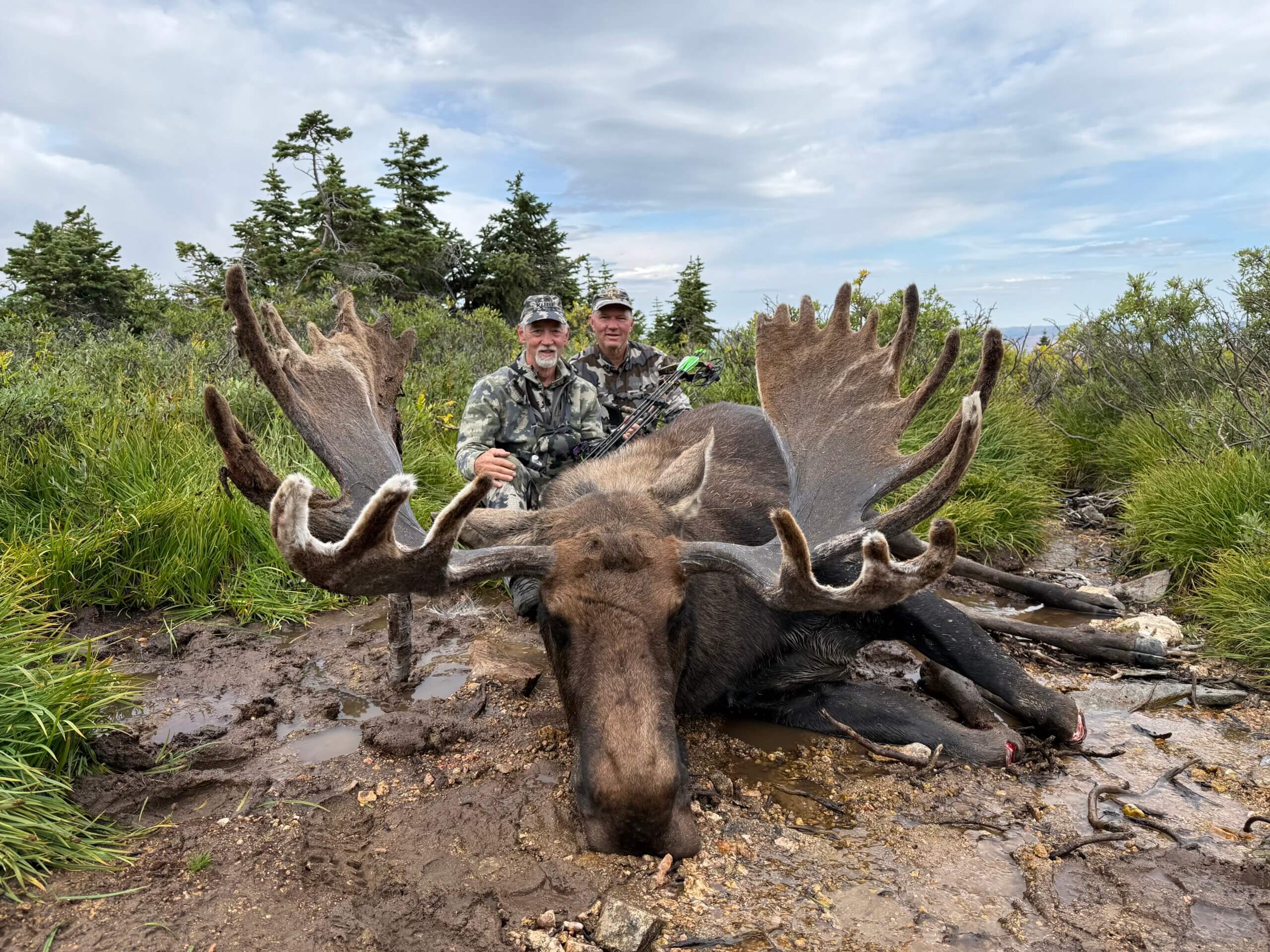
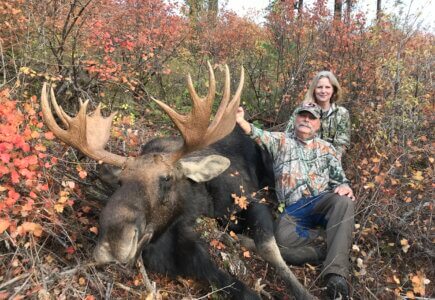
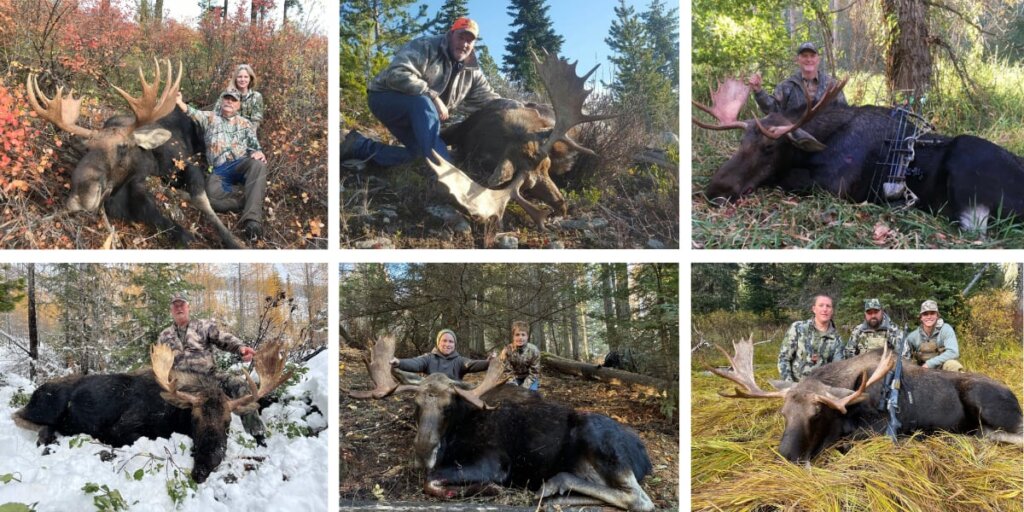
Four miles in, calling and listening the whole way, we finally got an answer. Things happened fast after that. First, a cow appeared, then the bull at 250 yards. On the second morning of the hunt, I had my Idaho Shiras moose down. It was an unforgettable moment.
As most moose hunters will tell you, the real work begins after the moose is down. While we quartered and caped the moose on that steep mountainside, Mike’s wife and father-in-law were gathering horses and mules at the trailhead. The pack-out was something I’d always wanted to experience, and it lived up to all of my expectations. Idaho’s backcountry is stunning in photos, but once you’re off the trail, dealing with deadfall and near-vertical slopes while loading hundreds of pounds of moose meat onto mules, “beautiful” takes on a different meaning. I’m in good shape, and I was completely exhausted. It was fantastic.
Logistics After the Hunt
I’d originally planned to drive the 30 hours from Ohio, but work demands made that impossible. Flying created a new challenge: how do you transport 400 pounds of moose meat when you fly? Mike had the answer. He took the meat to his butcher for processing, then I used a wild game shipping company to ship it home frozen. Yes, it cost about $2,000 to ship, but considering the time saved and the convenience, it was worth every penny. Mike also delivered the cape and antlers to his taxidermist. From field to freezer to taxidermist, he handled everything.
The WTA Difference
Working with WTA has been a game changer for my hunting life. Ten years ago, when I started with WTA, Jeremy helped me take a nice 6×6 elk and antelope in Wyoming. The next year, it was a quality mule deer. Then Argentina with my wife. And then this Idaho moose. Every hunt has been exactly what Jeremy said it would be. No surprises, no disappointments, just quality operations in the right units at the right time.
WTA consultants don’t just help you book hunts; they build your hunting portfolio. My consultant saved me years of wasted preference points and thousands of dollars by redirecting me from Wyoming to Idaho for moose. He knows which outfitters run tight operations, which units produce, and when to apply where. That knowledge is invaluable.
Looking Forward
As I write this, there are two spots open for Jeremy’s African cape buffalo hunt in September. It feels expensive, but after what WTA has contributed to my hunting experiences, I’m seriously considering it. That’s what happens when you work with people who steer you in the right direction. You start trusting them with your BIG dreams.
For anyone sitting on preference points in the wrong state or wondering how to make their hunting dreams actually happen, my advice is simple: call WTA. Let them redirect your efforts toward achievable goals. My Idaho Shiras moose is on at the taxidermist, not because I got lucky, but because I got smart and listened to people who know what they’re doing.
Contact a WTA consultant to start building your Western hunting portfolio. Sometimes the best investment isn’t in more preference points, it’s in expert advice that puts you in the right state at the right time.