

Book Your Adventure 1-800-346-8747

Waterfowl Slam – Hunting Mexico’s Breadbasket – Los Mochis, Sinaloa, Mexico. The Journey Within, A Bird Hunters Diary

Mark Peterson
|  

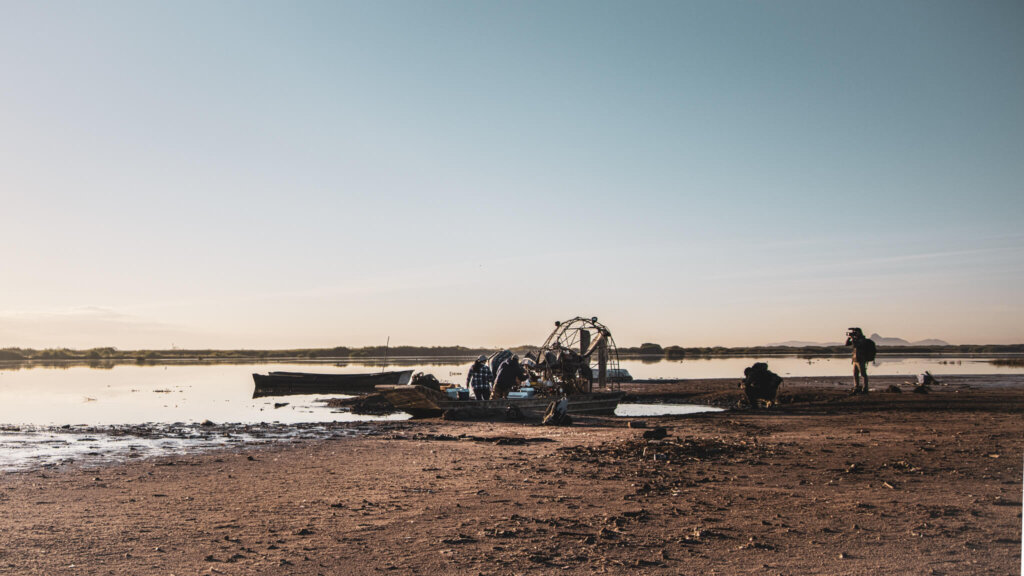
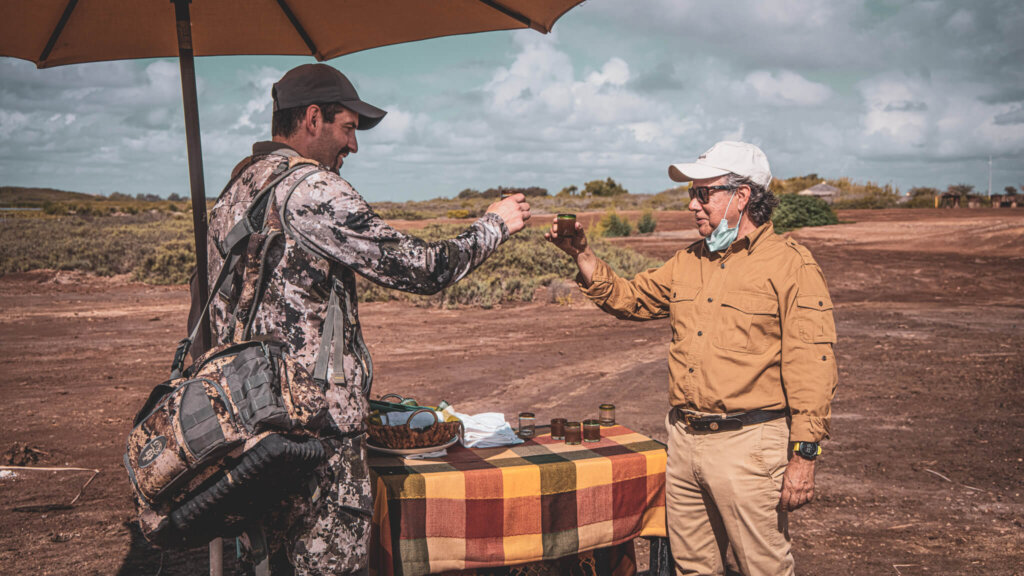
My target that first morning was a Cinnamon Teal. We arrived at a marsh just after sunrise, and David, our outfitter, took us on his airboat out to his blind, a series of pallets that formed a T shape. All sides of the blind were well concealed with natural brush.  David put about fifty decoys out and told us to be ready for some action.

Click the banner above to watch the Waterfowl Slam unfold on YouTube

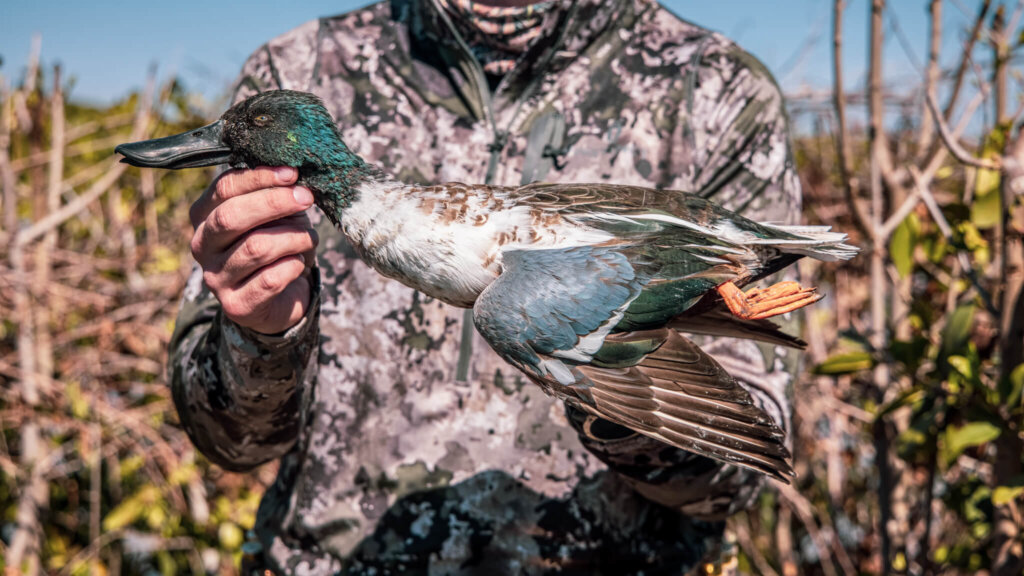
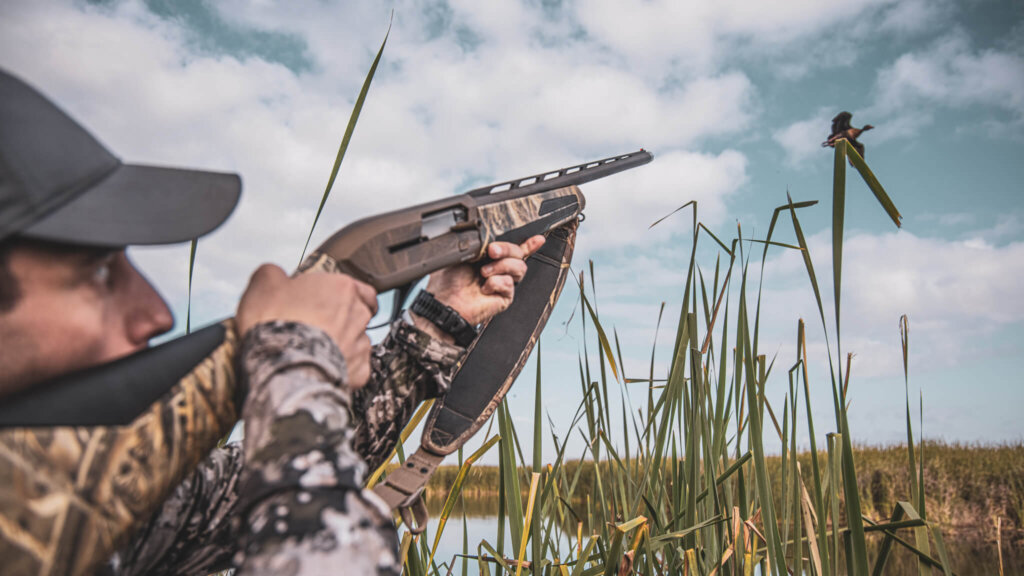
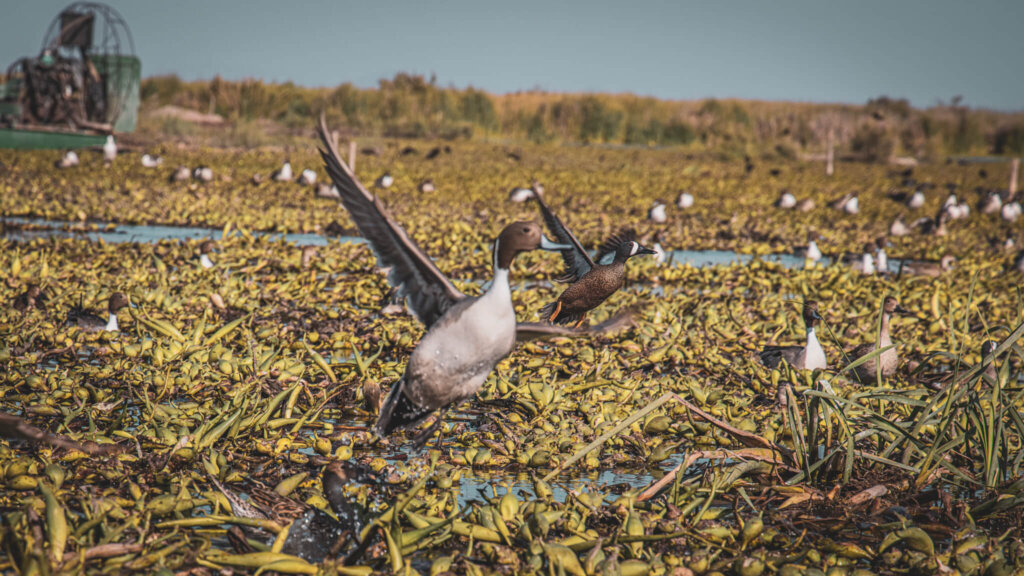
As soon as David left, ducks started flying—and they liked the looks of David’s decoy spread. Like most Mexican duck hunts, the waterfowl hadn’t been pressured too much. They would see our decoys and set their wings to come in. My first duck taken was a fully colored drake Northern Shoveler. I had already taken my Northern Shoveler for the Slam two months earlier in Sonora, but this one was much more beautiful. I planned to get him mounted. I also took a fully colored drake Blue-winged Teal and a drake Green-winged Teal. As with the Northern Shoveler, I had taken both these species earlier in the Slam, but these two had amazing colors and would also be saved for mounting.

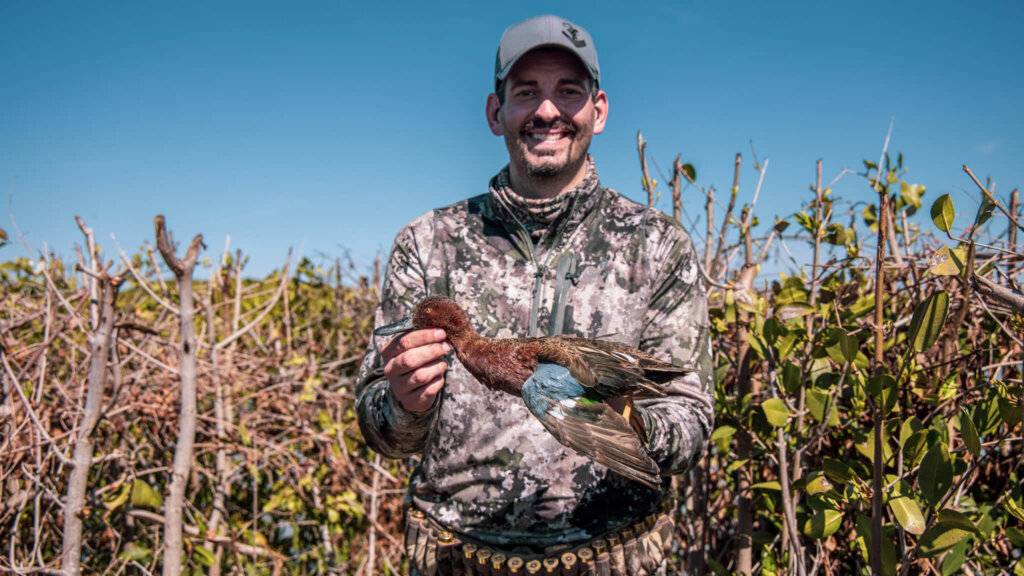
After about two hours, a group of Shovelers cupped their wings coming in. I picked out a pair of drakes. Just before I took my first shot, about twenty yards away, a drake Cinnamon Teal peeled off from behind the Shovelers, heading to land in the decoys. Just as he cupped his wings, I took the shot—and Waterfowl Slam species number forty-one was down.

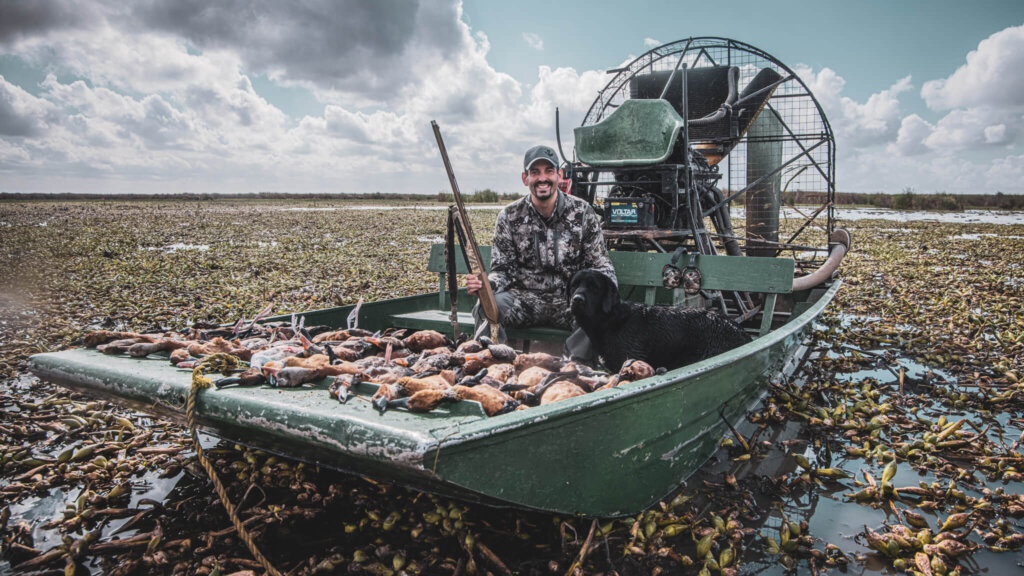
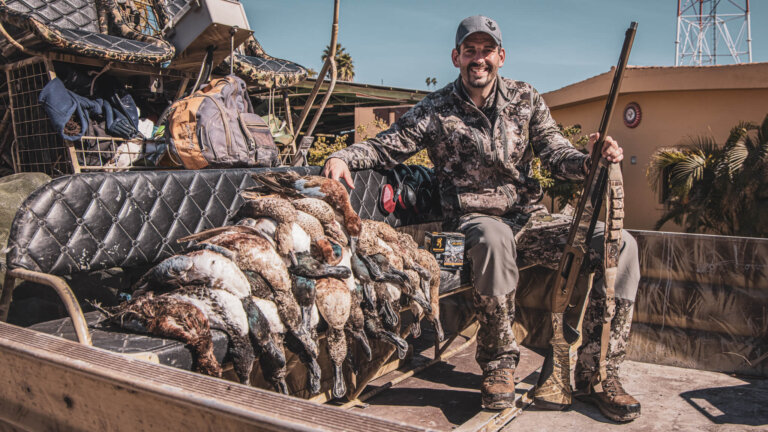
That morning was an excellent, action-packed hunt! I ended up with a mixed bag of Northern Shovelers, Green-winged Teal, Blue-winged Teal, and two Cinnamon Teal. It was a great start to my Los Mochis hunt. With the Cinnamon checked off my Slam list, our goal after lunch was to find whistling ducks. We drove around scouting fields and marshes. The Fulvous Whistling Duck was my last target needed in Sinaloa, and would leave me with a single species remaining to complete the North American Waterfowl Slam.

Whistling ducks generally move back and forth between fields and nearby marshy areas during the middle part of the day. We would stop at a field, glass the ducks there, and move on to the next field until we spotted my target. Unfortunately, we did not see a single Fulvous Whistling Duck the entire afternoon.

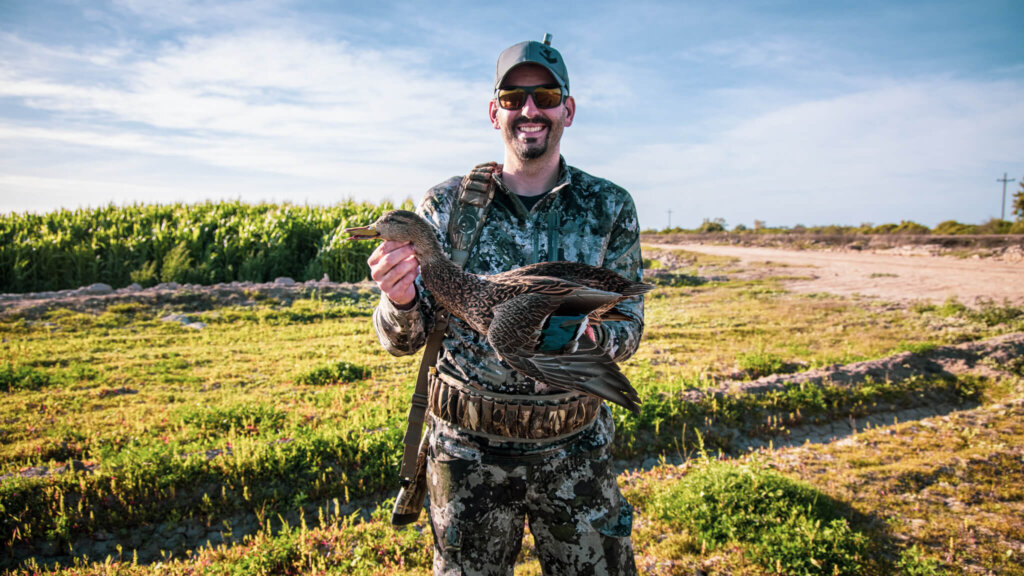
The afternoon was not a total bust, however. We were scouting a channel of water when I spotted a duck that I had not shot during my previous Slam hunts. I was able to make a sneak toward the channel and jump shoot a Mexican Mallard. He was a handsome, full-colored specimen. I had not included this subspecies of mallard on my list of the forty-three North American species, and considered the drake Mexican Mallard a bonus duck. 

If my goal for this trip had been to shoot a whole bunch of ducks, I would have stayed and hunted for several days. Since my goal was a single Fulvous Whistling Duck, and they were nowhere to be found around Los Mochis, I needed to move on. It was obvious that they had moved farther south. 

WTA put us in communication with Tony, an outfitter from Culiacán. Tony said he had good numbers of Fulvous Whistling Ducks near his lodge just outside the city of Culiacán. We decided to improvise and head farther south the next day. We landed at Culiacán’s regional airport the next afternoon.

The next morning we headed for a marshy area. “I have you in my best whistling duck blind,” Tony told us. I was very optimistic about the morning, as several whistling ducks took flight as we arrived. Within a few minutes, we had a great decoy spread set out and were in the blind, ready for ducks to start flying. Black-bellied Whistling Ducks and Fulvous Whistling Ducks came in together. I’d had many exceptional hunts this season. I had shot a lot of waterfowl and taken numerous species and subspecies during my quest to complete the Slam. My next statement is bold, but true. That morning’s hunt was, without a doubt, the best day of hunting since the Waterfowl Slam started. 

Within ten minutes of being in the blind, I had dropped a Black-bellied Whistling Duck. Shortly after, numbers two and three for the morning were down—both Fulvous Whistling Ducks. I had successfully taken forty-two of the forty-three species needed to complete the Waterfowl Slam. The pressure was off, and it was time to relax, have fun, and enjoy the experience. We stayed in the blind for two and a half hours. I ended up with a mixed bag of Black-bellies, Fulvous, Pintail and a fully colored drake Blue-winged Teal.

After that amazing morning hunt, we returned to the lodge and faced an unexpected five-star lunch. The chef had a pig roasting over an open fire. The food was beyond good—that meal was the best lunch I have ever had while hunting. It was fitting—the best morning of hunting during the Waterfowl Slam, followed by the best lunch during the Waterfowl Slam. I remember thinking that if the day kept going that well, the sky was the limit with what could happen in the afternoon. Whatever was going to happen had to wait, though—after that meal, I wasn’t able to do anything before I had a nap!

After my siesta, Tony placed us in a blind where he said we would see “many, many Teal.” It was another outstanding hunt. I added two fully colored drake Cinnamon Teal to my bag of Blue-winged Teal and Northern Shovelers. With an hour of shooting light left, we moved to a new blind and Tony put a spread of decoys out. My bag continued to grow with additional Blue-winged, Shovelers, and one more Cinnamon. What a day! That’s the best way to describe it. I couldn’t have asked for a better day of hunting—or eating. Everything was amazing.

The next morning, we had time for a quick hunt before we needed to pack our things and head to the airport. It was another phenomenal morning. I ended up with another mixed bag. Before we left, we were each presented with gifts from Tony and his family. Receiving a gift from your outfitter is a common custom when hunting in Mexico.

Needless to say, Tony and his team received outstanding ratings from me. If you’re ever considering a waterfowl hunt in Mexico, you’ll have a great experience with Tony. WTA would love to arrange a hunt, and rest assured you’ll be taken care of. The accommodations, food and hunting are phenomenal!

Episode 13

Episode 14

Related Articles

In the Jungle for Ocellated Turkeys: A Hunt Like No Other

In the Jungle for Ocellated Turkeys: A Hunt Like No Other

Everything about the ocellated turkey is different from what hunters expect when they think about turkeys—from where they live, to what they look like, to where you hunt them. Even if they may not look or act like a conventional turkey, they are still a coveted species for anyone wanting to complete their World Turkey Slam. Often, they are the last turkey that hunters tackle when shooting for a slam, but there’s no reason to wait. Go now and experience a turkey-hunting adventure like no other!

Adventure is the keyword here. A hunt for ocellated turkeys takes you into the wild jungles of Mexico’s Yucatan Peninsula, amid the ruins of the Mayan civilization and a world where jaguars still roam. Even though the camp is remote, getting there isn’t particularly difficult, dangerous, or challenging. It does take some time, but a flight from your nearest airport will have you in Merida, Mexico in just a few hours. Your representative will meet you there and transport you to Campeche, a beautiful, safe, and historic city set on the shores of the Gulf of Mexico. After a comfortable night’s rest at one of the hotels hand-selected by WTA’s professional staff of consultants, you’ll be picked up the next morning for a journey into the jungle via a modern, air-conditioned van, followed by an open-air Jeep ride for the final few miles.

Nearly hidden under the jungle’s canopy, the camp is a curious mix of modern and traditional. The heavy-duty, screened wall tents are lifted off the jungle floor on wooden platforms. A generator provides ample energy to power electronics, including overhead lighting and the welcome relief of air conditioning. And yes, there is Starlink, although I suggest unplugging completely to fully experience life off-grid and away from the hustle of modern life. Camp is set along a meandering stream, complete with a swimming hole where you can spend the hot, humid midday hours cooling in the creek.

Camp and country aside, the real reason to travel deep into the Yucatan is to experience a turkey hunt like no other. In addition to checking off the species to complete a Slam, the ocellated sports some of the most beautiful plumage in the bird world. Looking more like a peacock than a traditional turkey, the male ocellated is plumed in a gorgeous array of purple and blue feathers that seem to change colors at different angles in the sun’s rays. In strut, the tips of the fan show what look like a series of eyes, lending the bird its name, which is derived from the Latin word for “little eye.” Its head is also like no other bird, with a sky blue color punctuated by orange warts and, in large toms, crowned by a pronounced crest. The ocellated turkey makes a striking mount, and the camp staff works to ensure the best care and transport of your turkey.

While the ocellated turkey does have a distinct call, it’s not like the deep gobble turkey hunters are most familiar with. Instead, the male ocellated, known locally as the macho, sends out a rolling chorus of notes that increase in both speed and volume, not unlike the sound of a two-stroke motorcycle struggling to start somewhere deep in the jungle.

Hunters used to calling turkeys into shotgun range will also be surprised to know that’s not common practice here. It can happen, but most ocellated turkeys are taken from the roost, after following a local guide on a hike through the pitch-black just before sunrise. No matter how far into the thick cover you go, your guide will walk you to the exact tree where the macho resides, and, before the turkey flushes, instruct you about when and where to shoot. If the hunter does his or her job, the ocellated tag is notched and a bucket-list bird hunt is achieved before the sun even rises for the day.

Once the World Slam celebration wears off, many other activities keep hunters busy in the jungle. First and foremost, there are several exotic bird species available to hunt on a trophy-fee basis. Great currasow and crested guan are the top two birds that hunters target after taking their ocellated turkey. Like the ocellated, both birds are sought after for their beautiful and unique plumage, making distinctive additions to your trophy room. Other hunting opportunities include the coatimundi, lowland paca, and collard peccary.

While Mexico may not be on the minds of all hunters, for that certain adventurous kind of person, a hunt in the jungle is a must-do trip. The brightly plumed ocellated turkey is much more than just a checked box on the way to a World Slam. It provides a unique reason to get with the professionals at WTA and plan a hunt at their exclusive camp deep in the Yucatan. They manage the details and make traveling to Mexico a safe, easy, and memorable event.

Ocellated Turkey Hunt Info
Spring Thunder on the Plains: Kansas Turkey Hunting Made Simple

Spring Thunder on the Plains: Kansas Turkey Hunting Made Simple

Few Spring experiences rival the sound of a hard-gobbling tom echoing across the Kansas prairie. As winter gives way to warming mornings and longer days, Kansas comes alive with opportunity for turkey hunters who are willing to plan ahead. With strong Rio Grande turkey populations, abundant private land, and a well-managed season structure, Kansas remains one of the most reliable Spring turkey destinations in the country.

Kansas offers a straightforward, yet thoughtfully designed Spring turkey season. For 2026, Youth/Disabled Season runs from April 1–14, followed by Archery-Only Season from April 6–14, which is an exciting window for close-range encounters when gobblers are aggressive and responsive. The Regular Season, which allows both firearms and archery, opens April 15 and runs through May 31.

While the hunting itself is accessible, the permitting process requires attention, especially for nonresidents. Kansas turkey draw applications for nonresidents must be submitted by February 13, 2026.

Missing the February deadline is the most common reason hunters lose the opportunity to hunt Kansas in the Spring. Between busy schedules and multiple state regulations, it’s easy to overlook the application. This is where WTA TAGS plays a critical role.

WTA TAGS simplifies the application process and removes the guesswork. We handle the Kansas turkey application on your behalf—tracking deadlines, submitting applications correctly, and communicating results clearly. Instead of navigating state systems and regulations, you can focus on planning your hunt and enjoying the season ahead, confident that the logistics are handled professionally.

For hunters looking to elevate the experience, WTA TAGS also offers excellent outfitted turkey hunts on private land. These opportunities feature thousands of acres of exclusive ground, true Rio Grande turkeys, and flexible hunting styles ranging from ground-blind ambushes to classic run-and-gun tactics. Lodging is often first class, with comfortable rooms, hot showers, and hearty meals waiting at the end of the day. Group sizes are kept small, creating a more personal and high-quality hunt.

Because nonresident tags must be drawn, these hunts require planning. WTA TAGS can assist with both the application process and connect you with the right outfitter once a tag is secured. It’s a seamless path from paperwork to the field.

Kansas turkey hunting rewards preparation. With clearly defined seasons and a firm February 13 application deadline, the hunters who plan early are the ones listening to gobbles come April. WTA TAGS is here to make sure you’re one of them—applied, prepared, and ready when Spring thunder rolls across the Plains. If you would like to book a well-vetted Rio turkey hunt in Kansas for this Spring, call us ASAP at 1-800-755-8247.

TAGS Turkey Hunts in Kansas
Gould’s Turkey Hunting in Mexico’s Sierra Madres with Muy Grande Outfitters

Gould’s Turkey Hunting in Mexico’s Sierra Madres with Muy Grande Outfitters

Few places compare to Muy Grande’s ranch in Mexico’s Sierra Madres for chasing Gould’s turkey, the biggest of all wild turkeys, marked by the striking white tips on its tail fan. As a WTA consultant, I’ve seen their guides deliver consistently, making it a top destination for hunters working toward the World Turkey Slam. Add in rugged country and a proven outfitter, and it becomes an experience every turkey hunter should have.

Turkey season runs from early April through early May. You’ll typically fly into Phoenix, then catch a morning hop to Hermosillo, Mexico, arriving around 11:30 a.m. After customs, Sergio or Pedro will greet you with a cold drink and a van stocked with sandwiches for the scenic ride ahead. From Hermosillo’s 700 feet, you’ll climb through 5 hours of winding Sierra Madre roads to the ranch at 3,000 feet. The journey is half the fun—curves, vistas, and glimpses of the country you’ll be hunting. By about 7 p.m., you’ll be unpacking in your room. Open your window to the cool mountain air and let it lull you into one of the best nights of sleep you’ll ever experience.

The food is reason enough to make the trip. Muy Grande’s French chef has 20 years of experience with serving up everything from ribs to authentic Mexican dishes, hearty breakfasts, and appetizers. You’ll need the delicious calories for the long days in the open country chasing Toms. Mornings start early and you may spend up to two hours on ranch roads before reaching your spot. Dry mountains, steep valleys, and big country define the day. Want to call birds from a pop-up blind? They’ve got you covered. Prefer run-and-gun? This is prime terrain for it. With one-on-one guides, the hunt is tailored to your style.

The Gould’s turkey is the largest subspecies in North America, and in the field, they stand out as they strut down dusty trails, flashing their tall frames and bright white fan tips. They’re plentiful here. On my last trip, the group of five tagged six birds by the end of day one—some from blinds, others by stalking ridges. Gobbles echo through the canyons all morning, and the guides know every fold of the landscape and the flocks that roam it. The hunt package includes in-field transport, trophy care, lodging, meals, guide service, and a license waiting for you at camp—everything dialed in so you can focus solely on finding your big ol’ Tom.

Getting your bird back home is simple. The outfitter freezes it—whole or just the fan—and handles the paperwork. Flying back through Phoenix is smooth—customs deals with turkeys regularly. Just bring the address of a USDA-certified taxidermist and a sturdy suitcase big enough for your trophy.

The gear list for this trip is straightforward: good hiking boots, lightweight shirts, face mask, hat, gloves, and a jacket for the cool mornings. Days can hit 90° F in April, but the temp drops quickly at night, so pack for variety. After tagging out, you’ll head back to Hermosillo for a final night at the Fiesta Americana, a top-notch hotel, before flying home—though early successes can open the door to earlier flights.

Muy Grande is a place of raw beauty, from stone-fenced corrals to mountain views stretching for miles. Hermosillo itself might surprise you—not a rough frontier town, but a safe, vibrant city where families are out and about. If you’re looking for an authentic Gould’s turkey adventure in a spectacular setting with unmatched hospitality, this hunt should be on your wish list. Book through WTA and come chase the turkey that towers above the rest.

Learn about this Hunt Watch Hunt Video

Get Trip Specials & Cancellations,
Right Where You Want It.

No spam. Just the good stuff. Opt-out anytime.