Book Your Adventure 1-800-346-8747

The 29, Again: A New Chapter in the Super Slam Journey

Mark Peterson
|  
Method of Take: Muzzleloader

When I completed the North American Super Slam, a lot of people assumed that was the finish line. It was an incredible journey—29 species in 30 years. But somewhere during that journey, while I was still closing in on the original 29, I’d already started going back through the list with my muzzleloader. It wasn’t a decision I made after the fact. It grew out of something I fell in love with along the way.

I started using the Gunwerks muzzleloader around the same time I started using their rifle, probably close to 10 years ago now. I went on a mule deer hunt and an elk hunt with it, and clicked with the challenge. With a rifle, if you make a bad shot, you can generally get a follow-up, especially at distance, because the animal doesn’t always know what happened. With a muzzleloader, you get one shot. You have to get closer. You have to make sure the wind is right. You have to keep your powder dry, literally. Everything has to fall into place. That added difficulty resonated with me, and it felt like the natural next step.

From what I understand, only a handful of people have ever completed the Super Slam with a muzzleloader. I think more people have actually done it with a bow than a muzzleloader. Most people chasing the 29 want to use whatever gives them the highest chance of success, and I get that. But for me, this was the challenge that made sense.

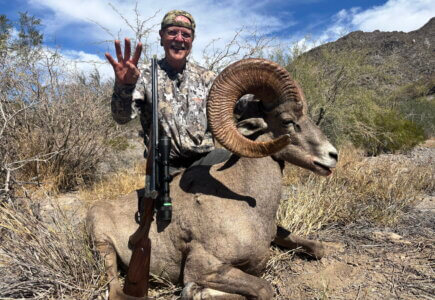
I’m at 14 of 29 right now, and two of those are sheep: a stone sheep and a desert bighorn. The stone sheep took two trips. On the first one, we were in the tent 8 out of 10 days because of less-than-ideal weather. On the second trip, we were in rams, but I rushed a shot early on. We had some rams bedded, and when one stood up, I ranged it and shot. I missed right underneath him. When we ranged the shot again, we realized the ram was 50 yards farther than what I’d originally read. The difference between 300 and 350 yards with a muzzleloader is the difference between hitting that sheep and missing by about three feet. I consider myself to be pretty good in the field, but I definitely rushed it. I should have ranged the ram when he stood, but I didn’t. That’s a lesson you only need to learn once.

Revisiting species I’ve already taken with a rifle gives me a different perspective. I go in with more knowledge because I’ve been there and done that before. Sometimes I go back to the same outfitter. When I went to Newfoundland for caribou, I went with who I consider the best outfitter there. That’s where I got my rifle caribou and my archery caribou, and I knew going back with the muzzleloader, that was exactly where I wanted to be. Same for my Roosevelt elk. I knew from my previous experience and the number of bulls in that area that it was where I wanted to go.

But sometimes the muzzleloader changes where I go entirely. With Coues deer, for example, a lot of those Sonoran ranch hunts produce shots at 400–600 yards. That’s not realistic with a muzzleloader. So this time, I’m planning for a ranch that has a ton of water so I can hunt water sources and keep that shot at 80 or 100 yards. It’s the same logic as archery hunting. You don’t go to a ranch where you’re glassing from a knob at 500 yards. You go where the setup increases your odds of getting close. A lot of this journey comes down to logistics and planning around the weapon’s limitations.

The mountains are the real test. Any time you’re up high, you’re dealing with weather. With a muzzleloader, that means worrying about keeping your powder dry on top of everything else. If I load up my muzzleloader, I can keep it ready for a day or two, then I need to shoot it out, clean it, and start fresh. With a rifle, you pull the shell out, put it away, and you’re ready to roll the next morning. It’s a completely different game. Dall sheep is going to be tough. I know that going in. Any of the mountain species will add that extra layer of difficulty.

Traveling with the muzzleloader presents its own challenges. Arranging powder is harder now than it used to be. For hunts in the States, it takes planning and shipping before the hunt. For Canada, I usually have the guys up there source the powder I need. It’s manageable, but it’s one more item on the list that a rifle hunter doesn’t have to think about.

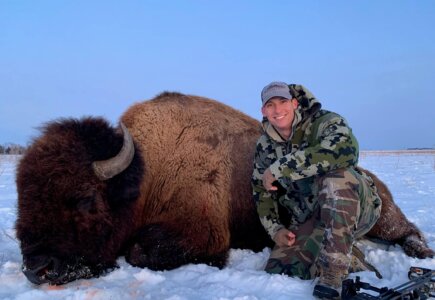
This year I’ve got a bison hunt in California and a bighorn hunt in Colorado. I’m realistic about what the muzzleloader demands. The bighorn I took in Alberta with my rifle was at 720 yards. That was as close as we were going to get. That kind of shot just isn’t happening with a muzzleloader.

Next year, I’m headed to British Columbia for Canadian moose and mountain goat on the same trip. That’ll be a cool one. Two extremes on the same hunt: sitting and calling for moose, which doesn’t involve a lot of movement, and then shifting to mountain goat, where we’ll put in serious elevation. I love that contrast.

What keeps me motivated is simple. I’ve always been competitive. I loved sports growing up, and hunting scratches that itch. It’s a way to physically and mentally test myself in the field, and the muzzleloader raises the bar on both. There’s no coasting through a hunt when you get one shot at half the effective range.

For hunters looking to start their own long-term pursuit, the Super Slam doesn’t have to be the first goal. Grand Slam Club’s Super 10 is very achievable. Break it down: a black bear, a deer, an elk, an antelope, etc. Look at what you can apply for and draw in the U.S., and it becomes real with some planning. Don’t let the years go by without applying. Start earning points even if you’re not hunting yet.

The first time I completed the Super Slam, I learned that the journey and process matter more than the finish line. This time around, I know that going in. Every hunt is a little different now. The muzzleloader forces me to slow down, plan harder, and get closer. It puts me back in that mindset I had on my first Dall sheep hunt, where nothing was guaranteed and every detail mattered. Fifteen species to go, and I’m in no rush. The wild places are still out there, the animals are still worth chasing, and I still have a reason to be in the field every Fall. That’s more than enough.

Related Articles

Building a Quail Hunter’s Paradise: Habitat Improvements and Day Hunts at Stonewall Plantation Outfitters

Building a Quail Hunter’s Paradise: Habitat Improvements and Day Hunts at Stonewall Plantation Outfitters

Expanding into quail hunting was a natural fit to complement Salt River Outfitters’ already thriving deer hunting operation. With a clear vision and a commitment to quality, we set out to create a quail program that could stand among the best in the region. Drawing on the expertise of skilled dog handlers, seasoned habitat specialists, and our experienced guides and habitat managers, we’ve built something special.

Over the last few years, we’ve been steadily transforming Stonewall Plantation’s land from cattle pasture to high-quality bobwhite quail habitat. We aimed to create hunts that feel as close to wild as possible, and unlike confined shooting preserves, our hunting grounds span diverse terrain including ridges, hollows, and rolling hills. That transformation hasn’t been easy, but it has been worth it. A huge part of that effort has focused on the removal of invasive fescue which had taken over much of the pasture. Fescue chokes out native grasses and eliminates the natural cover and food sources that the quail depend on. Through persistent spraying and management, we’ve brought back the native species and laid the groundwork for wildlife to thrive.

In addition to native grasses, we’ve planted food plots throughout the property—carefully selected mixes of grain sorghum, millet, sunflowers, corn, and Korean lespedeza. These plots not only support healthy quail populations, but they’ve also created a boom in other wildlife. Watching our dogs lock up on a big covey of birds is a rewarding moment, and those moments are coming more frequently each year.

Our last season proved that the work is paying off. Hunters enjoyed productive days in the field, with strong bird numbers and multiple coveys flushed during most outings. Many visitors left with full game bags, big smiles, and stories they’ll tell for years. Based on the success of a limited trial last year, we’re also excited to expand access with guided day hunts this upcoming season. In October and December, we’ll offer morning and afternoon hunts for up to three hunters at a time. Each hunter will have the opportunity to harvest up to 30 birds, with lunch included in the hunt package. It’s a new way to experience Salt River, whether you’re a first-time guest or a returning visitor.

I can’t tell you how many times I’ve heard: “My dad and I hunted quail when I was younger, but with quail numbers down, we haven’t hunted them in years.” Last season, a gentleman booked a hunt for his father, his son, and himself—three generations in the field. The stories they shared around the dinner table that night were moving and unforgettable. The joy in their eyes and the bond they rekindled through the hunt reminded me why we do this.

Being part of such an experience—where a grandfather and father can introduce a young man to something they’ve cherished for decades—is priceless. Our goal at Stonewall Plantation Outfitters is to continue creating new memories for many seasons to come.

The habitat is stronger. The lodge is more comfortable. The birds are flying better. And our program now has a proven track record of delivering exceptional hunts. Whether you’re coming for a full three-day experience or joining us for a day hunt, we can’t wait to share this quail hunting heaven with you.

Single Day Hunt Muli-Day Hunt with Lodging Watch…
Authentic Quail Hunting in Kentucky’s Heartland

Authentic Quail Hunting in Kentucky’s Heartland

If you’re looking for a genuine quail hunting experience paired with southern hospitality, our Kentucky operation delivers. Nestled in Bourbon Country in partnership with Worldwide Trophy Adventures, we’ve built an experience that honors upland hunting traditions while showcasing our stunning landscape.

Our historic property, once a cattle farm, has been carefully transformed into prime Bobwhite quail habitat. We aimed to create hunts that feel as close to wild as possible. The centerpiece is a fully restored pre-Civil War farmhouse, now a comfortable lodge accommodating up to 6 hunters.

Unlike confined shooting preserves, our hunting grounds span diverse terrain including ridges, hollows, and rolling hills. We’ve designed multiple routes across the property, ensuring each hunt feels unique and exciting. Guests often tell us that it’s the closest they’ve come to wild quail hunting in years.

We don’t impose bag limits. Arrivals are typically on Wednesdays, with two and a half days of hunting concluding on Saturday afternoon. Our philosophy is simple: create an authentic and enjoyable experience for all skill levels, free from the pressure of quotas.

Days begin with a hearty breakfast at the lodge. By mid-morning, you’re in the field with our skilled dog handlers and guides. We hunt until lunchtime, break for a meal, then head out for an afternoon session. Evenings bring cocktails, appetizers, and a delicious dinner followed by relaxation and camaraderie at the lodge.

We keep our group sizes intentionally small, usually two or three hunters, each paired with a handler and a guide. This ensures personalized attention and ample shooting opportunities. Our guides also will try to get some photos and videos for you to take home.

We take immense pride in our birds. Through an exclusive partnership with an experienced breeder, we offer mature, strong-flying quail that truly challenge hunters. Our dogs and handlers are also top-notch, crucial elements in creating memorable hunts.

A really cool added perk of our location is its proximity to Kentucky’s famed Bourbon Trail. Many of our guests combine their hunt with distillery visits. It’s the quintessential Kentucky experience. That’s also a great backup plan if weather disrupts hunting.

As another season approaches, we’re eager to share our creation with more bird hunters. With limited availability, now is the time to secure your spot. For details and bookings, contact us! Come experience Kentucky’s finest Bobwhite quail hunting!

Learn about this Hunt Watch Video
Quail Hunting in Sonora Mexico - The Journey Within, A Bird Hunter’s Diary

Quail Hunting in Sonora Mexico - The Journey Within, A Bird Hunter’s Diary

The last stop of my Upland Slam journey was in Mexico’s northern state of Sonora. Sonora is just across the border from Arizona and a bit of New Mexico. For the slam, we would be seeking Elegant quail and doves. In a later blog, I will cover our amazing dove hunting in Sonora. Sonora has always been one of my favorite hunting destinations as the people, culture, terrain and plentiful game ensure that my hunts there are always memorable. In February, leaving the snow in Michigan for Sonora’s warm desert, is another plus.

The main reason we chose Sonora for the Upland Slam was that the state is home to Elegant Quail. Elegant Quail are a New World species of quail that is only found in northern Mexico. Their range reaches from Sonora and Chihuahua into Jalisco, but the majority of the birds are in Sonora. They are commonly found in thorny scrub brush areas inter-mixed with open ground and are usually near cultivated fields. Because these birds are in northern Mexico, which makes them harder to hunt for US hunters, they are not as well-known as the other northern species of quail. Elegant Quail are also the least hunted species of quail. This is not because of low population numbers, which are stable and growing. It is solely because it is more difficult for bird hunters to get to them, especially if the upland hunters want to use their own dogs. Adding to the difficulty is that you need to hunt on private ground and only a small handful of outfitters offer Elegant Quail hunting.

WTA works with great outfitters from all over the world and we have some great ones in Sonora, where our team has personally hunted and vetted the operations. One outfitter, in particular, specializes in dove, quail, and waterfowl hunting. This team knows what they are doing and have numerous areas to hunt. This past spring, while seeking my World Turkey Slam in a single season, I was with this outfitter and hunted with them for Gould’s turkeys. I took two big toms while enjoying some great Mexican cuisine along the way. It was during this spring trip that I started to make plans for my February return trip for doves and quail.

The process for bringing dogs into Mexico is extremely simple, as is the process for returning your dog back to the US. In late 2019, the Mexican laws were changed, starting in 2020, so that no formal documentation was required to bring your dog from the US into Mexico. However, having travelled to Mexico numerous times in the past, I always want to be prepared, just in case there is a snag with customs while crossing the border. As a result, to avoid any potential problem, I obtained a veterinary certificate for each of the dogs. These certificates identified each of my dogs and showed that they were each up to date on all of their shots and vaccinations. I was asked, at customs in Hermosillo, to see the veterinary certificates and I was happy to have the documentation, so we cleared customs without a problem. Our outfitter did all of the necessary gun paperwork, in advance, and met us at the airport to assist in the process. Within an hour of landing, we were on the road to the lodge. The lodge is located on the outskirts of Hermosillo, which is perfect as it allows for easy travel to the different hunting areas scattered in different directions in surrounding Sonora.

There are two species of quail that are open to hunting in the areas around Hermosillo. These are Elegant Quail, the main reason for this trip, and Gambels Quail, which we had earlier hunted in Arizona. We would split our time in Sonora and hunt for both quail on this trip. Our main focus was Elegant Quail and we decided to target them first. From Hermosillo, we headed by vehicle about two hours northeast, which brought us into a rural agricultural/cattle grazing area. There were both Elegant Quail and some Gambels in the area, but the area was preferred by Elegant Quail. When hunting quail, it is not good to start early in the morning as the quail need time to get off the roost and start moving around. We targeted to be at our hunting areas around 9:30 in the morning and to have the dogs down and hunting by 10 am. This would give us a couple of good hours of hunting before the afternoon temperatures would get high enough to cause heat troubles for our dogs. We would take the mid-afternoons off to rest, as the temperatures were just too hot for the dogs to run. Later in the afternoon, when the temperatures started to drop, we could again hunt the last couple of hours before sunset.

After the long travel from Michigan to Sonora, our dogs were excited to be back in the field. It didn’t take long for the dogs to get birdy and, just like all of the other quail species, Elegant Quail like to show off their legs and run like crazy. After a bit of teamwork, we got our first covey cornered and got them in the air. As the cover was fairly thick, I didn’t have a shot on the initial break up of our first Elegant Quail covey. We then set out after singles, which tended to hold tighter and not run as much as the large covey. Both Arrow and Shooter locked up in front of me. I slowly walked up and two quail were in the air. I raised my Benelli Ethos and covered the first bird. After a quick trigger pull, I watched the bird fall. My first Elegant Quail was a gorgeous male. The pressure was now off for the trip as my last quail for the Upland Slam was in hand.

Find the outdoor adventure of a lifetime.

SEARCH
Try ‘Elk’, ‘Colorado’ or ‘Waterfowl’